
Hair Keeps Falling Into the Eyes
A tiny fringe or face-frame cleanup may solve the problem without changing the rest of the hair.
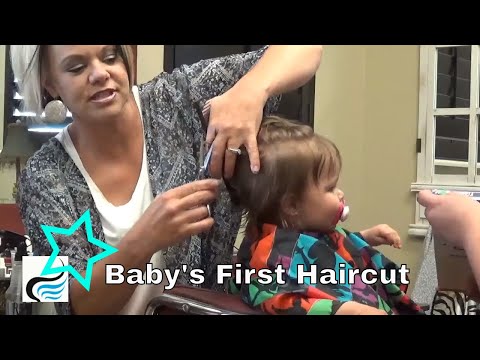
There is no magic age for a first haircut. Some babies need an early trim because hair is falling into their eyes; others can wait until two or three. The best first haircut is the one that solves a real problem without turning a short milestone into a battle. RaDona's real salon videos show the part parents rarely see in polished photos: wiggling, distraction, lap sitting, pauses, changing positions and stopping when the child is simply done.
When the hair needs it—not when the calendar says it is time. A first haircut makes sense when hair is repeatedly in the eyes, the back or sides are very uneven, wispy ends are difficult to manage, matting or tangling is becoming a problem, or you simply want a cleaner shape.
Some children need that at under a year. Others can wait until two or three. The first appointment can be a five-minute cleanup rather than a full “style.” A calm experience and one solved problem are enough.
You do not need all six. One practical reason can be enough—especially if the child can handle a brief, low-pressure appointment.
A tiny fringe or face-frame cleanup may solve the problem without changing the rest of the hair.
A small perimeter trim can make uneven baby growth look more intentional while preserving most of the length.
Removing only the transparent or straggly ends can make the outline look cleaner and visually fuller.
If the haircut is affecting comfort, brushing or family routine, a small cleanup may make everyday care easier.
They do not have to sit perfectly. A parent lap, toy, snack or familiar video can be enough for a short trim.
The first haircut can simply establish a neater outline. It does not need to turn a baby into a completely different hairstyle.
You cannot guarantee cooperation, but you can stack the odds in your favor. Morning or another naturally happy window is often easier than the end of a long day.
A haircut is rarely urgent. If the day is already going badly, rescheduling can be the most successful “first haircut” decision you make.
Overexplaining can make a toddler more suspicious. Keep the language positive, simple and ordinary: “We’re going to get your hair trimmed. Mom/Dad will be right there.”
Watch a calm BGH child haircut, point out the cape, comb and chair, and avoid using words like “cut” as a threat or scary event.
Feed the child and choose a window when they are normally alert. Bring the familiar snack instead of hoping the salon has the right distraction.
A short video, toy, snack or familiar object can buy the few calm minutes a simple first haircut needs.
“Hair out of the eyes,” “even the back,” or “clean up the wispy ends” is clearer than asking for a complete style overhaul.
Both can work. The question is not which setting is “correct”; it is where the adult can safely complete the small haircut the child needs without creating extra stress.
KyLynn's video is valuable because it is not polished around the hard part. She moves, gets distracted, changes position and eventually reaches the end of her patience. RaDona adapts rather than demanding stillness.
RaDona keeps the interaction warm and conversational so the haircut feels less like something being done to the child.
Watch at 0:58The cut begins by evening the longest wispy area rather than trying to create a complicated haircut on a one-year-old.
Watch at 1:15Mom moves with KyLynn, hands her something to focus on and helps RaDona get short cutting windows.
Watch at 4:12RaDona recognizes that the bangs still need attention and completes that essential area quickly.
Watch at 6:37This may be the best first-haircut lesson in the video: RaDona stops the styling instead of extending the appointment just to make the finish prettier.
Watch at 7:25Comments repeatedly praised the patience and the fact that the video showed the real movement and struggle of cutting a toddler's hair.
A toddler cannot be expected to understand the danger of scissors, clippers or hot tools. The adult holding the tool has to assume movement will happen.
Wesley's fresh 2025 BGH video shows this clearly: RaDona says that when the child goes to move, let go of what you are doing. That principle is more important than getting one more hair.
One recurring theme in the BGH videos and comments is that the haircut works better when the stylist cuts and the familiar adult handles reassurance, positioning and distraction.
Use your lap if that is where the child is calmest. The salon chair is not a requirement for a successful first visit.
A favorite short video, toy, snack or sensory object can create enough stillness for a few careful snips.
If the stylist needs the child facing another direction, move with the child rather than twisting the head forcefully.
If the adult sounds worried about scissors or clippers, the toddler may decide there is something to fear.
Tell the stylist up front that you would rather finish another day than turn the first haircut into a long struggle.
Enjoy the milestone, but let the haircut happen first. The perfect keepsake picture is easier once scissors are put away.
The point is not to copy the haircut. Compare how RaDona changes the process around the child's age, tolerance, tools and the parent's goal.
▶
Best example of movement, parent help, distraction, prioritizing the essential trim and stopping when the child is done.
Watch KyLynn ▶
Useful for parents wondering about clippers, toys, moving with the child's head and avoiding a noisy blow dryer at the end.
Watch Granger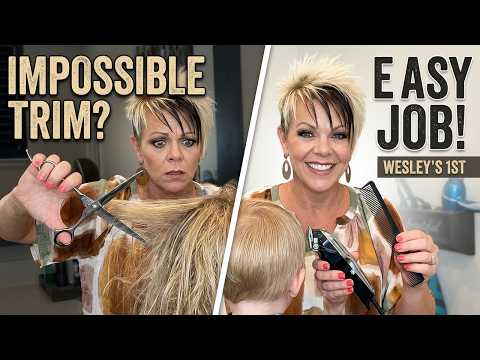 ▶
Fresh example of lap sitting, snacks, showing the tool first and immediately releasing the hair when the toddler moves.
Watch WesleyGive the stylist the problem, the length you want to protect and your priority for the experience. That is much more useful than arriving with a complicated haircut name.
“This is the first haircut, so comfort is our first priority. The main problem is [hair in the eyes / wispy uneven ends / the back is much longer / tangling]. We want to keep as much length as possible. Please do the most important part first, and if they are done before everything is perfect, we are happy to stop.”
For a boy's clipper cut, add: “Please let him hear the clippers first and tell us before you work around the ears.” For a longer little-girl trim, add: “We are not trying to create layers yet; we mainly want a cleaner outline.”
The first haircut is often more successful when it solves one visible problem rather than trying to deliver a completely finished grown-up haircut.
| Parent goal | Simple first-haircut approach | What to preserve | Stop when… |
|---|---|---|---|
| Hair in the eyes | Small fringe / face cleanup | Back and side length | The eye area is clear and safe. |
| Wispy uneven ends | Light perimeter cleanup | Most overall length | The outline looks cleaner. |
| Long back / shorter sides | Even only the longest section | Front and side growth | The back no longer looks disconnected. |
| Boy's first short cut | Simple sides/back + longer top | Enough top for an easy style | The child is losing tolerance—details can wait. |
Trimming can absolutely make baby hair look fuller because the transparent, wispy ends are removed and the remaining edge is more even. But scissors are cutting the hair shaft above the skin; they do not change the follicle underneath or speed up the child's natural growth rate.
That means you do not need to rush into a first haircut “to make the hair grow.” Cut it when the shape, comfort or maintenance actually benefits from a trim.
The best next step is usually to leave the child alone, celebrate the successful experience and watch how the new shape grows before deciding what the second haircut should be.
Ask before the haircut starts so the stylist can keep one clean section instead of searching the cape afterward.
Do it after tools are away. The first haircut memory is more valuable than a perfectly styled toddler.
Eyes, ears, nape and back perimeter often tell you what the next maintenance visit actually needs.
The next haircut may be weeks or months away depending on growth rate, style and what the family wants to maintain.
Use detangling and child-friendly hair-care habits that reduce pulling and make future appointments less stressful.
If the lap, snack, video or tool introduction helped, reuse the successful pattern at the next visit.
The advice comes from BGH's real first-haircut library rather than a staged milestone checklist: KyLynn's age-one haircut with 400K+ views, Granger's age-one clipper cut, a fresh 2025 Wesley toddler trim, and viewer comments from parents and stylists who repeatedly focused on patience, distraction, movement and safety.
RaDona Ludlow is a licensed cosmetologist and salon owner in Nephi, Utah who has worked behind the chair since 2000. Her first-haircut videos are useful because they show the part a written checklist cannot: how an experienced stylist responds when a baby turns, reaches, gets tired or simply stops cooperating.
For a first haircut, that adaptability is the expertise. The goal is not to prove the stylist can force a technically perfect haircut onto a toddler. It is to get the useful work done safely while preserving the child's trust for the next visit.
The most useful answers are practical: why you are cutting, how long the child can tolerate it, what needs to happen first and when it is smarter to stop.
There is no universal correct age. Some babies need an early trim because hair is in their eyes; others can wait until two or three. Let the hair and family routine drive the decision.
Look for a real reason to trim—eyes, tangles, uneven ends or maintenance—and choose a day when the child can likely tolerate a brief appointment with a familiar adult and distraction.
Choose a rested, fed time, talk positively and simply about the haircut, bring one familiar distraction and tell the stylist the single most important thing you want fixed.
That is often a great option. Several BGH toddler haircuts use a parent or familiar adult's lap because comfort and cooperation matter more than sitting independently in the salon chair.
Expect movement. Use a helper and short cutting windows, and stop the scissors or clippers whenever the child moves suddenly. A partial safe trim is a successful first visit.
No. Cutting changes the visible hair shaft, not the follicle or growth rate. Removing thin, wispy ends can make the outline look fuller and more even as the hair continues growing naturally.
Either can work. Use a salon when the haircut involves clippers, blending, a shape change, difficult growth patterns or when the parent would rather focus entirely on keeping the child comfortable.
Describe the problem and protect the length you care about: “Please get the hair out of the eyes but keep the back,” or “Please clean up only the wispy ends and stop if she is done.”