
 ▶
October 2026 · Age 76 · rising fast
Short Stacked Makeover at 76
Use this recent video when crown and back shape matter more than a close pixie outline.
Watch the side and back shape at age 76 →Short hair after 70 is not one haircut. A pixie, pixie-bob, compact bob, one-length short cut and softly stacked shape can all solve different problems. This guide uses fresh RaDona videos to help you decide how much lift, perimeter, texture and maintenance you actually want.

Start with the problem you want the haircut to solve. A pixie gives the most crown lift and the least perimeter. A bixie keeps more softness around the ears and jaw. A compact bob strengthens the lower edge. A soft stacked cut moves shape toward the crown and back.
The broad category matters less than where the weight remains and how much daily styling you want.
This September 2026 video is especially useful because RaDona spends the tutorial showing how to make a mature short cut look fuller—without simply saying “add volume.”
These timestamps come directly from RaDona's September 2026 video. They turn the embed into a practical lesson instead of decorative media.
These are deliberately fresher and less recycled than our earlier builds. Each shows a different version of “short.”
▶
Use this recent video when crown and back shape matter more than a close pixie outline.
Watch the side and back shape at age 76 → ▶
Compare this when you want a cleaner perimeter and less internal layering than a pixie or stacked cut.
See why the stronger perimeter changes the look → ▶
Use this when you want movement and separation without the commitment of a very tight pixie.
Watch how soft texture changes the finished silhouette →These high-view videos live here for social proof so they do not take over every hero, gallery and age page on the site.
 #1
A major 2026 audience favorite and broad proof that mature short-hair transformations resonate strongly.
Watch the popular transformation → #2
Strong late-70s proof with an exact-age client and family-centered transformation.
Watch the popular transformation → #3
A strong short-hair favorite when you want the pixie end of the spectrum.
Watch the popular transformation → #4
The popularity proof to use when density is the main reason for choosing short hair.
Watch the popular transformation →These examples deliberately pull from different 2026 clients and haircut families so “short hair” does not become a synonym for “pixie.”

Keep enough surface length for movement while cleaning up the overall silhouette.
Use controlled graduation to move shape upward through the back and crown.
Keep a clearer perimeter and less internal layering when the ends need visible weight.
Add light surface separation without turning the haircut into a highly textured pixie.

Choose a compact shape that can be dried and placed without a complicated routine.

A restrained, balanced short shape can look current without aggressive texture or clipping.

Focus on crown, sides and neckline so the haircut itself carries the silhouette.

Keep the finished shape soft and wearable instead of treating short hair as one fixed pixie formula.

Use a transitional short shape to rebalance the haircut while an undercut grows out.

Build crown shape without turning the lower perimeter into a highly graduated stacked bob.

A shorter outline can open the face while keeping enough softness through the front.
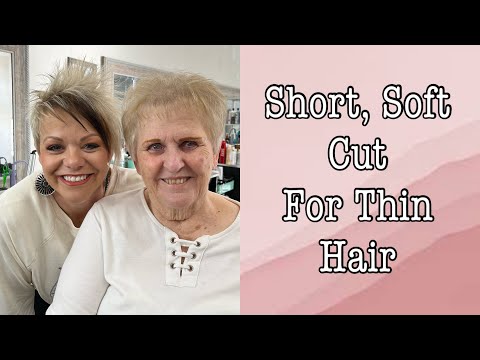
Shorten to where the perimeter reads fuller and the roots are easier to lift.
The key difference is how much perimeter remains around the ears, jaw and neckline—and how much crown lift comes from shortening the hair.
Choose it when easy root lift and a compact lower outline matter most.
Choose it when you want pixie lift with more side and face-framing softness.
Choose it when lower-edge density and more jaw/neck coverage matter most.
Fine hair describes strand diameter; thinning hair describes lower density. A short haircut can improve the appearance of fullness by changing the silhouette and reducing weight, but it should not remove density from sparse areas.
Bring one example with a similar starting density and another that feels too short. Then identify where you want softness and where you want lift.
The more tightly tapered the cut, the sooner regrowth becomes visible around the ears and nape.
| Short-hair family | Approx. trim window | Main advantage | Main tradeoff |
|---|---|---|---|
| Tight pixie | About 3–5 weeks | Fastest styling | Regrowth shows sooner |
| Soft pixie | About 4–6 weeks | Lift + flexibility | Fringe/crown lose balance first |
| Bixie / pixie-bob | About 5–7 weeks | Softness + lift | Can get bulky through sides |
| Short bob / one-length | About 6–8 weeks | Strong perimeter | Less automatic crown lift |
| Soft stacked short | About 5–7 weeks | Rounded back shape | Needs balanced graduation |
The Women Over 70 hub remains broader. Pixie, bixie and thin/fine-hair pages go deeper once you know which short-hair problem you are solving.
Use the age hub if you are still considering medium or longer styles.
Move deeper once you know whether you want pixie lift or bixie softness.
Use these when density or face framing matters more than the haircut label.
Linda's embed teaches volume. The style cards compare different short-hair shapes. The Most Popular section shows what RaDona's audience keeps choosing.
RaDona is a licensed cosmetologist and salon owner in Nephi, Utah who has worked behind the chair since 2000. This page uses real 70+ clients across multiple short-hair families rather than pretending every short haircut is the same pixie.
The featured Linda transcript also gives this page original styling evidence: even product distribution, blow-dry movement, brush sizing, haircut texture, controlled backcombing and a lighter finishing spray.
Density, perimeter, natural texture and maintenance preference are more useful decision factors than age alone.
Soft pixies, pixie-bobs, compact short bobs, soft stacked cuts and simple one-length short styles can all work well. The best option depends on density, natural texture, face framing and how much daily styling you want.
A soft pixie or simple compact short cut is often easiest day to day. A short bob can also be low maintenance if the natural fall and perimeter are designed well.
A soft pixie, pixie-bob or compact bob can create a fuller-looking silhouette when the perimeter and crown are handled carefully. Fine or low-density areas should not be aggressively thinned.
Yes, when the graduation is controlled. A soft stacked shape can move visual fullness toward the crown and back while keeping enough lower-edge density.
Yes. An undercut can work especially well on denser hair or for women who want a bolder, lighter outline. It can be less forgiving on low-density hair if too much weight is removed.
RaDona's September 2026 Linda video emphasizes even product distribution, movement while blow-drying, an appropriately sized round brush, texture in the haircut, controlled backcombing and a lighter hairspray.
Very short tapered cuts may need cleanup around 3 to 5 weeks. Softer pixies, pixie-bobs and compact bobs often fall around 4 to 8 weeks depending on growth and outline.
Bring a real-client video with a similar starting density and one example that feels too short. Discuss crown lift, ear coverage, fringe, neckline and how much perimeter you want to keep.
Start with Linda's embedded volume lesson, compare the 12 real-client short shapes, then move into the pixie, bixie or fine-hair page when you know which decision needs more detail.