
Exterior Length
The sides, fringe and lower perimeter stay long enough to frame the face, tuck behind the ears or retain a visibly soft outline.
Think: coverage
Visual weight: lower/outside
A Bixie combines a Bob-like exterior with Pixie-like internal layers. It usually keeps more length around the ears, sides and perimeter than a Pixie, while using shorter crown and interior layers to create more movement than a classic Bob.
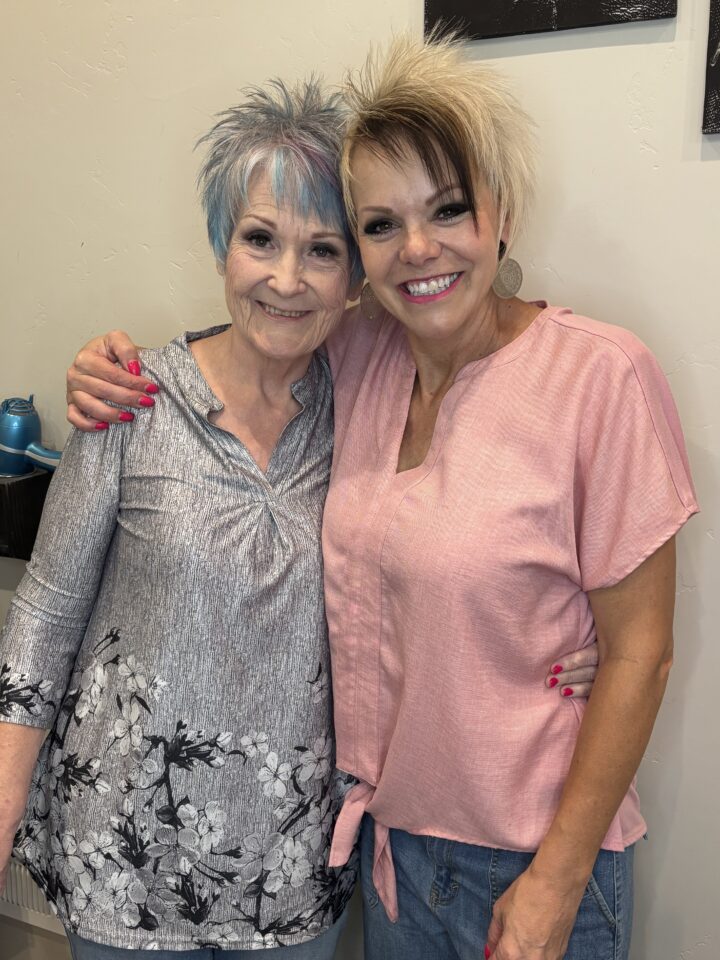
A true Bixie keeps enough exterior length to retain Bob-like softness while shortening the interior enough to create Pixie-like lift and separation.
A Bixie is a short haircut between a Bob and a Pixie. It keeps more length around the ears, sides and lower perimeter than a traditional Pixie, while using shorter internal layers through the crown and back to create more lift, texture and movement than a classic Bob. It is also commonly called a Pixie Bob.
The sides, fringe and lower perimeter stay long enough to frame the face, tuck behind the ears or retain a visibly soft outline.
Shorter layers through the crown and back remove weight from inside the shape so the haircut can lift, separate and move.
The outside remains softer and longer while the inside behaves like short hair. That contrast—not a single measurement—is what makes it a Bixie.
Salon terminology varies. A stylist may call the same cut a long Pixie, Pixie Bob, short layered Bob or Bixie. The structure is more useful than the name.
A Bixie needs shorter crown/internal layers. If everything falls at nearly one length, it is behaving more like a Bob.
Many Bixies keep pieces that cover part of the ear or tuck behind it. A closely cropped ear area pushes the shape toward Pixie.
The nape can be tapered, softly graduated or left longer. The exact choice determines whether the cut leans Pixie or Bob.
The Bixie usually keeps enough exterior hair that the lower silhouette still matters, even when it is soft or broken up.
That internal/exterior contrast is one of the clearest signals you are looking at a Bixie rather than a short Bob.
You are probably in true Bixie territory. If the perimeter dominates, lean Bob. If the exterior nearly disappears, lean Pixie.
Compare all three haircut familiesThe side and back reveal the proportions that separate a Bixie from a Pixie or short layered Bob. Bring multiple angles to your stylist.
Look at where the front ends: brow, cheek, mouth or jaw. Longer front pieces make the haircut read softer and more Bob-like.
This angle reveals the Bixie best. Ask whether the sides tuck, skim the ears or expose them, and where the perimeter sits relative to the jaw.
The back determines how compact, soft or graduated the cut feels. A tight nape reads more Pixie; a longer, fuller nape reads more Bob.
These are useful because the Bixie is not one fixed silhouette. Watch how much perimeter each woman keeps and how aggressively the crown is shortened.

Use this direction if you want Bixie movement but still want the sides and lower outline to feel substantial.
Watch the longer Bixie
The interior moves like short hair while enough exterior length remains to keep the haircut soft around the face.
Watch the transformation
Use this direction if the Bob-like length is less important than crown movement and a lighter overall silhouette.
Watch the shorter directionRaDona's full tutorial shows the hybrid mechanics. Watch the exterior length establish the Bob-like softness, then the shorter internal layers create the Pixie-like movement.
This is the most useful way to personalize the cut. Start with one of these three proportions, then adjust fringe, density and texture.
Longer sides, more lower-edge weight and a softer nape. The crown still has enough shorter layering to keep the cut from behaving like a classic Bob.
The exterior and interior are equally important: clear side/perimeter length plus visible crown movement and texture.
Shorter nape and sides with more focus on crown lift, but enough fringe or exterior length remains that it does not read as a close Pixie.
Texture tells you how the hair moves. Density tells you how much hair you can remove without making the perimeter look sparse.
Fine strands with plenty of overall density can often support stronger internal layering and more visible texture.
Bixie for Fine HairKeep more exterior weight and use fewer internal layers. Avoid aggressive texturizing through sparse temples or see-through ends.
Fine & Thinning HairInternal weight removal can help the Bixie move instead of expanding outward, but the perimeter still needs a deliberate shape.
Straight hair shows the cut clearly. Softer internal layering prevents the Bixie from looking like a blunt mini-Bob.
Waves can make the Bixie's internal layers visible with less styling. Leave enough length for the wave pattern to form.
A Bixie can work beautifully with curl, but the finished length and perimeter should be planned around the natural pattern and shrinkage. A stylist experienced with your curl type can tailor the shape.
The useful adjustments are concrete: crown height, side length, fringe, ear exposure and where the front pieces stop.
Shorter crown layers and a little more root lift can shift visual weight upward without cutting the sides as short as a Pixie.
Leave the front pieces closer to cheek, mouth or jaw level instead of taking the whole perimeter short.
Longer side pieces can tuck around frame arms; shorter sides put the glasses more fully on display. Bring your everyday frames to the consultation.
Side-swept, wispy or longer fringe can make the haircut feel softer and more Bob-like from the front.
Ear exposure changes the haircut dramatically. Tucking gives you the effect without requiring the sides to be permanently short.
A soft, longer nape reads more Bob-like; a compact tapered nape makes the same general haircut feel more Pixie-forward.
Age can change density, gray pattern, styling priorities and maintenance preferences, but it does not dictate whether you should wear a Pixie, Bixie or Bob.
A Bob-leaning Bixie can be a useful first step into shorter hair while preserving side and jaw length.
Bixies Over 50Adjust the crown for movement while keeping the perimeter deliberate if density has changed around the temples or sides.
Bixies Over 60Choose the version that fits your density, mobility, glasses and actual styling routine rather than following a rule about age.
Bixies Over 70Many Bixie wearers prefer reshaping around every six to eight weeks, but your best interval depends on how Pixie-like the lower shape is and how much change you are comfortable with.
The perimeter simply gets longer, so the haircut can move naturally toward a textured Bob.
The Bixie identity weakens when the short internal layers and longer perimeter start becoming the same length.
A tighter neckline and shorter sides make regrowth more visible, even if the crown still looks good.
Use this checklist before the first cut. A few extra minutes in the consultation can prevent the haircut from drifting too Bob, too Pixie or too thin.
The side and back reveal the ear coverage, nape and crown-to-perimeter relationship that actually define the cut.
“Bixie” covers a wide range. Decide whether you want the perimeter or the crown to dominate.
Texture should create movement without removing the visible perimeter the hair needs to look substantial.
A tight nape can make the haircut feel much shorter than expected; a longer nape can make it feel much more Bob-like.
Shorter layers reveal natural growth. Your stylist needs to know what happens when the hair dries without salon styling.
Your density, texture, routine and desired coverage matter more than whether you are 48, 62 or 78.
A short nape, fringe or highly textured crown may need reshaping sooner than a longer Bob-leaning version.
Use front, side and back images from hair that behaves similarly to yours whenever possible.
A real transformation shows starting density, how the layers are built and how the finished haircut moves—not just one flattering angle.
Use the real Bixie videos above“I want a Bixie that leans [more Bob / balanced / more Pixie]. Keep the nape [soft and longer / lightly tapered / short and compact]. I want the sides to [cover part of my ears / tuck behind my ears / sit above my ears]. Keep the front around [brow / cheek / mouth / jaw]. I want [soft / moderate / strong] crown layering, and my hair density is [high / medium / low]. I normally spend about [2 / 5 / 10+] minutes styling it.”
If your stylist and you agree on these seven variables, you can usually agree on the haircut even if you use different names for it.
Long, soft, tapered or close.
Covered, tuckable or exposed.
Brow, cheek, mouth or jaw.
Soft, moderate or strongly textured.
None, side-swept, wispy, curtain or piecey.
Where to preserve weight and where to remove it.
Air-dry, quick blow-dry or salon-polished styling.
Bring multiple angles or a full transformation video.
Know which areas will need trimming first and what the cut becomes if you let it get longer.
Choose the next page based on the decision you are actually trying to make.
Compare crown lift, perimeter, coverage, fine hair, glasses, maintenance and grow-out.
Compare all threeChoose the amount of layering by density so you get lift without see-through ends.
Bixie for fine hairUse the five-step daily routine for crown lift, perimeter placement and lightweight finishing.
Bixie styling tutorial
RaDona Ludlow is a licensed cosmetologist and Utah salon owner who has worked behind the chair since 2000. Her public video library includes Pixies, Bixies, Bobs, fine-hair transformations, gray-hair changes and age-specific short cuts on real salon clients.
That matters because the Bixie is a proportion haircut. A static inspiration photo cannot show you how much density the client started with, where the crown was shortened, how the nape was shaped or what the haircut looks like when the client turns her head. A real transformation can.
The short answers are here; the deeper sections above explain the why.
A Bob–Pixie hybrid: more exterior length than a Pixie, with shorter internal layering and more crown movement than a classic Bob.
Usually, yes. Stylists may use the terms differently, so describe the actual proportions you want.
Bixie generally keeps more side, ear and lower-perimeter length. Pixie is typically more closely cropped.
Full comparisonBixie has more internal shortening and crown movement; Bob generally keeps a stronger, more continuous lower perimeter.
Full comparisonYes, when layering matches density. Fine + thin hair usually needs more perimeter than fine + dense hair.
It can work at any adult age. Density, texture, coverage and styling preferences are more useful than age alone.
Many wearers prefer roughly six to eight weeks, with shorter Pixie-leaning versions often showing growth sooner.
Specify nape length, ear coverage, front length, crown layers, fringe, density and how much daily styling you will do.
Use the three-way comparison to decide whether Bixie is actually the right haircut family.
Pixie vs Bixie vs BobDo not choose it from the name alone. Decide how much perimeter, ear coverage, nape length and crown movement you want—then watch a real transformation with proportions close to yours.