

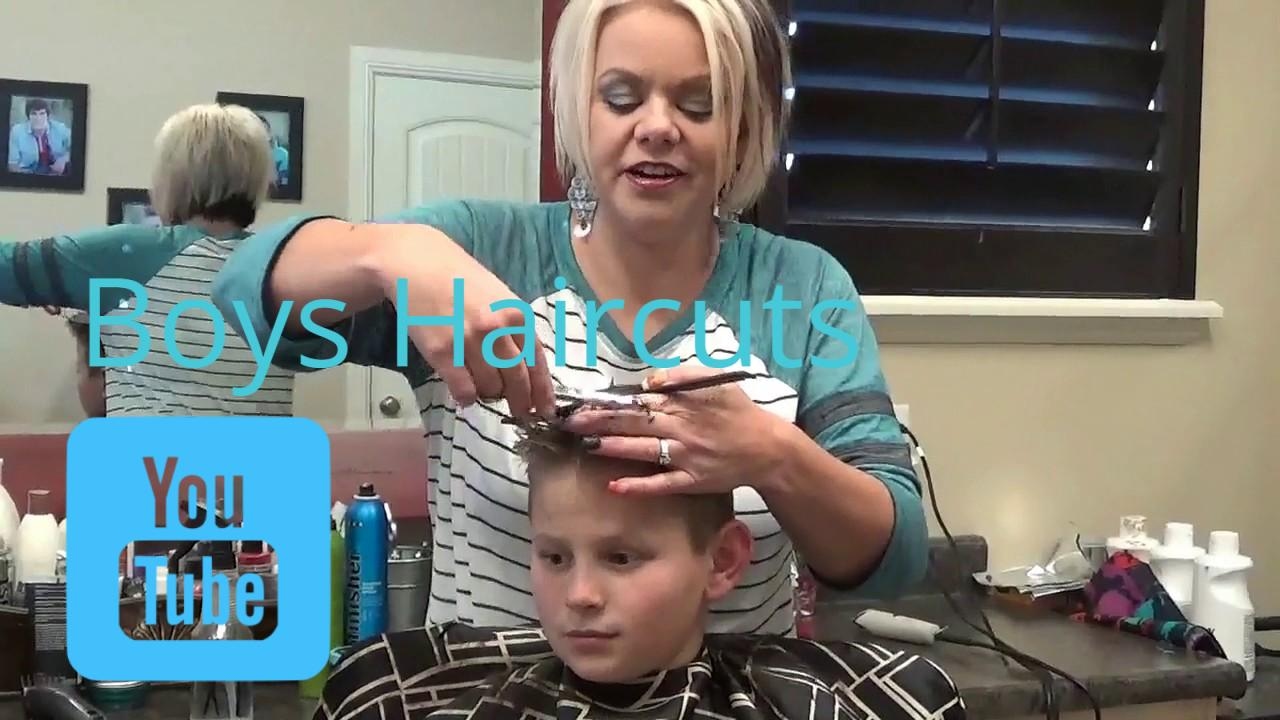
Watch: RaDona's Boys & Men's Haircut Tutorials
Both videos show the exact clipper and scissor technique this guide is built around — the first on a young man (short faded style), the second specifically on a boy. Watch before your first attempt at home.
The Complete Tool Checklist
You don't need everything on this list for your first haircut. The bold items are non-negotiable. Everything else can be added as your confidence grows.
Clipper Guard Reference — Know Before You Cut
Every clipper guard number equals 1/8" of hair length. Memorise this and every clipper haircut guide in the world becomes legible. The guard controls how much hair the clipper leaves after a pass.
Fade vs. Taper — What's the Difference?
Hair gradually gets shorter toward the neckline and sideburns — but never goes to skin or very close. A taper is a gradual reduction in length. The hair at the neckline is shorter than the hair at the top, but there's no dramatic jump between the two.
- ✓Easier to cut at home — more forgiving
- ✓Grows out more naturally
- ✓Conservative — works in any school/setting
- ✓Best starting point for home cutting
Hair blends from very short (often near-skin) at the bottom to longer at the top — with a defined transition zone. A fade is a high-contrast blend. The bottom is dramatically shorter than the top, creating the sharp contrast that defines the modern barbershop look.
- →Low fade: starts above the ear
- →Mid fade: starts at the temple
- →High fade: starts near the crown
- →Requires more technique to get right
Step-by-Step: Boys' Haircut at Home
This guide cuts the standard boys' short taper — short on sides and back, longer on top, cleanly blended. Master this and the fade variations become straightforward next steps.
- 1Prep — wash, damp-dry, cape upWash and towel-dry the hair to damp — not soaking wet, not fully dry. Damp hair lies flat and even, shows the true length, and cuts cleanly. Drape the cape and adjust the neck closure so it's snug but not tight. Oil the clipper blades once before starting. Have a distraction ready (tablet, favourite show) — younger boys will sit significantly stiller when occupied.
- 2Clip the sides — #2 guard, upward passesAttach the #2 guard. Starting at the nape on one side, move the clippers upward against the direction of hair growth in smooth, consistent passes. Work from the neckline up to where the sides naturally curve toward the top of the head — this is your stopping point. Work around both sides and the full back. Use the comb to lift sections as you go for consistency. Move steadily — hesitant passes create lines.
- 3Create the blend — #3 guard, flicking motionSwitch to the #3 guard. In the transition zone — where the #2 section ends and the longer top begins — work the clipper with an outward flicking motion rather than a full pass. Angle the clippers away from the head as you reach the top of the clipped section, flicking the end of the guard out so the tips barely graze the hair. This gradual blend is the taper. Work slowly around the entire head. Watch the primary tutorial video above — this motion is significantly clearer to see than to read.
- 4Scissor blend the transition lineAfter clipper blending, there's usually a remaining faint line at the transition point. Comb small sections upward with the fine-tooth comb and point-cut across the transition zone with scissors — cutting the tips that extend above the comb teeth. This scissor-over-comb step removes the last line and produces the polished blend. This is the step that most separates a home cut from a barbershop result. Take your time here.
- 5Cut the top — comb-and-scissors methodDampen the top with the spray bottle. Section front to back. Lift each section with the comb, hold firmly between two fingers, cut across — whatever extends above your fingers is removed. Move systematically from the front section to the back, keeping the amount lifted consistent. For a textured finish, angle the scissors at 45° (point-cut) rather than cutting straight across. This removes the blunt edge that makes boys' cuts look stiff rather than natural.
- 6Clean the neckline with the trimmerRemove all guards. Using the small trimmer (or the clipper blade-only), carefully clean the neckline. Follow the natural hairline growth — natural necklines curve or have a slight point. Do not draw a forced straight horizontal line higher up the neck; it looks artificial and grows out badly. Clean around both ears and along the sideburns. This step makes the entire cut look intentionally finished.
- 7Check the back, dry and adjustUse the hand mirror to check the back before removing the cape. Both sides should be even — the back is the section most likely to be slightly off and the one neither of you can see in the mirror during the cut. Blow-dry and check the true finished shape dry. Make any final scissor adjustments. Dust with the neck brush, remove the cape, check one final time. Done.
Boys' Haircut by Face Shape
| Face shape | Best style | Key detail | Avoid |
|---|---|---|---|
| Oval | Any — most versatile | Natural proportions flatter most cuts; experiment freely | Nothing strictly off-limits |
| Round | Taper or mid-fade with volume on top | Height at crown elongates; close sides reduce width | Close all-over buzz — maximises roundness |
| Square / wide jaw | Low taper; textured top; soft not sharp sides | Textured, slightly messy top softens angular features | Skin fade with hard shaved lines — draws attention to jaw |
| Long / oblong | Medium length sides; avoid extra crown height | Leave more width at the sides; shorter crown height balances | High fade + tall quiff — adds length to a long face |
| Heart (wide forehead) | Mid taper with textured fringe | Textured fringe reduces visual forehead width | Slicked-back no-fringe styles — fully expose wide forehead |

The Real Challenge: Keeping Boys Still
Technique is learnable in an afternoon. This part takes longer.
- Screen time is your best tool: A tablet propped at eye level showing a favourite show or game is the single most effective stillness strategy. Reserve it specifically for haircuts so it retains its value.
- Short sessions beat marathon attempts: For very young or wiggly boys, split the cut into two sessions — sides and back today, top and neckline tomorrow. Quality of result beats completion speed every time.
- Let him hold something small: A toy or snack in each hand gives fidgety energy somewhere to go that isn't the head.
- Work fast on the sections they dislike: Most boys are fine with clipper work but dislike the scissor-on-top section (the comb lifting feels odd). Know this and work efficiently through it.
- Same time, same place, same routine: Predictability dramatically reduces resistance. A standing Saturday morning appointment in the same chair with the same show becomes non-negotiable rather than a negotiation.
- Praise the result, not the sitting: Show him in the mirror and make a genuine fuss about how good it looks. Boys who feel the haircut payoff cooperate better next time.
Common Mistakes — and the Fix
When to Go to the Barber — and What to Tell Them
Home cuts work brilliantly for maintenance between barbershop visits. For the first cut establishing a new style, or for complex fade work, a professional is the right call. Here's exactly what to say when you get there:
- "#2 on the sides and back, fade to #4 through the transition
- "Low/mid fade — [point to the temple or above ear]
- "Scissors on top, leave [X] inches, textured not blunt
- "Follow the natural neckline — no straight line across
- +Bring a photo from this page or the tutorial videos
- ✓Establishing a new style from scratch
- ✓He wants a skin fade or high-contrast fade
- ✓School photo week, special event
- ✓You've had an "incident" and need a rescue
- ✓He wants complex line work or a hard part
Home Cut Maintenance Schedule
| Style | Full cut frequency | Neckline touch-up | Home vs barbershop |
|---|---|---|---|
| Short taper (#2 sides) | Every 4–5 weeks | Every 2–3 weeks | 100% home once technique is comfortable |
| Low/mid fade | Every 3–4 weeks | Every 2 weeks | Fade at barber, maintenance at home |
| High/skin fade | Every 2–3 weeks | Weekly | Barber — requires advanced technique |
| Longer scissor cut | Every 6–8 weeks | As needed | 100% home — most forgiving for beginners |
| Buzz cut (all one guard) | Every 3–4 weeks | Every 2 weeks | 100% home — easiest possible cut |