

Scalp anchor
Dutch Braid
The raised braid stays close to the scalp and gives excellent control around the face.
Watch tutorial →Volleyball hair needs to survive serving, diving, jumping, blocking and a long tournament day without constantly falling into the player's face. These 25 volleyball hairstyles combine RaDona's strongest braid, ponytail and bun techniques with options for short, medium and long hair.


The most secure volleyball hairstyles start with hair attached close to the scalp. Dutch braids, French braids and braided pigtails control the hairline before the loose length has a chance to move. If time is short, reinforce a ponytail or bun rather than simply pulling it tighter.
A braided ponytail is one of the easiest transitions from everyday hair into sports hair. The ponytail gives you speed. The braid controls the loose length so it does not whip, tangle or swing across the face during a rally.
Practice the technique before tournament morning, then adjust the height of the ponytail based on comfort and hair weight.
Each tutorial below comes from RaDona's established YouTube library. The images are standard YouTube thumbnails so older videos render reliably in WordPress.
The raised braid stays close to the scalp and gives excellent control around the face.
Watch tutorial →
Two braids distribute weight across both sides instead of pulling everything from one elastic.
Watch tutorial →
A strong option for thick or heavy hair because the weight is divided before the style reaches the nape.
Watch tutorial →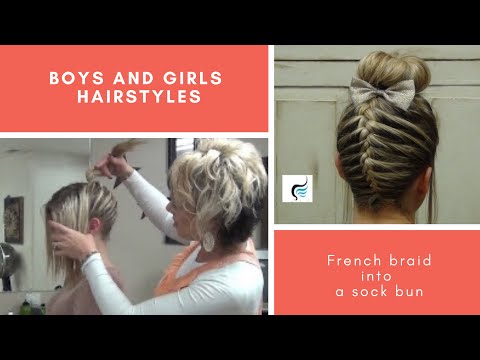
Anchor the scalp with a braid, then contain the long ends in a compact bun.
Watch tutorial →This keeper combines the strongest ideas from the volleyball pages being consolidated: long hair, quick styles, secure styles, tournament hair and accessories.
Best for: maximum scalp control. Excellent for diving, jumping and long tournament days.
Best for: players who want a ponytail while keeping the front and crown secured.
Best for: balanced tension. Two braids prevent all the weight from hanging from one point.
Best for: long hair. The braid anchors the roots while the bun contains the ends.
Best for: very long hair when you want nearly all the length off the neck.
Best for: speed plus control. Secure the ponytail first, then braid the loose length.
Best for: players who do not braid. Multiple elastics reduce swinging and tangles.
Best for: quick extra hold. Multiple anchor points help control layers and shorter pieces.
Best for: controlling the front without braiding the entire head.
Best for: getting long hair completely off the shoulders and neck.
Best for: a more detailed look while still containing the loose length.
Best for: players who want a braid-like effect without traditional braiding.
Best for: a fast two-section finish that keeps long ends together.
Best for: thick hair. Dividing the weight makes the style more comfortable.
Best for: players who find a high ponytail too heavy or uncomfortable.
Best for: shoulder-length hair. Secure the front and leave shorter back pieces alone.
Best for: layers around the face that escape a normal ponytail first.
Best for: medium hair. Control both temples before joining the hair in back.
Best for: short layers and flyaways around the forehead.
Best for: lighter practice days when you mainly need the front out of the eyes.
Best for: team spirit. Add permitted team-color elastics after the hairstyle is secure.
Best for: an easy coordinated team look without learning a new braid.
Best for: strong hold at the scalp with zero loose length at the finish.
Best for: distributing thick hair across two smaller anchor points.
Best for: lower-intensity practice days when comfort matters more than maximum hold.
Very long or thick hair becomes uncomfortable when the entire style pulls from one elastic. Braiding the roots first spreads the weight across more of the scalp.
Short hair usually needs control around the forehead and temples. Long hair needs control at the scalp and through the loose ends.
Use front braids, half-up Dutch braids or a soft headband.
Ponytails, pigtail braids, bubble styles and compact buns all work.
Secure the roots and braid or contain the loose length.
Use clean sections and secure hold without flattening every curl.

Multiple anchor points can help medium-length layers stay controlled.
Watch on YouTube →
Learn the basic bun first, then make the sports version tighter and more compact.
Watch on YouTube →Tournament hair has to survive sweat, long breaks, repeated matches and the occasional quick repair. Choose a style the player has already worn successfully before tournament morning.

Keep the tournament bag simple. A few reliable basics solve most between-match problems.
Always check the player's current team or league rules before using hard clips, decorative pins or other accessories during competition.


Team colors can be added with permitted soft elastics or other team-approved accessories after the braid or ponytail foundation is finished.
Do not sacrifice comfort or security just to add decoration. The hairstyle still has to survive the match.
These pages connect volleyball hair to the main sports hub, other sport-specific guides and the braid techniques used here.
The practical questions usually come down to hold, time, hair length and comfort.
Double Dutch braids, double French braids and braided ponytails are among the strongest choices because they secure hair close to the scalp before controlling the loose length.
A braided ponytail, bubble ponytail, triple ponytail or simple athletic bun can be quick once the technique is familiar. Practice before game day so the style is automatic.
Focus on the hairline. Half-up Dutch braids, a front braid, two small front braids or a soft headband can keep shorter pieces out of the eyes.
Detangle first, create an anchored braid whenever possible, use secure soft elastics and fix the front sections before warm-ups begin.
Choose a style that distributes tension, such as double Dutch braids, double French braids or a braid-to-bun style. Pack spare elastics for small repairs between matches.
Do not rely on extreme tightness. Divide heavy hair into braids, lower the ponytail or use two anchor points so the style is secure without pulling painfully from one spot.
Use RaDona's YouTube tutorials to practice when there is no game clock. Once the braid motion becomes familiar, game-day hair becomes faster, stronger and much less stressful.