
Pixie Haircuts for Women Over 70: Complete Guide to Styles, Cuts & Transformations
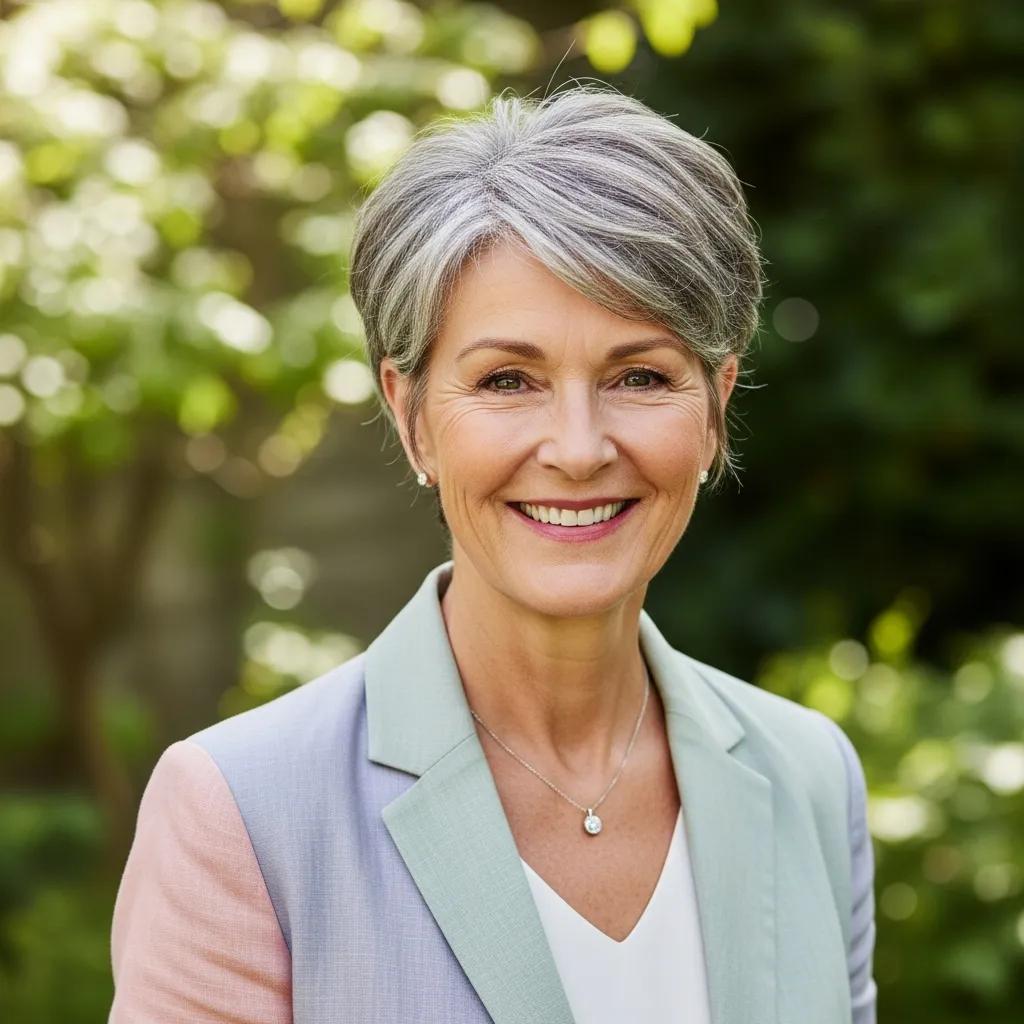
The pixie is the most flattering haircut for women over 70 — but only when it's cut for your specific hair texture, density, and face shape. Generic "go shorter" advice produces generic results. This guide walks through eight pixie variations chosen specifically for mature hair, with the exact terms to ask your stylist for. Five real client transformation videos are embedded — including Ellen's new look, Linda's classy pixie, Judy's textured cut, and Valerie's refresh. Every woman in these videos is in her 70s.
After 70, your hair has changed. The texture is different. The density is different. The way it holds shape, takes color, responds to heat — all different. And yet most "pixie for older women" articles online recycle the same advice that was written for 50-year-olds. After 25 years of cutting hair — including hundreds of pixies on women over 70 in my Utah salon — I can tell you what actually works after 70 is more specific than generic short-hair advice.
This guide is built around what I've learned from those clients. Eight pixie variations that flatter women in their 70s, grouped by hair density and texture. Five real client transformation videos — every one of them filmed in my chair, on a woman whose age is exactly the audience I'm writing for. A face-shape guide, the trim schedule that keeps the cut sharp, and the styling routine that takes three minutes a morning.
If you already know you want a pixie and just need to choose the variation, scroll to the style grid below. If you're still deciding whether a pixie is right for you, watch the first video — it's Ellen's complete transformation from longer hair to a soft, modern pixie. By the end of the video, the question usually answers itself.
Watch: Ellen's complete pixie transformation
Ellen came in nervous. She'd worn her hair the same way for decades and wasn't sure she was ready for a change. Forty-five minutes later, she walked out with the pixie she'd been quietly wanting for years. This is the video to watch if you're on the fence — Ellen's face at the end says everything.
Ellen's complete transformation — the kind of cut that takes ten years off without trying to look young. Notice the consultation at the beginning; it's the most important part of the appointment.
The 8 pixie variations that flatter women over 70
Grouped by what they're built for — fine hair vs. thick, soft texture vs. structured, easier styling vs. more shape. Each card tells you who it suits, with the exact phrase to use at your appointment.
The default, most-flattering pixie for women over 70. Layered for movement, with soft pieces at the front and a tapered nape. Works on most hair textures and face shapes. If you're unsure where to start, start here.
Heavily point-cut throughout so the hair sits in deliberately separated, piecey sections. The volume comes from the cut, not from styling. The best pixie for women whose hair has thinned with age — it creates the visual density that fine hair lacks.
Short on the sides and back, with longer pieces in the front swept across the forehead or to one side. The bangs frame the face and give styling versatility — wear them swept, parted, or pinned back. Works beautifully on every face shape.
Strategic short layers at the crown that lift the hair off the scalp, with longer pieces blending toward the front. Engineered specifically for the women whose biggest concern is "my hair lies flat." The shape is the volume.
Sharper than a classic soft pixie — tapered close at the nape and around the ears, with more definition at the silhouette. Reads as deliberately modern and architectural rather than soft and rounded. Beautiful on women with strong features.
Same cut as any of the above, but styled to highlight natural silver or gray hair. After 70, embracing your color (instead of fighting it monthly) is often the most stylish choice. A great cut makes silver hair look intentional and elegant — not "let go."
For women whose hair has natural curl or wave — cut to work with the texture, not fight against it. Cut dry, not wet, so the stylist sees how each curl actually falls. Skip thinning shears entirely.
A hybrid for women who aren't quite ready for a full pixie. Slightly longer than a classic pixie — sits above the jawline — with face-framing pieces in the front. The gateway pixie. Easy to transition into a shorter cut later if you decide you want to.
Watch: Judy's textured pixie
Judy's transformation shows the textured pixie (#2 above) in action — the cut for women whose biggest concern is hair that's gone thin or fine. Notice how the cut itself is what creates the appearance of fullness. No product is doing the heavy lifting here.
Judy's textured pixie — the cut that solves "my hair feels thin." Volume from structure, not from product.
Watch: A classy pixie for women over 70
Linda's cut shows the classic soft pixie (#1) — the most-flattering starting point for most women over 70. Watch the consultation, the cut, and the styling. Notice how little product is involved at the end — a well-cut pixie doesn't need much.
Linda's pixie — proof that the classic soft pixie is timeless. Cut once, styled in three minutes, walks out looking ten years younger.
Which pixie suits your face shape?
After 70, face shape matters more than ever. The features have settled into themselves; the right cut frames them, the wrong cut emphasizes what you'd rather not emphasize. Here's the cheat sheet:
- Oval face — the most flexible. Almost every pixie on this list flatters an oval face. Choose based on hair density and texture.
- Round face — go with cuts that add vertical height: layered with crown volume (#4), textured (#2), or pixie with long swept bangs (#3). Avoid full, rounded shapes that emphasize roundness.
- Square jaw — go with softer, layered cuts: classic soft pixie (#1), silver/gray pixie (#6), curly pixie (#7). Avoid sharply tapered cuts that emphasize angular features.
- Heart-shaped face — go with cuts that add weight at the chin and softness at the temples: pixie-bob (#8), pixie with longer bangs (#3). Avoid very tight tapers that emphasize a narrower chin.
- Long face — go with cuts that add horizontal weight and don't lengthen further: classic soft pixie (#1), pixie-bob (#8). Avoid layered pixies with significant crown height that lengthen the face.
- Diamond face — go with cuts that frame the cheekbones: pixie with longer bangs (#3), classic soft pixie (#1), textured pixie (#2). Avoid sharply tapered cuts that emphasize the cheekbones.
Real results: pixie transformations from the chair
Two more transformations from the salon — both women in their 70s, both showing the kind of result a well-cut pixie delivers. These are the photos to bring to your appointment if you want a sense of what's possible.
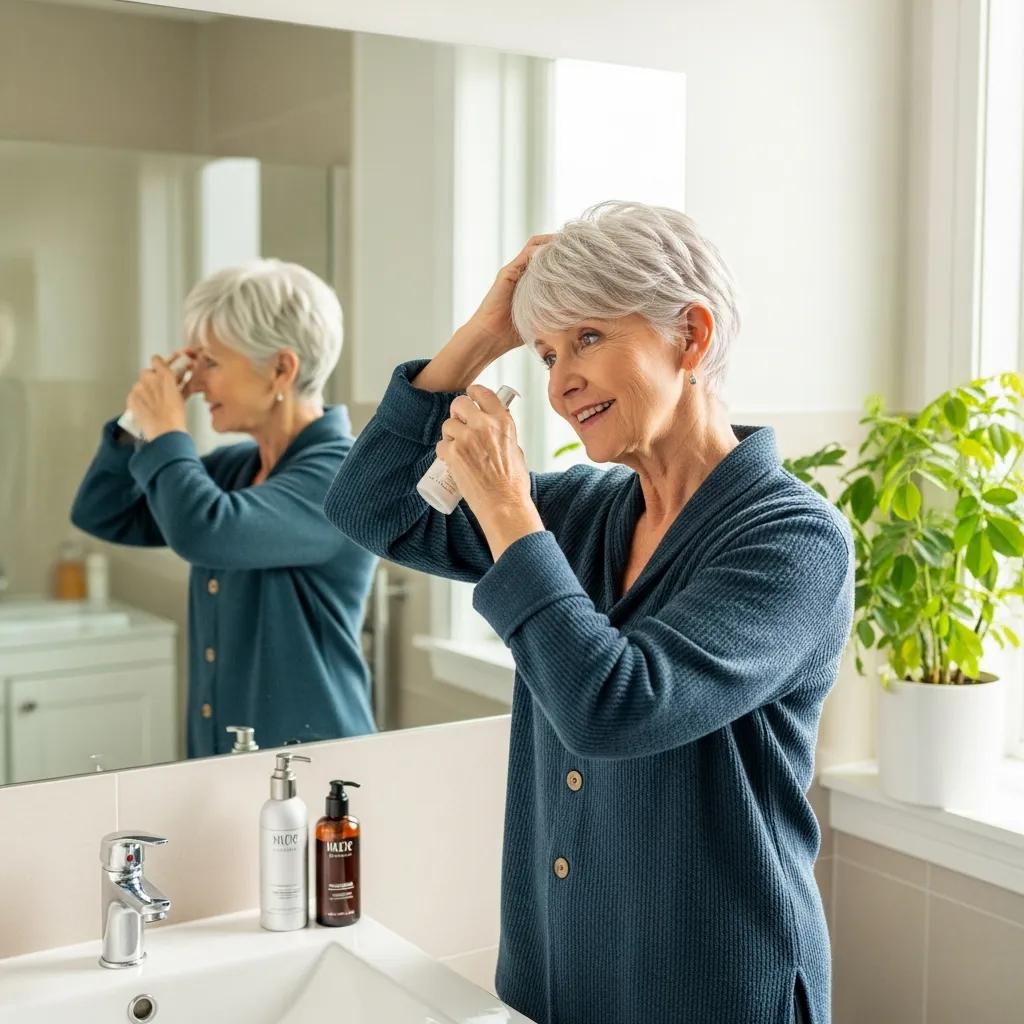
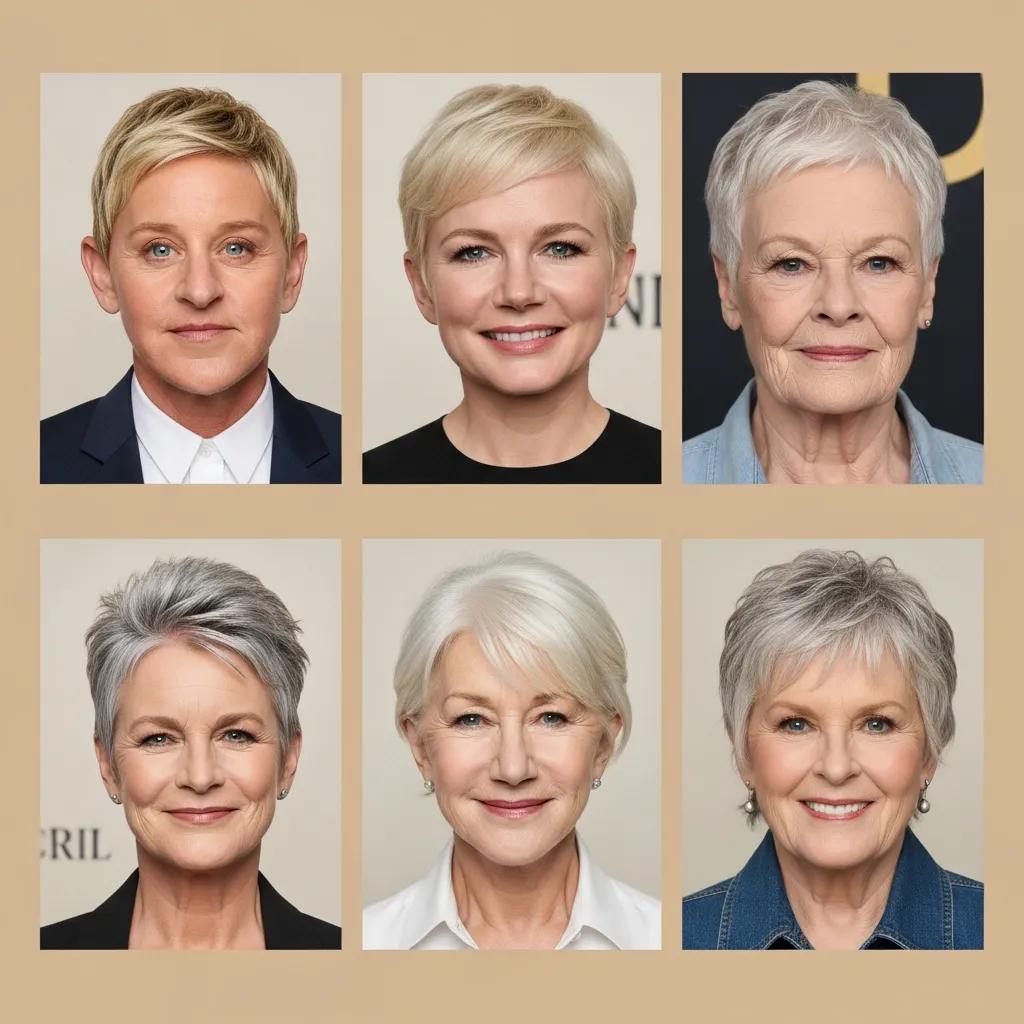
Real client styling routines — three to five minutes from start to finished cut. The shape is doing the work.
Watch: Another pixie transformation
One more transformation to round out the visual library. The technique here is the soft pixie with subtle layering — what I cut more than any other style for first-time pixie clients in their 70s.
Another over-70 transformation — same foundational technique, different client, different result. The cut adapts to the person.
The 3-minute morning routine
A well-cut pixie shouldn't need more than three minutes in the morning. Here's the exact sequence I teach clients before they leave the salon:
- Wash with a volumizing shampoo — every other day, not daily. Daily washing strips natural oils and makes mature hair look duller.
- Towel dry gently — don't rub. Squeeze. Rubbing creates friction that breaks fragile mature hair.
- Apply a small amount of lightweight mousse at the roots. A golf-ball-sized amount, worked through with your fingertips.
- Blow-dry with a round brush — lift the roots at the crown for volume, smooth the ends down. 60–90 seconds is plenty for a pixie.
- Finish with a light texture spray — only at the top and crown, not on the sides. Set with a small mist of flexible hairspray if your style needs hold.
Products that actually work for mature pixies
- Volumizing mousse — at the roots specifically, golf-ball sized
- Lightweight texture spray — for piecey definition without heaviness
- Flexible hairspray — light hold, brushable, doesn't crunch
- Sulfate-free shampoo — gentler on color-treated and aging hair
- Heat protectant — every time you use heat, no exceptions
- Heavy pomades or waxes — flatten fine mature hair
- Daily flat-ironing — damages already-fragile strands
- Hairspray with crunch — looks dated, snaps fine hair
- Daily washing — strips oils, leaves hair dull
- Thinning shears on the ends — already-fine hair doesn't need to be thinner
The trim schedule that keeps a pixie sharp
Pixies depend on shape, and shape softens fast. The single biggest reason a pixie "stops looking good" is going too long between trims. The cut grows out of itself in 6 weeks.
- Every 4–5 weeks for tapered (#5) and textured (#2) pixies — the structure is what makes them work, and that structure is the first thing to go.
- Every 5–6 weeks for classic soft (#1), layered (#4), silver/gray (#6), and curly pixies (#7).
- Every 6–8 weeks for pixie-bobs (#8) and pixies with long bangs (#3) — the longer pieces buy you a little more time.
If you can't get in for a full cut, ask for a "shape trim" — a 10-minute appointment where the stylist just cleans up the nape, ears, and any front fringe. Many salons offer this for under $25, and it makes the cut look freshly-done for an extra 2–3 weeks.
Watch: Valerie's refresh cut
One final transformation — Valerie's refresh shows what a "shape trim plus minor restyle" looks like in practice. The cut wasn't a major change; it was a polish. Many of my best appointments are these — small changes that make a huge visual difference.
Valerie's refresh — sometimes the best cut isn't a transformation, it's a polish. A trained eye, sharp shears, and 30 minutes.
I'm filming more pixie transformations in the salon every week — different ages, different hair types, different starting points. Subscribe to be notified when each one goes live. 180,000+ subscribers already get the new videos every week.
▶ Subscribe Free on YouTubeFrequently asked questions
For most women over 70, the classic soft pixie (#1 above) is the safest, most-flattering starting point. It's layered for movement, softer at the front, and tapered at the nape — three qualities that work on nearly every face shape and hair density. From there, you can adjust toward more texture, more length in the front, or more structure depending on your specific features.
Only if it's cut harshly. Modern pixies for women over 70 are layered, soft, and feminine — nothing like the stark, geometric pixies of decades past. The right pixie softens your features, doesn't sharpen them. Bring an inspiration photo of a soft, layered pixie to your appointment, and tell your stylist explicitly: "I want this soft, not harsh." Most stylists will adjust their technique to match.
The opposite. A pixie removes the wispy, see-through ends that make fine hair look thin from a distance. A textured or layered pixie (#2 or #4 above) builds structural fullness into the cut itself — most women whose hair felt thin going in are surprised by how much fuller it looks going out. The volume isn't from product; it's from the cut.
Go shorter than feels comfortable. Almost every first-time pixie client comes back for the second appointment and asks me to take it shorter — because once they see what the cut does, they want more of it. A classic soft pixie (#1) feels really short in the chair but looks exactly right once the hair settles. You can always grow it out; you'll almost never wish you'd gone longer.
Absolutely — but ask your stylist to cut the pixie dry, not wet, so they can see how each curl actually falls. A wet curl looks twice as long as a dry one. Skip thinning shears entirely on natural curl. A curly pixie (#7 above) shows off your natural texture beautifully and requires almost no styling — wash, scrunch, air-dry, done.
Every 4–6 weeks for most pixies. The shorter and more structured the cut, the more often. A textured or tapered pixie needs 4–5 weeks. A classic soft or pixie-bob can stretch to 6–8 weeks. Going 10+ weeks between trims is the most common reason a pixie "stops working" — it loses its shape and starts looking like a grow-out.
Not when it's cut right. The right pixie for your face actually takes years off — not by trying to look young, but by removing length and weight that drag your features down. Look at every woman in the videos above. Every one of them looks fresher and more current going out than going in. That's the cut doing its job.
Ellen-Inspired Pixie Haircuts for Women Over 70: Styling & Care Tips
The pixie is the most flattering haircut for women over 70, and the right one for you depends on three things: your hair texture (fine vs. thick), your face shape, and how much time you want to spend styling each morning. The eight variations above cover roughly every situation that walks into my chair.
If you're stuck choosing, the safe default is a classic soft pixie (#1) — it works on most face shapes, suits most hair textures, and reads as flattering without being trendy. From there, you can adjust toward more texture, more length in front, or more structure once you've lived with the cut and know what feels right.
The hardest part isn't the cut itself. It's the decision to make the appointment. After 25 years and hundreds of pixies on women over 70, I can tell you: almost no one regrets it. The regret is always about how long they waited.