
What Actually Changes About Hair in Your 40s
Four genuine shifts — each with a clear, practical response that makes more difference than any product.
Oestrogen levels begin changing in the 40s and fine hair gets finer at the root where new growth emerges. The fix isn't volumising shampoo alone — it's the cut. The right haircut creates structural volume that no product can replicate. Layers, a bob, a lob all work with the structure of the hair rather than against the physics of thinning strands.
Straight hair develops wave. Wavy hair either intensifies or loses definition. Curls change pattern. This is hormonal and completely normal — but it means the cut and products that worked at 35 may now actively fight your hair's new texture. The correct response: find out what the hair actually wants to do now, then cut and style with that rather than against it.
For most women the first serious grays arrive in the 40s — at the temples, through the part line, scattered through the crown. This is the decision point: cover completely, blend strategically, or begin the transition. Each is valid. This guide covers the blending strategy — the one that buys time, looks intentional and keeps appointment frequency manageable.
Facial structure shifts in the 40s — softening around the jaw and cheeks. The hairstyles most flattering at 30 may now be doing the face no favours. Face-framing becomes the central principle: which length and layers make the most of your cheekbones, direct attention to your eyes, and create the most flattering silhouette for your face shape today.
Watch: RaDona's Tutorials for 40s-Relevant Styles
Two tutorials that directly address the most-requested techniques — the face-framing braid that elevates any length, and the wavy hair guide that unlocks the soft texture many women develop in this decade.
The Central Question: Lob vs. Long After 40
The most common question RaDona hears from women in their 40s: "Should I keep my long hair or cut it?" Her honest answer.
- ✓Your hair is still thick and healthy at the ends — not thinning or splitting significantly past the shoulders
- ✓You genuinely use the length — braids, updos, ponytails. If it just hangs down every day, it's not earning its maintenance cost
- ✓Your daily routine is sustainable — you have the time and energy to style long hair properly, not just tie it back
- ✓You've added face-framing layers — long flat hair past the shoulders tends to drag the face downward. Layers change this completely
- ✓The ends are thin, dry, or damaged — a lob removes exactly those ends and reveals the healthier hair underneath
- ✓You're wearing it up every single day — the length isn't working for you if it only ever lives in a ponytail
- ✓Your face feels like it needs more framing — the lob's shorter front pieces do this in a way longer hair cannot
- ✓You want less morning effort — the lob is the most flattering low-maintenance choice for the 40s
The 6 Most Flattering Styles for Women Over 40
The long bob at collarbone length is the single most requested style in RaDona's salon for women entering their 40s. It removes the damaged ends that fine mature hair accumulates, creates structure and face-framing length that flat long hair can't produce, and styles in under 10 minutes. Versatile enough for a half-up, a braid, or a loose wave.
The face-framing element is non-negotiable: slightly longer pieces at the front that skim the cheekbones and frame the jaw. This is what makes it flatter rather than simply being shorter long hair. Full technique: Perfect Bob Guide.
"Lob at the collarbone with face-framing layers — front pieces longer than the back, point-cut throughout. I want movement at the ends, not a blunt line."
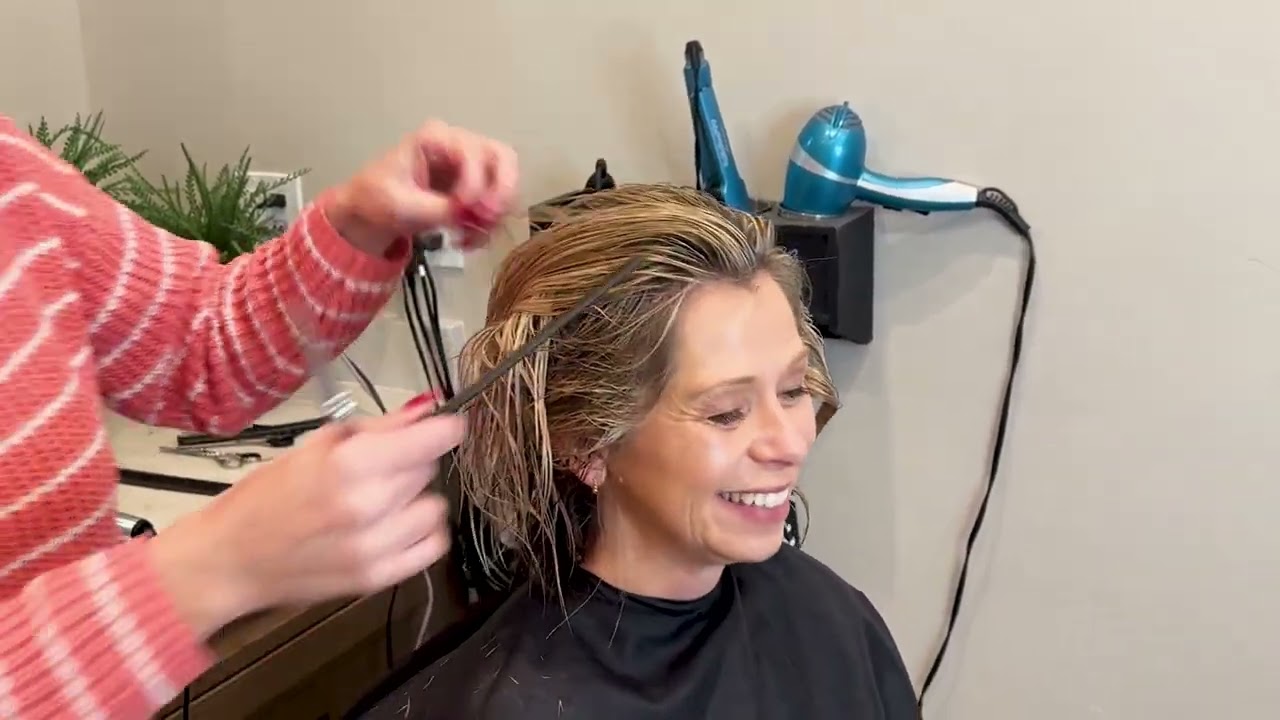

For women who want to keep their length: the transformation isn't shorter hair — it's layers. Face-framing layers starting at the cheekbone remove the visual drag that flat long hair creates on a changing face, add movement to the mid-lengths, and make the same length look dramatically more intentional.
A curtain fringe or the longest layer starting at chin level breaks the flat line of long hair and creates a face-framing shape that reads as styled rather than grown out.
"Keep the length but add face-framing layers starting at the cheekbone — graduated toward the back. Point-cut everything. I want movement, not weight."
The jaw-length bob with interior texture layers is the volume solution for fine hair in the 40s that no product can replicate. Internal layers remove weight from the mid-section while the perimeter stays full — hair sits off the head with body rather than lying flat. Point-cut ends give a natural, textured finish that grows out cleanly over 6–8 weeks.
Styling: rough-dry with fingers for root lift, one pass of a round brush at the ends, light cream through mid-lengths. Under 8 minutes. Full guide: Perfect Bob Guide.
"Jaw-length textured bob — internal layers to remove weight, perimeter kept full. Point-cut throughout. Fine hair — I need volume without losing density at the edges."

The curtain fringe — a long, centre-parted fringe that falls either side of the face rather than across the forehead — is one of the most flattering additions for women in their 40s. It softens the forehead, draws the eye to the eyes rather than above them, and works at every length from lob to shoulder.
Combined with a lob, the curtain fringe is arguably the single most universally flattering look for women in their 40s — at every face shape and hair type. Styling: blow-dry outward and slightly under with a round brush. 90 seconds.
"Curtain fringe — long, centre-parted, point-cut, falls to the cheekbone either side. Not blunt across. Combined with a lob at collarbone with face-framing layers."
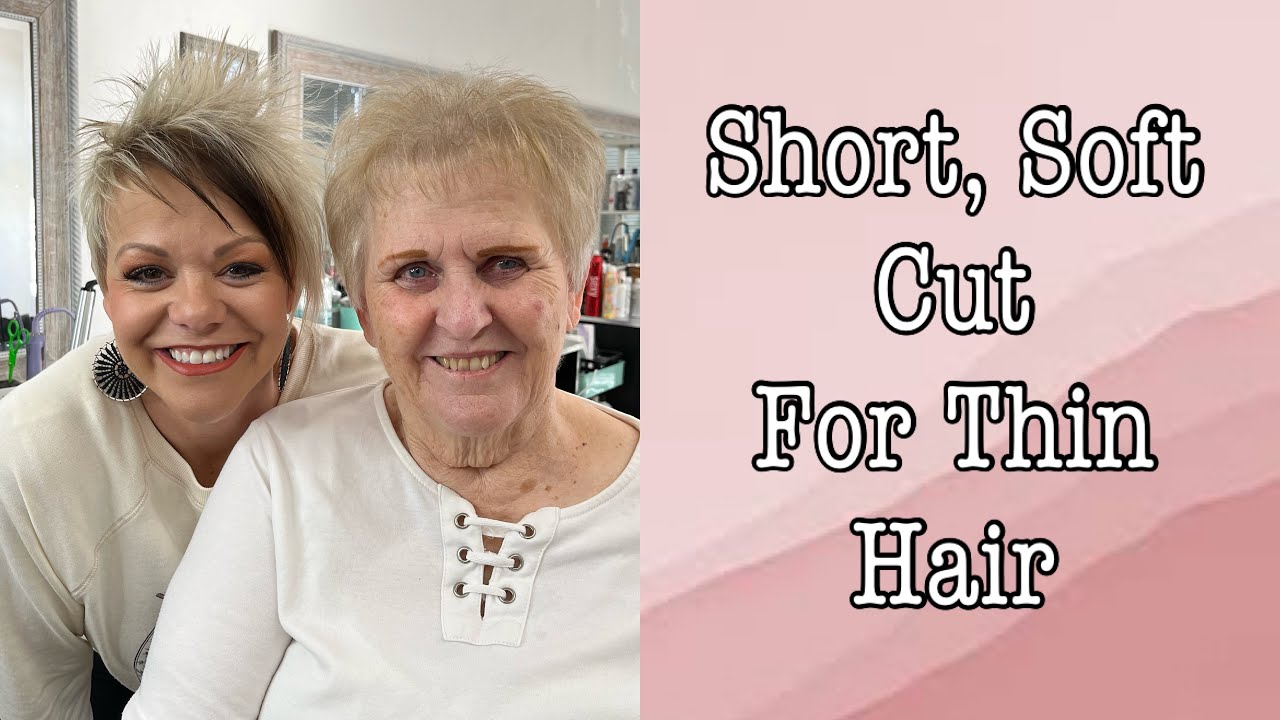
For women in their 40s who are ready for the boldest move: the soft pixie. Not a severe crop — a soft, textured short cut with slightly longer pieces at the temples and crown, a razor-finished neckline, and enough length at the top for volume and versatility. The 40s are actually the ideal decade for the first pixie — the face has the definition to carry it, and the reduction in daily styling time is immediately obvious.
Routine: mousse on damp hair, diffuse or rough-dry, fingertip of clay on the crown pieces. 5 minutes. Full guide: Pixie Haircuts and Pixie for Older Women.
"Soft pixie — longer at the temples and crown, textured not slicked, point-cut throughout. Razor-finished neckline following the natural hairline. I want movement, not a helmet."
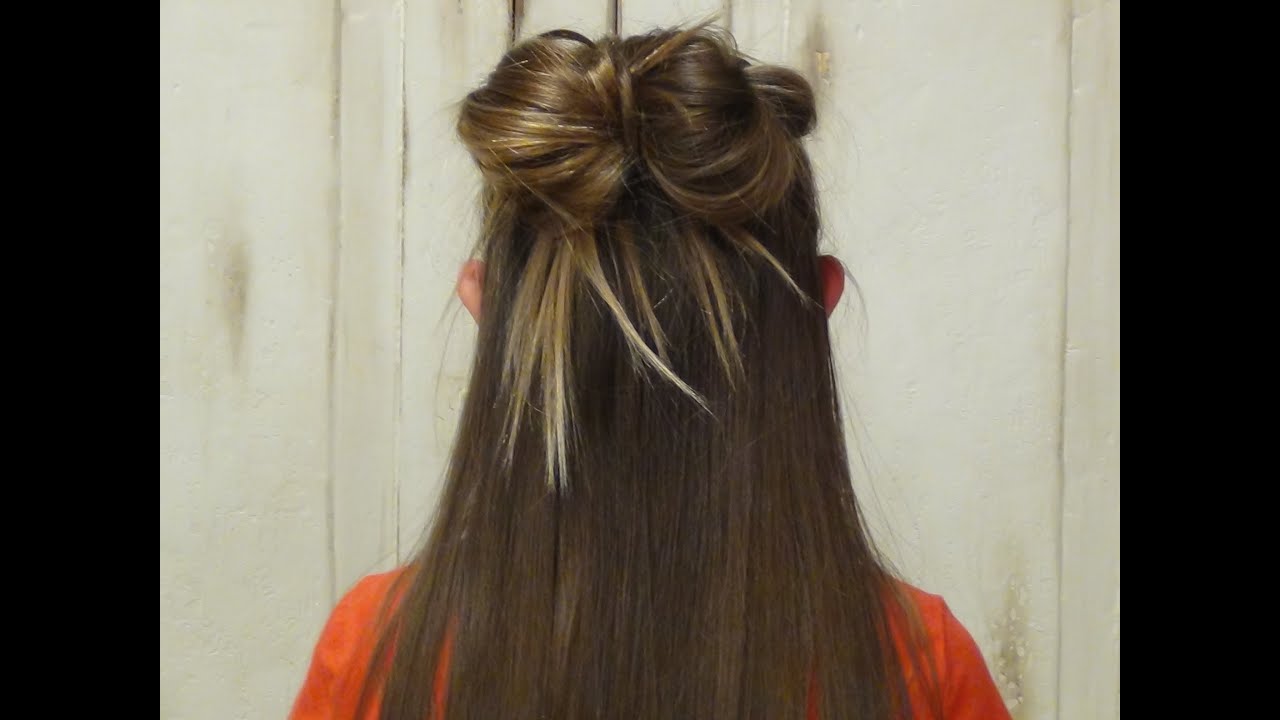
If your texture has developed a natural wave in your 40s, working with it rather than against it is both the most flattering and the most practical choice. Wave and curl at lob length — enhanced with the right products and cut to encourage the pattern — produces a beautifully individual result that straight styling could never replicate.
The key: products go on soaking-wet hair, diffuse on low, hands off while drying. Full guides: Wavy Hair Tutorial and Curly Hair Tutorials.
"Cut to work with my natural wave — please cut dry or after diffusing. Curl-by-curl shaping, point-cut. I want to work with this texture, not fight it every morning."
Face Shape Guide for Women Over 40
| Face shape | Best style | The 40s-specific consideration | What to ask for |
|---|---|---|---|
| Oval | Any — curtain fringe lob standout | Natural proportions; the lob with curtain fringe is most versatile | "Lob, collarbone length, curtain fringe, face-framing layers" |
| Round | Lob with longer front; layers with crown volume | Softening around the jaw means round faces benefit more from length and height now | "Lob, longer in front, crown volume, no full horizontal fringe" |
| Square / angular jaw | Layered lob; curtain fringe; soft waves | Soft layering and wave texture reduce angularity that can increase visually in the 40s | "Layered lob, curtain fringe, soft textured ends — nothing with hard lines" |
| Heart (wider forehead) | Curtain fringe lob; face-framing at the jaw | The curtain fringe is the most effective forehead-narrowing tool for the heart face at this age | "Curtain fringe, jaw-length layers, lob or bob" |
| Long / oblong | Lob with soft wave; side-width layers; avoid extra height | Slight forehead softening means the long face benefits from width, not additional length | "Lob with soft layers for width, fringe, no extra crown height" |
| Diamond | Lob with volume at sides; soft layers at jaw | Jaw-area width creates balance the narrower lower face needs as it softens | "Lob, soft side layers, jaw-length front pieces — width at the sides" |
First Grays: The Three Strategies — Honestly Assessed
Covers grays completely with permanent colour. Most effective at hiding grey. Highest maintenance — roots visible every 4–6 weeks. Commitment increases as grey coverage increases. Good choice if grey bothers you significantly and you'll maintain the schedule.
RaDona's most recommended approach for women in their 40s. Fine highlights placed to blend with emerging grey rather than contrast against it. As roots grow in, new grey merges with the highlight rather than creating a harsh two-tone line. Looks natural at every stage. Appointment every 10–16 weeks.
Stopping colour and allowing natural grey to grow through. The transition (6–18 months) is the challenge — grey-blending highlights smooth the process. Once fully grey: purple shampoo weekly, deep conditioning. Often looks extraordinary. Zero ongoing colour cost.
The 40s Salon Communication Script
The gap between a good haircut and a great one is almost always the conversation before scissors touch your hair. These exact phrases communicate the specific concerns of a woman in her 40s.