web analytics
The Pixie Haircut Hub

Pixie Haircuts Find the version that fits your hair, face and life.

“Pixie” describes a family of short haircuts, not one single shape. A soft classic pixie, choppy textured pixie, long pixie, curly pixie and asymmetrical pixie can look completely different. Start with what you want the haircut to do, then see RaDona create the same ideas on real salon clients.

Classic Textured Long Pixie Fine Hair Curly Asymmetrical
Choppy textured pixie haircut styled by RaDona Ludlow
Choppy Pixie · 3M+ views One of RaDona's most-watched pixie styles
Built from real pixie cuts — not a stock-photo gallery. Compare the shape here, then watch RaDona cut and style real clients.
YouTube 234K subscribers
Channel 97M+ lifetime views
Library 1,500+ public videos
Experience 25+ yrs behind the chair
Start with your goal

Why are you considering a pixie?

The answer usually points toward the right variation faster than choosing from dozens of inspiration pictures.

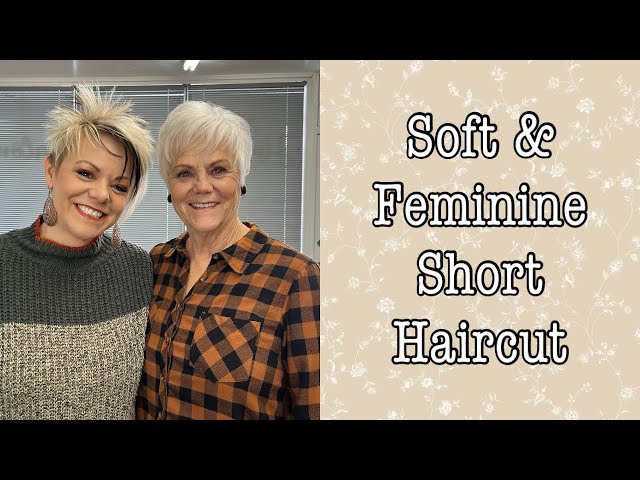
Soft pixie haircut transformation on mature woman
First pixie

Soft Classic Pixie

The safest starting point when you want to go short without looking severe or overly edgy.

Ask for: soft layers, a tapered neckline and enough length around the front to frame the face.
See the classic pixie
Choppy textured pixie haircut
More texture

Choppy Pixie

Piecey separation gives short hair energy and prevents the silhouette from feeling too polished or uniform.

Ask for: point-cut layers through the top with piecey definition and softer sides.
Watch the choppy pixie
Short bob to pixie haircut transformation
Not ready to go very short

Long Pixie

Keep more front and top length while still gaining the lighter, shorter feel of a pixie.

Ask for: pixie length through the back with extra length around the front and crown.
Pixies with longer bangs
Curly pixie haircut on older woman
Natural texture

Curly Pixie

The goal is to release the curl pattern, not cut a straight-hair pixie and hope curls cooperate afterward.

Ask for: a pixie designed around your natural curl pattern and shrinkage.
Curly pixie guide
Short asymmetrical pixie haircut
Bold + modern

Asymmetrical Pixie

Different lengths from side to side create a stronger, more directional short haircut.

Ask for: a shorter side with intentionally longer top or fringe sweeping toward the opposite side.
Asymmetrical pixie guide
Pixie haircut for fine hair on woman over 60
Fine + flat hair

Fine-Hair Pixie

Removing unsupported length can make crown lift easier and create a stronger overall silhouette.

Ask for: controlled crown layers and minimal thinning through already-fine ends.
Fine-hair pixie strategy
The pixie family

12 types of pixie haircuts — and what makes each different.

The important differences are length, texture, fringe, taper and how much structure the cut creates at the crown.

01 · Universal starting point

Classic Soft Pixie

Softly layered through the top, tapered around the nape and ears, with gentle pieces around the face.

Best for: first-time pixie clients and most face shapes.
02 · Texture

Choppy Pixie

Point-cut or textured layers create visible separation through the top rather than a smooth finish.

Best for: modern, casual styling.
03 · Crown lift

Layered Pixie

Short strategic layers move the visual weight upward and give the crown more shape.

Best for: flatter hair and clients wanting more lift.
04 · Versatility

Pixie With Longer Bangs

Short back and sides with extra fringe length that can sweep, part or tuck.

Best for: face framing and styling variety.
05 · Gateway pixie

Long Pixie

Longer than the classic version around the crown and front, but still clearly shorter than a bob.

Best for: nervous first-time pixie clients.
06 · Hybrid

Pixie-Bob

Keeps additional length around the ears, jaw and front while maintaining a cropped back.

Best for: women deciding between pixie and bob.
07 · Bold

Asymmetrical Pixie

One side is deliberately shorter while length travels diagonally across the top or front.

Best for: statement haircuts and strong personal style.
08 · Clean silhouette

Tapered Pixie

Close through the neckline and around the ears with more length reserved for the top.

Best for: clean structure and easy styling.
09 · Energy

Spiky Pixie

Shorter layers through the crown are styled upward or outward for deliberate separation.

Best for: short hair with personality and stronger texture.
10 · Natural texture

Curly Pixie

Shaped around natural wave and curl instead of relying on daily straightening.

Best for: naturally curly and wavy hair.
11 · Density

Fine-Hair Pixie

Keeps enough structure at the perimeter while removing length that pulls the crown flat.

Best for: fine or lower-density hair.
12 · Natural color

Silver / Gray Pixie

A modern pixie shape designed to showcase natural silver rather than treating gray as a limitation.

Best for: gray transition and naturally silver hair.
Go deeper

Already know your pixie direction? Use the dedicated guide.

The parent hub helps you choose. These child guides handle the detailed face-shape, styling and salon questions.

Versatile

Pixie With Longer Bangs

Compare longer-fringe variations and different ways to sweep, part and style the front.

Long-bang pixie guide
Bold

Asymmetrical Pixie

Move from subtle asymmetry to a much stronger side-to-side contrast.

Asymmetrical guide
Natural texture

Curly Pixie Haircuts

Learn how pixie length interacts with curls, waves, shrinkage and natural movement.

Curly pixie guide
Decision guide

Pixie vs. Bob

Compare styling time, grow-out, face framing and how much length each haircut preserves.

Compare pixie vs. bob
Fine hair

Best Haircuts for Fine Hair

Go beyond pixies and compare the volume advantages of pixies, bobs and other fine-hair shapes.

Fine-hair guide
Mature hair

Pixie Haircuts for Older Women

Focus on mature texture, face framing, volume and practical maintenance.

Older-women pixie guide
Pixie hairstyle for mature woman with fine hair
Pixie haircuts for fine hair

Shorter can create more visible structure — if you preserve density.

Fine hair does not automatically need to be cut short, but a pixie can remove length that pulls the roots flat and move the visual focus upward.

The important part is resisting the urge to aggressively thin hair that is already fine. Shape and controlled layering should do the work.

Keep crown layers strategic: enough to create lift without making the top transparent.
Preserve the perimeter: fine hair often benefits from stronger edges.
Use less product: heavy waxes and oils can collapse volume.
Longer fringe: can preserve softness without adding weight everywhere.
Thinning hair: significant or sudden loss deserves medical evaluation rather than simply a shorter cut.
Real pixie transformations

See six very different pixies on real people.

The videos show far more than a finished photograph: starting length, density, cutting technique, styling and how the final haircut moves.

Choppy pixie haircut styling transformation ▶
Choppy + textured

RaDona's 3M+ View Choppy Pixie

A strong example of how piecey separation changes a basic short haircut into something much more modern.

Watch the haircut
Pixie transformation for woman over 60 ▶
Mature hair · transformation

The Pixie Seen by Millions

A powerful example of how shorter length changes crown shape, neckline and face framing.

Watch the transformation
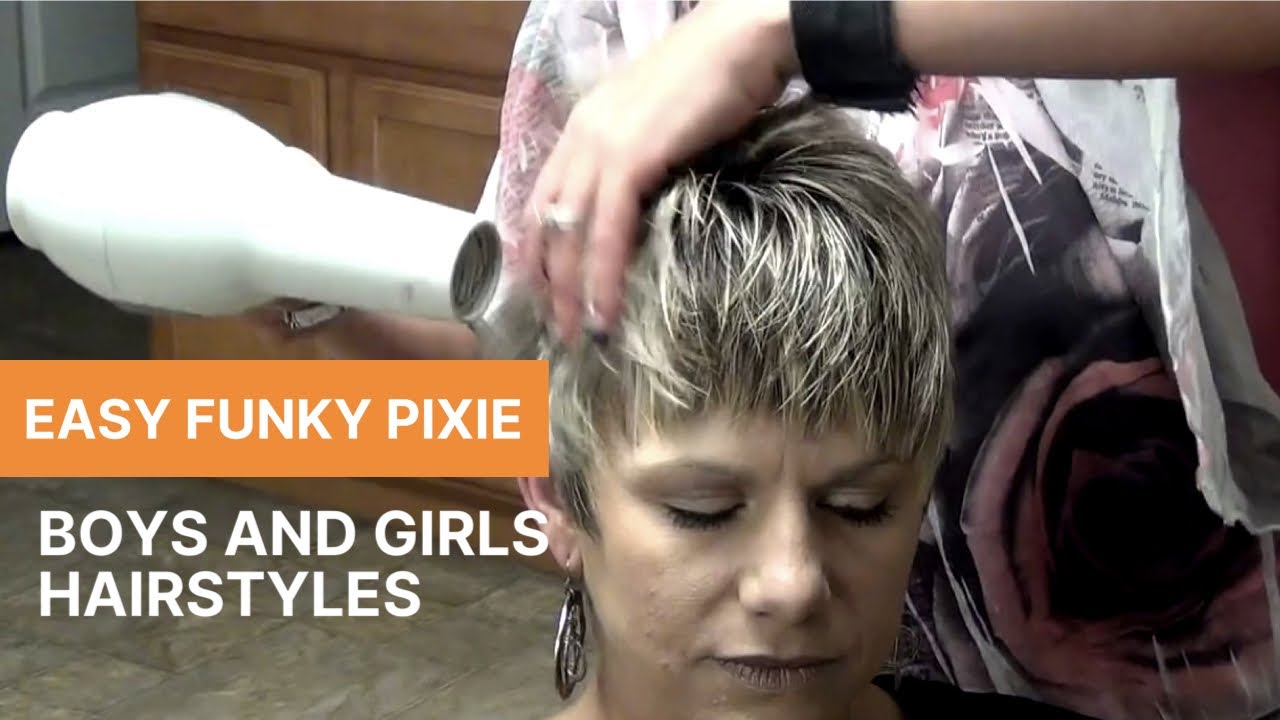
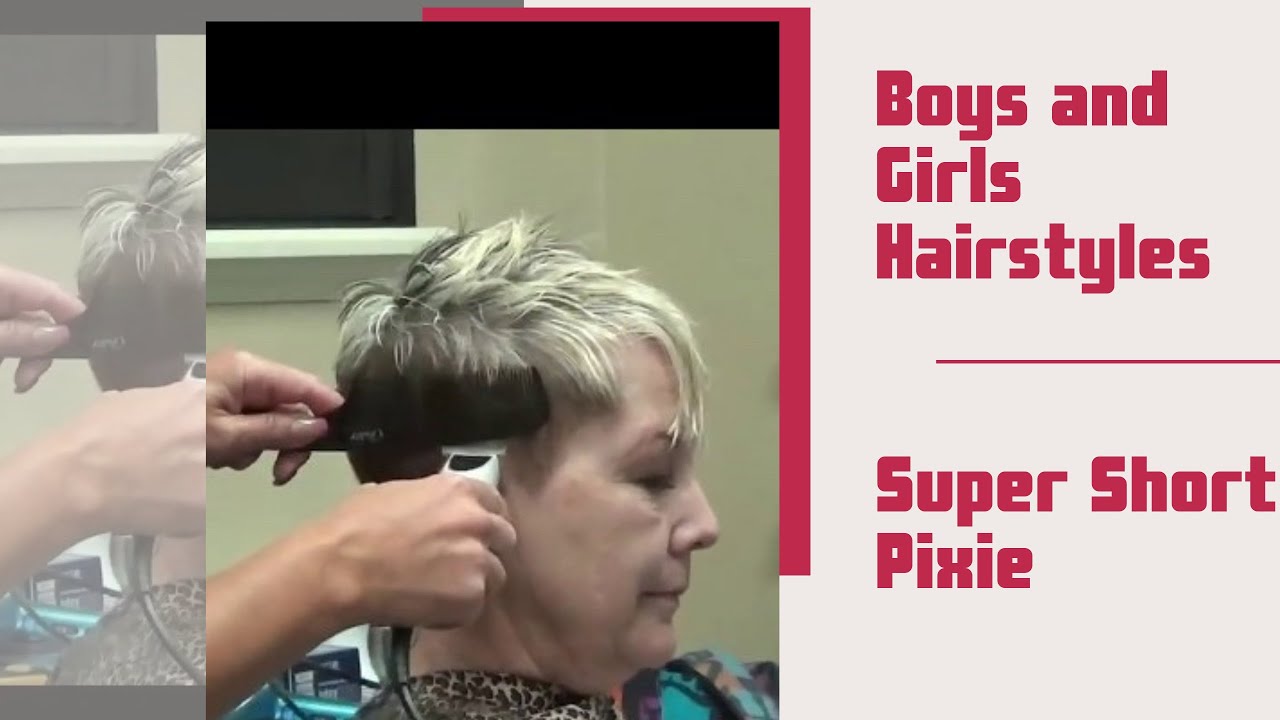
Easy pixie haircut on mature woman ▶
Easy + mature

Low-Maintenance Pixie

A shorter clipper-supported shape with a longer textured top for easy everyday styling.

Watch the haircut
Woman over 50 changing from short bob to pixie haircut ▶
Over 50 · bob to pixie

Short Bob to Pixie

Useful if you already wear a short bob and are deciding whether to make the next move shorter.

Watch the change
Curly pixie haircut transformation on older woman ▶
Curly + wavy

Pixie for Natural Curl

Shows why natural texture should influence the cutting strategy instead of being treated as an obstacle.

Watch the curly pixie
Long gray hair transformed into short pixie haircut ▶
Long to short

The Big Pixie Transformation

A useful watch for anyone who has worn longer hair for years and is nervous about the commitment.

Watch the transformation
Pixies by age

Age doesn't decide the haircut — but hair changes can change the strategy.

Density, texture, gray pattern and maintenance priorities may evolve over time. Use the age guides when those concerns matter.

Women 50+

Pixies in Your 50s

Explore pixies alongside bobs, longer layers and changing density.

Women over 50
Women 60+

Pixies Over 60

Softer pixies, fine-hair options and low-maintenance mature styles.

Pixies over 60
Women 70+

Pixies Over 70

Eight mature-hair variations with real clients, face-shape guidance and salon wording.

Pixies over 70
Mature hair

Pixies for Older Women

Broader guidance on mature texture, styling, volume and maintenance.

Mature pixie guide
Pixie haircuts by face shape

Adjust the fringe, height and sides — not necessarily the haircut family.

Most people can wear some version of a pixie. The important question is which proportions should change.

Oval

Most pixie variations work. Choose according to texture, density and personal style.

Round

Extra crown height, diagonal fringe and less width through the sides can create more vertical balance.

Square

Softer fringe and less severe edges around the temples can balance a stronger jaw.

Heart

Longer fringe and slightly fuller side pieces can soften the relationship between forehead and chin.

Long

Avoid excessive crown height. Side-swept fringe and additional side movement can create balance.

Diamond

Longer bangs and softer front pieces can frame prominent cheekbones beautifully.

How short?

The pixie length spectrum.

A pixie can range from almost clipper-short to a pixie-bob that approaches jaw length.

Pixie Type Relative Length Main Advantage Good Starting Point For Trim Frequency
Tapered Pixie Shortest Clean structure Very easy styling More frequent
Classic Pixie Short Balanced + versatile First-time pixie clients About 4–6 weeks
Textured Pixie Short Movement + crown shape Fine or flatter hair About 4–6 weeks
Pixie With Long Bangs Short / medium front Face framing Styling versatility Can stretch slightly longer
Pixie-Bob Longest More softness + grow-out ease Nervous first-timers Usually less frequent
Styling & maintenance

A good pixie is short on length — not necessarily on options.

The underlying cut should create most of the silhouette. Styling then changes the finish: smooth, piecey, lifted, swept or curly.

For lift: direct the roots away from the scalp while drying.
For texture: use a small amount of lightweight styling product through the top.
For fine hair: avoid heavy oils and waxes that collapse the root.
For curly hair: preserve the natural pattern and avoid unnecessary straightening.
For shape: short pixies generally need reshaping sooner than longer cuts.
Easy low maintenance pixie haircut for mature woman
Before you get the pixie

Don't walk into the salon and say only, “I want a pixie.”

Show the exact variation and describe what you like about it. “Pixie” alone leaves too much open to interpretation.

1

Choose the Neckline

Decide whether the nape should be soft, tapered, clipped close or left longer.

2

Choose the Fringe

Short, side-swept, long or asymmetrical fringe changes the entire personality of the haircut.

3

Discuss Your Texture

Fine, thick, straight, wavy and curly hair need different cutting strategies.

4

Discuss Grow-Out

Ask what the haircut will look like in four, six and eight weeks.

Frequently asked questions

The practical questions before going pixie.

The right version depends more on your hair and desired routine than on a single trend.

What is a pixie haircut?

A pixie is a family of short haircuts generally tapered around the sides and back with more length reserved through the top or front. The amount of length, layering and texture can vary significantly.

How do I choose the right pixie?

Start with your hair density, texture, desired front length and daily routine. Then adjust crown height, fringe and side length to suit your face and preferences.

Are pixie haircuts good for fine hair?

They can be excellent for fine hair because removing unsupported length can make the crown easier to lift. Avoid excessive texturizing when the hair is already sparse.

Can curly hair be cut into a pixie?

Yes. Curly pixies should be designed around the natural curl pattern and shrinkage so the haircut works without daily straightening.

How often does a pixie need trimming?

Many structured short pixies benefit from reshaping around every four to six weeks. Longer pixies and pixie-bobs can often stretch longer because additional length makes the grow-out more forgiving.

What is the difference between a pixie and a pixie-bob?

A traditional pixie is shorter around the sides and back. A pixie-bob retains additional length around the front, ears or jaw, creating a bridge between the two haircut families.

About these recommendations

Pixies are one of RaDona's core salon specialties.

RaDona Ludlow is a licensed cosmetologist and salon owner in Nephi, Utah who has worked behind the chair since 2000. Her YouTube library includes pixie transformations across different ages, textures and starting lengths.

That's why this hub is organized around actual haircut decisions rather than a gallery of nearly identical inspiration pictures.

Licensed cosmetologist since 2000
Real pixie transformations throughout the library
234,000 YouTube subscribers
1,500+ public haircut and styling videos
Your next step

Choose the pixie family. Then go into the detailed guide.

If you want the most styling flexibility, start with longer bangs. If you want something bolder, compare the asymmetrical guide. If you're still deciding how short to go, compare the pixie directly against a bob.

Most versatile

Pixie With Longer Bangs

Keep the short silhouette while preserving enough front length to sweep, part or tuck.

Explore long-bang pixies
Still deciding?

Pixie vs. Bob

Compare maintenance, grow-out, styling flexibility and how much length each option preserves.

Compare pixie vs. bob

Leave a Reply

Your email address will not be published. Required fields are marked *

Fill out this field
Fill out this field
Please enter a valid email address.
You need to agree with the terms to proceed

fifteen − 3 =

Translate »