web analytics
★ Popular Updated May 2026 · 12 min read

Asymmetrical Pixie Cut: 12 Styles, Face-Shape Guide & How to Maintain It

Stylish woman with asymmetrical pixie haircut in a salon — modern short hairstyle with one side longer than the other
The short version

The asymmetrical pixie is the most flexible short haircut available right now — bold enough to feel modern, soft enough to be wearable, and adjustable for nearly every face shape, age, and hair type. This guide breaks down 12 specific variations I cut in my salon, who each one flatters, and exactly how to keep the shape sharp between trims. Five real client transformations are embedded as videos so you can see the cuts in motion before you commit.

The asymmetrical pixie sits in a sweet spot that almost no other haircut occupies. It feels distinctive enough to turn heads, but practical enough to live with every day. It works on a 28-year-old with thick straight hair and a 68-year-old with fine silver hair — just in completely different ways. And after 25 years of cutting hair in my Utah salon, I can tell you it's the single short style my clients ask for by name more than any other.

What makes it work is the deliberate imbalance. One side is cut shorter — sometimes dramatically so, sometimes only barely — while the opposite side is left longer to fall forward toward the face. The shorter side gives the cut definition and structure. The longer side gives it softness and movement. Together, they create a silhouette that looks intentional from every angle, even when you've done absolutely nothing to it.

This guide walks through the 12 specific variations I cut most often, which face shapes and hair types each one flatters, the products and tools that actually make a difference, and the maintenance schedule that keeps the cut from softening into something it isn't supposed to be.

What an asymmetrical pixie actually is (and what it isn't)

Before we get into variations, it's worth being precise about the cut itself, because "asymmetrical pixie" gets applied loosely in salons and on social media.

A true asymmetrical pixie has three structural features:

  1. Uneven lengths from left to right — not just a side part. The actual hair on one side is cut shorter than on the other.
  2. A deliberate angle — usually built diagonally from the nape up through the longer front piece on one side.
  3. A back that follows the same logic — typically short and tapered, sometimes with an undercut, but never blunt or boxy.

What it isn't: a regular pixie with a side part. A side-parted classic pixie is a different cut and grows out differently. If your stylist is just parting your hair to one side, you don't have an asymmetrical pixie — you have a classic pixie styled asymmetrically. Those are two completely different conversations.

What to ask for at the salon

"I want an asymmetrical pixie with [X] inches longer on the [left/right] side, tapered shorter at the back and the opposite side." Specifics matter here — vague descriptions are why so many asymmetrical pixies come out looking just like every other pixie.

The 12 variations I cut most often

The reason the asymmetrical pixie works for such a wide range of people is that it isn't one cut — it's a category. Here are the 12 distinct versions I've cut over the years, organized roughly from softest and most wearable to boldest and most graphic.

1
The Soft Asymmetric
Best for first-timers

Only about an inch of difference between sides. Reads as a flattering pixie that "just falls a certain way" rather than something obviously different. The gentlest possible introduction to the cut.

2
The Sleek & Polished
Best for fine straight hair

Same shape, but styled with a smoothing serum and flat iron so the angles read as crisp lines. The most professional, office-friendly version of the cut.

3
The Textured Asymmetric
Best for fine, thinning hair

Heavy internal point-cutting creates piecey separation throughout. Fine hair looks 30–40% fuller. This is the version I cut most often on clients in their 60s and 70s.

4
The Long-Front Asymmetric
Best for square or round faces

The longer side extends past the jawline — sometimes to the collarbone. The vertical line softens jaw angles and elongates round faces. Highly photogenic.

5
The Bangs Asymmetric
Best for heart-shaped faces

An asymmetric pixie paired with bold, blunt or diagonal bangs that sweep across the forehead. The bangs balance proportions where the cheekbones are widest.

6
The Side-Swept Asymmetric
Best for slightly heavier hair

Heavier weight on the longer side falls forward across the face. Looks polished without product. The most low-maintenance version on this list.

7
The Tousled Asymmetric
Best for wavy hair

Sea-salt spray and air-drying enhance natural waves on the longer side. The most relaxed, undone version — perfect for casual lifestyles and warmer climates.

8
The Curly Asymmetric
Best for natural curls

Cut dry, layered for shape, defined with curl cream. The curls themselves create the texture — the asymmetry just gives them a structure to fall into.

9
The Stacked Asymmetric
Best for thick straight hair

Stacked layers in the back add lift and remove bulk from thick hair. The longer side stays smooth and forward. Combines two cuts in one.

10
The Undercut Asymmetric
Best for boldest version

An undercut on the shorter side — clipper-cut close to the scalp — under longer pieces on top. Most graphic, most editorial, most attention-getting.

11
The Edgy Asymmetric with Bangs
Best for confident transformations

Sharp angles, blunt diagonal bangs, dramatic length contrast between sides. The cut that turns heads. Requires monthly trims and intentional styling.

12
The Grown-Out Asymmetric
Best for transitioning lengths

Specifically cut to grow out beautifully — designed so each week of growth keeps a deliberate shape rather than becoming awkward.

See it in motion: 5 real client transformations

Reading about a haircut is one thing — seeing it cut is what actually tells you whether you want it. Each of the videos below is a different version of the asymmetrical pixie, on a different client, with a different finish.

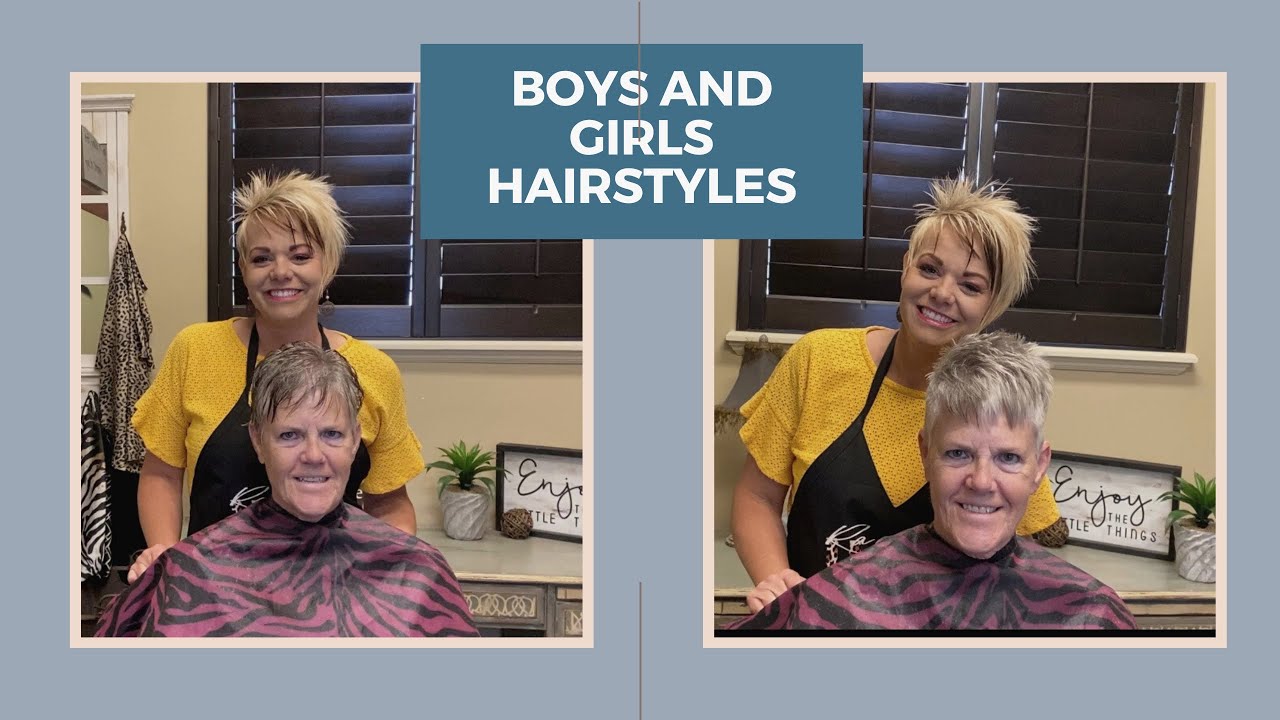
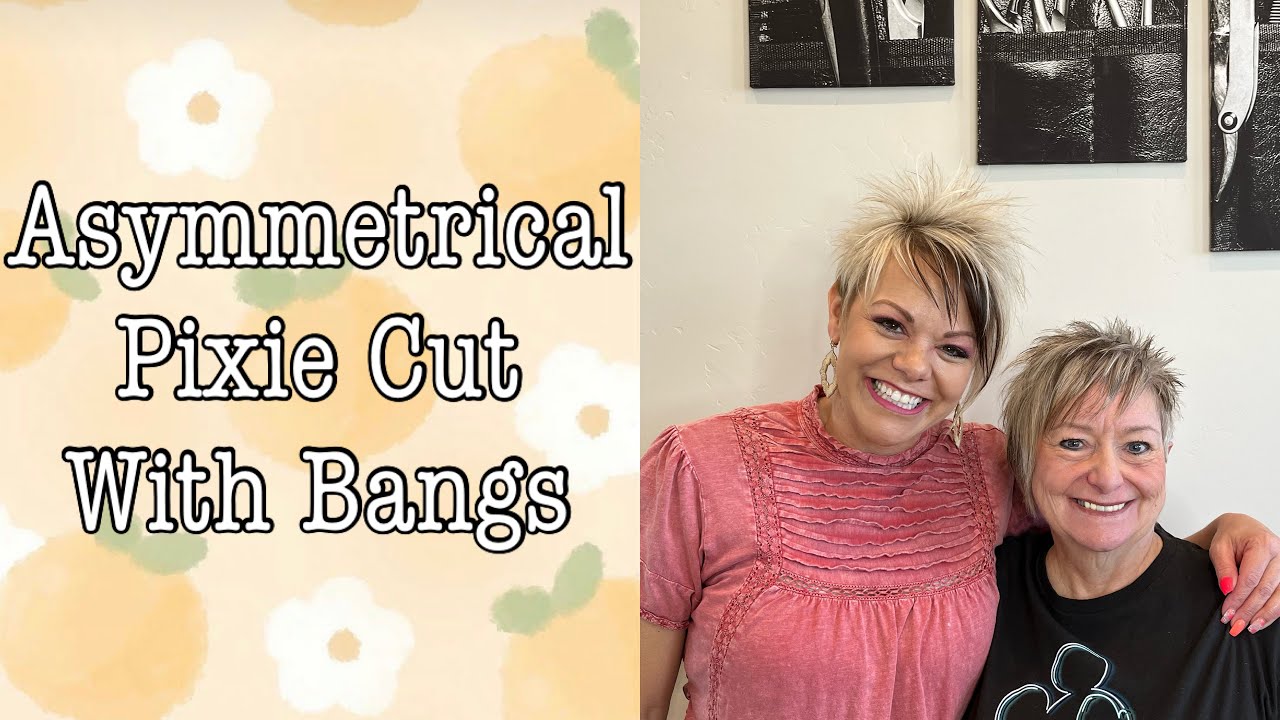
1. The edgy version with bangs (women over 60)

Brenda came in wanting something bolder than her existing short cut. What she got is a textbook edgy asymmetric with diagonal bangs — proof that "edgy" and "age-appropriate" aren't mutually exclusive at any age.

Brenda's full transformation — watch how the bangs are cut diagonally to match the angle of the rest of the haircut. That's what makes it read as deliberate.

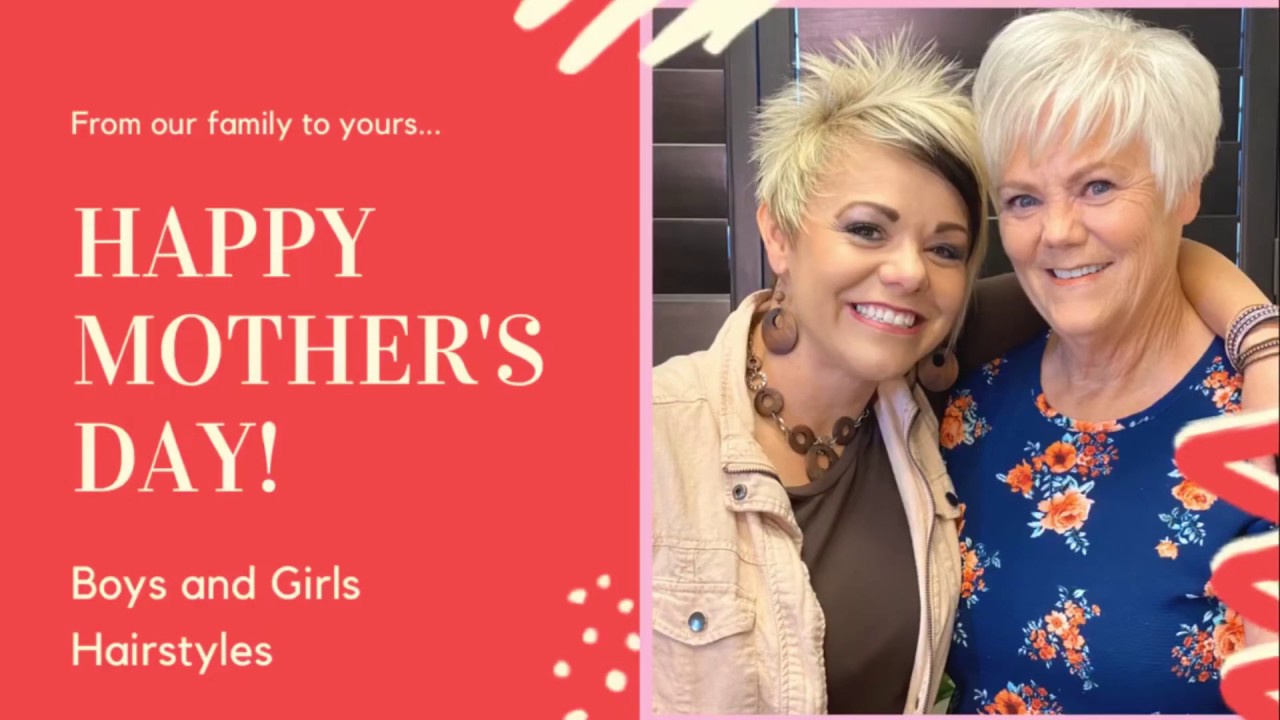
2. The feminine, grown-out version (women over 60)

Sharon's asymmetrical pixie had grown out and lost its shape. Rather than cut it all back short, I refined the angles so the longer length still works as a deliberate asymmetric — the version many women actually wear day to day.

Sharon's session — useful if you're worried about the "growing-out phase." A well-cut asymmetrical pixie should look good at every length, not just on the day you leave the salon.

3. The short and spiky version

This is the textured, piecey version cut shorter overall. The angles are still present, but the styling pushes the cut into a different mood entirely — playful rather than polished.

A spunkier, more playful take. The same structural cut, finished with different products and a different intention.

4. How the cut is actually built

This older tutorial is the most technical of the videos here — it shows my actual cutting process for an asymmetrical pixie from start to finish. Useful if you're a stylist, or if you just want to understand what your stylist should be doing.

The actual cutting technique. Pay attention to how I section and angle the work — it's a different process from cutting a symmetric pixie.

5. Styling an asymmetric at home

If you've got the cut and want to style it yourself, this is the styling tutorial that walks through it. Tools, products, and the actual sequence of moves.

My own styling routine for the cut, demonstrated on my own hair. The "lift, direct, define" sequence I use every morning.

Which version is right for your face shape?

The single biggest factor in whether an asymmetrical pixie flatters you is matching the right version to your face shape. Get this right and the cut looks like it was made for you. Get it wrong and the same cut will fight your features.

Match the variation to the face shape:
  • Round face — go with the Long-Front Asymmetric (#4) or Textured Asymmetric (#3). You want vertical lines that elongate, not horizontal ones that emphasize roundness. Avoid blunt bangs.
  • Oval face — almost any version works. This is the most flexible face shape for the asymmetrical pixie. Choose based on lifestyle and hair density instead.
  • Square jaw — go with the Soft Asymmetric (#1) or Side-Swept (#6). Softer angles balance the angularity of the jaw. Avoid sharp graphic versions like the Undercut (#10).
  • Heart-shaped face — go with the Bangs Asymmetric (#5). Bangs balance proportions where the forehead is widest.
  • Long face — go with the Side-Swept (#6) or Bangs Asymmetric (#5). Horizontal volume on the sides shortens the visual length of the face.
  • Diamond face — go with the Long-Front Asymmetric (#4). Length at the cheekbone level softens the widest point of the face.
"The asymmetrical pixie isn't one cut — it's a category. The version that flatters you depends on your face shape, your hair density, and your willingness to maintain it."

Styling: how the cut actually gets worn day to day

An asymmetrical pixie is only as good as your daily styling. Here's the actual five-minute routine I teach clients before they leave the salon:

Hair stylist using a round brush and hairdryer to style an asymmetrical pixie cut — daily styling technique for the longer side
The round-brush-and-dryer combination on the longer side is what creates the directional movement that defines the cut.

The 5-minute morning routine

  1. Start with damp, towel-dried hair. Not soaking, not bone dry — just barely damp.
  2. Apply a quarter-sized amount of volumizing mousse at the roots only. Work it in with your fingers, don't comb it through.
  3. Dry the shorter side first, lifting roots with your fingers as you go. Direct the airflow toward the back.
  4. Dry the longer side last, using a round brush to direct the hair forward and slightly across the face. This is what creates the asymmetry visually.
  5. Finish with a small amount of texturizing spray through the ends, scrunching gently with your fingers to define separation.

What to use — and what to avoid

✓ Use
  • Volumizing mousse — at the roots, on damp hair
  • Texturizing spray — on dry hair, ends only
  • Smoothing serum — on the longer side for polish
  • Light-hold hairspray — to finish, flexible hold only
  • A round brush — for the longer side direction
  • Heat protectant — every time you use heat
✗ Avoid
  • Heavy pomades or waxes — flatten fine hair within hours
  • Stiff-hold hairspray — kills movement, looks crunchy
  • Heavy oils at the roots — make hair look greasy
  • Combing through after styling — undoes the texture you built
  • Stretching trims past 6 weeks — the cut loses its identity
  • Daily heat styling — damages the longer pieces fastest

Maintenance: the trim schedule that actually matters

The asymmetrical pixie is a precision cut, and precision cuts lose their precision quickly. The longer side grows at roughly the same rate as the shorter side — which means every week of growth narrows the contrast between the two and softens the angle that makes the cut work in the first place.

How often to trim

  • Every 4 weeks for the boldest versions (Edgy #11, Undercut #10, Long-Front #4) — these depend on sharp angles that disappear fast
  • Every 5–6 weeks for medium-contrast versions (Bangs #5, Stacked #9, Sleek #2) — there's a little more forgiveness
  • Every 6–8 weeks for the softest versions (Soft #1, Side-Swept #6, Textured #3) — the design is meant to soften gracefully
  • Never longer than 8 weeks — beyond that, the cut stops being asymmetrical and starts being a slightly weird regular pixie
What to communicate at your trim

Don't just say "trim." Say: "Keep the asymmetry — the longer side should stay [X] inches longer than the shorter side. Take half an inch off both sides, refine the back, but don't change the silhouette." Stylists who don't know your specific cut will sometimes "balance it out" without asking. That's how good asymmetric pixies become bad regular pixies.

Product picks that actually work on this cut

Moisturising shampoo, texturising spray, and smoothing serum on a vanity — essential hair care products for maintaining an asymmetrical pixie cut
The three products that do 90% of the work on this cut: a moisturizing shampoo, a texturizing spray, and a smoothing serum.

I keep the product list deliberately short. Most clients buy too many products, use them inconsistently, and wonder why their hair never looks like it did at the salon. Three products, used consistently, will outperform a bathroom shelf full of half-empty bottles.

  • Moisturizing shampoo + conditioner — short hair still needs hydration, and the longer side dries out faster than the rest. Sulfate-free is non-negotiable on color-treated hair.
  • Texturizing spray — the workhorse product for this cut. Adds grit and separation that makes the asymmetry visible. Avoid anything that feels sticky in the bottle.
  • Smoothing serum — a pea-sized amount on the longer side only, to keep it from looking dry next to the textured shorter side.

That's the entire kit. Anything beyond those three is optional — heat protectant if you use hot tools, light hairspray if your shape doesn't hold, dry shampoo for between washes. But you can run this cut on three products and never miss the rest.

Watch every cut in this article on YouTube

All five client transformations above are from my channel — 800+ free tutorials, two new videos every week, 180,000+ subscribers. Subscribe to see the next asymmetrical pixie when it goes live.

▶ Subscribe Free on YouTube

Frequently asked questions

Will an asymmetrical pixie work on curly hair?

Yes — the Curly Asymmetric (#8) is specifically built for natural curls. The trick is cutting dry rather than wet, so the stylist can see how each curl falls and shape around it. Wet-cut asymmetric pixies on curly hair almost always come out wrong.

How short is too short for the shorter side?

For most clients, I don't go shorter than half an inch on the shorter side unless we're doing an actual undercut (#10). Below half an inch you're seeing scalp through the hair, which doesn't flatter most people. The undercut version is its own decision and looks different on purpose.

Can I grow out an asymmetrical pixie into a bob?

Yes, and the asymmetric is actually one of the better cuts to grow out — variation #12 (the Grown-Out Asymmetric) is specifically designed for it. The longer side already has length, so as the shorter side catches up, you transition naturally into an asymmetric bob, then a regular bob, then a lob. Plan it with your stylist and the awkward stage almost disappears.

Is the asymmetrical pixie too "young" for women over 60?

No — and this is one of the most common questions I get from clients in their 60s and 70s. The Textured Asymmetric (#3) and Side-Swept (#6) are particularly flattering on mature hair because they create volume where fine hair has lost it. Two of the five videos above are clients in their 60s. Age has very little to do with whether this cut works.

How long does the cut itself take?

In my chair, an asymmetrical pixie usually takes 45 minutes to an hour for the cut, plus 15–20 minutes for the style. Compare that to 90+ minutes for a complicated long-hair cut and color — it's actually one of the faster appointments most women have.

What if my stylist isn't familiar with this cut?

Find a different stylist for this one. Asymmetric pixies are a precision cut and they look noticeably different when cut by someone who does them regularly versus someone who's improvising. Show the videos above to any stylist you're considering — if they nod and know the technique, you're in good hands.

The bottom line

The asymmetrical pixie is the most flexible short haircut available right now, full stop. There's a version of it that flatters almost every face shape, works on almost every hair type, and reads as appropriate at almost every age. The keys are matching the right variation to your features, maintaining it on a real trim schedule, and being specific with your stylist about what you actually want — not just "an asymmetrical pixie," but which of the 12 versions above.

If you're considering one, scroll back up and watch the five videos. Pick the version of the cut that looks most like what you want, then bring those exact videos to your consultation. Stylists understand pictures and references far better than they understand adjectives.

💇‍♀️
RaDona Ludlow Licensed cosmetologist since 2000, graduate of Bon Losee Hair Academy, and the stylist behind 800+ free hairstyle tutorials watched by 180,000+ YouTube subscribers. RaDona runs her salon in Nephi, Utah, where she specializes in modern haircuts for women of every age — asymmetrical pixies among them.

Leave a Reply

Your email address will not be published. Required fields are marked *

Fill out this field
Fill out this field
Please enter a valid email address.
You need to agree with the terms to proceed

12 − 8 =

Translate »