web analytics
πŸ₯Ž Sports Updated May 2026 · 11 min read

Softball Hairstyles: 8 Game-Day Looks That Fit Under a Helmet

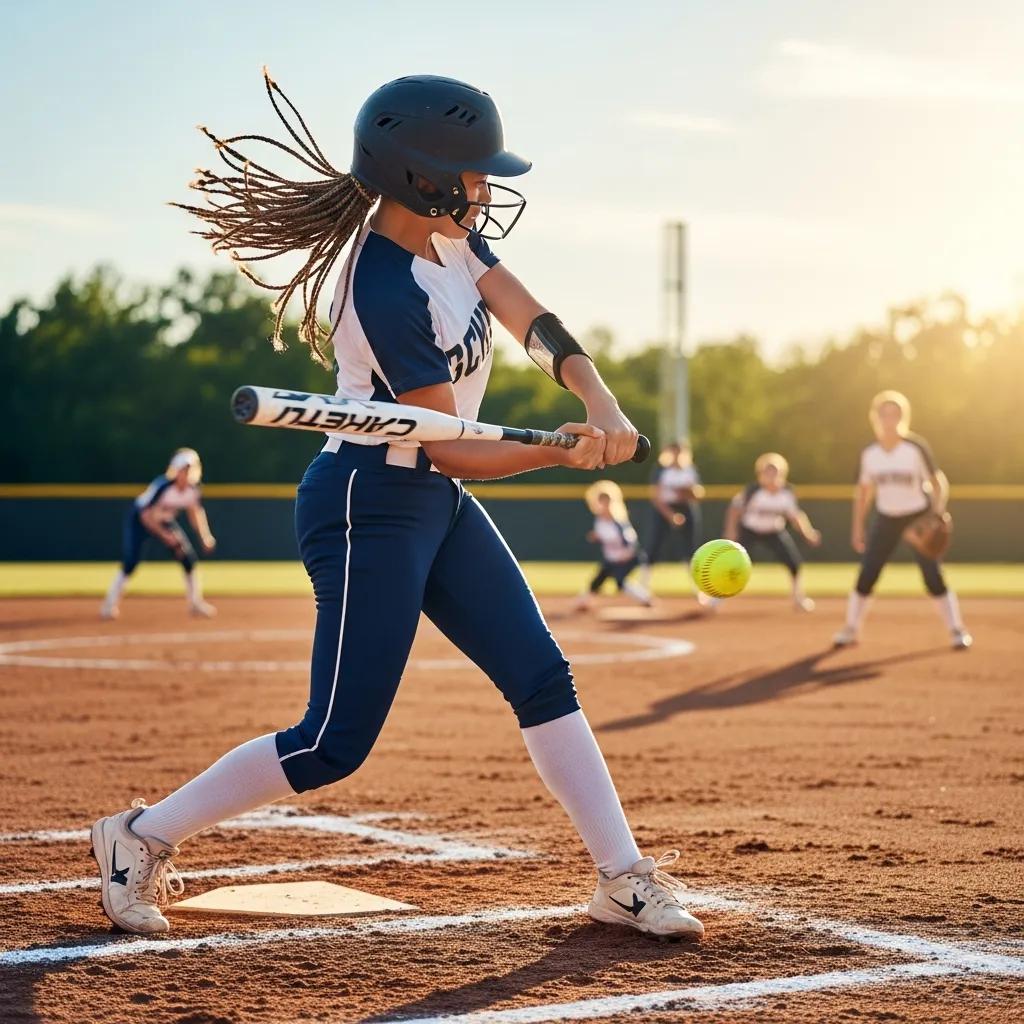
Young female athlete swinging a bat on a sunny softball field, showcasing a stylish braided hairstyle, with teammates in the background.
πŸ₯Ž Softball Game Day Add a real player photo here
The short version

Softball hair has a problem volleyball hair doesn't: the batting helmet. Every time your player goes from the dugout to the on-deck circle to the box, that helmet goes on and off — and the wrong hairstyle gets destroyed by inning two. This guide breaks down the eight specific styles that survive a helmet, stay secure through seven innings of dirt and sweat, and still photograph well for team pictures. Two foundational braid videos are embedded below.

I cut softball families' hair every spring in my Utah salon — the same families twice a week through travel ball season, then once a week through high school season, then every few weeks through fall ball. After 25 years, I've watched every kind of "softball hairstyle" walk into the chair on Sunday morning to be fixed. The mistakes are always the same: too high, too tight, too smooth, or built for volleyball.

Volleyball hair and softball hair aren't the same thing. Volleyball players don't wear helmets. Softball batters do — and the helmet is the single biggest variable that ruins game-day hair. A high, tight bun looks beautiful walking up to the plate and disastrous after the second time the helmet comes off. The styles that work for softball are built around the helmet, not against it.

This guide walks through the eight styles that actually survive a softball game. Each one is built around two non-negotiables: it fits under a helmet without flattening, and it stays secure through a full game in dirt and humidity. Every style includes the exact technique, the products that hold up, and the time it takes to do it.

The helmet rule: what changes for softball vs. volleyball

Before the eight styles, the single most important principle for softball hair:

The helmet changes everything:
  • Volume at the crown gets crushed. A tall bun or a teased crown looks great until the helmet goes on. Then it's flat for the rest of the game.
  • Bumpy textures hurt. A bumpy bubble ponytail, a thick crown braid, or any style with elevation at the back of the head will catch on the inside of the helmet. By the third at-bat the player is wincing.
  • The helmet pulls hair when it comes off. If the ends are loose at the nape, the helmet drags them up and creates instant flyaways every inning.
  • Sweat pools where the helmet sits. Anything that traps sweat at the hairline (heavy gel, thick headbands inside the helmet) becomes a slipping problem fast.
  • Position matters. Pitchers wear masks (not helmets). Catchers wear catcher's masks. Infielders wear helmets only when batting and base-running. Outfielders rarely wear helmets at all. The right style depends on the position.

Every style below is designed with these five constraints in mind. The differences between them come down to face shape, hair length, and personal preference — but the underlying rule is the same: low, flat, secured at the nape, and tucked.

The 8 styles that survive a full softball game

Ranked roughly from highest helmet compatibility to most stylish. Every style works for shoulder-length hair and longer. Short-hair adaptations are noted at the end.

1
Double Dutch Braids (Boxer Braids)
Maximum helmet compatibility

Two Dutch braids running from the hairline to the nape, secured tight against the scalp. The single best softball hairstyle, full stop. Lies completely flat under a helmet, doesn't move during sliding, and survives a seven-inning game with zero flyaways.

Time: 8–10 min Β· Hold: All day
2
Single Dutch Braid Down the Back
For longer hair, every position

One Dutch braid starting at the crown and running straight down the back, secured at the bottom. Flatter than two side braids (less profile), works under every batting helmet ever made. The easiest "good" softball braid to do on yourself.

Time: 6–8 min Β· Hold: All day
3
French Braid Pigtails
For younger players (8–14)

Two French braids from a center part to the nape, secured into two short pigtails. The classic Little League and travel ball style. Distributes weight evenly across both sides, no headache after seven innings, and stays out of every helmet position.

Time: 10–12 min Β· Hold: All day
4
Low Braided Ponytail
Simplest secure option

Hair pulled into a low ponytail at the nape (not high), then the length braided. The low position keeps it under the helmet line. The braid prevents the tail from whipping during sliding. Easiest style to do without help.

Time: 5 min Β· Hold: All day
5
Low Bun at the Nape
For thick or heavy hair

Hair pulled into a tight low bun sitting at the base of the neck — well below where the helmet sits. The lowest profile style on this list. Doesn't catch on the helmet, doesn't move, doesn't pull. Best for players with thicker hair that needs to be contained.

Time: 5 min Β· Hold: All day
6
French Braid into Low Ponytail
Best of both worlds

French braid starting at the crown, transitioning into a low ponytail at the nape. The braid handles the top of the head; the low ponytail handles the length. Helmet-friendly and photographs beautifully for team pictures.

Time: 7–9 min Β· Hold: All day
7
Fishtail Braid Down the Back
Most stylish

A fishtail braid running straight down the back from a low ponytail. Looks intricate, holds tight against itself, and the tight weave means almost no flyaways. Worth the extra few minutes for team picture day or playoff games.

Time: 8–10 min Β· Hold: All day
8
Half-Up French Braid (Short Hair)
For bob-length hair

A French braid across the top of the head from temple to temple, securing the front section while the rest is short enough to stay out of the way. The cut for players whose hair is too short to ponytail but long enough to fall into their eyes.

Time: 5–6 min Β· Hold: Solid through game

Master the foundation: the Dutch braid

Five of the eight styles above are built on the Dutch braid technique. If you only learn one skill from this guide, make it this one. The Dutch braid sits on top of the hair (instead of disappearing into it like a French braid), which is exactly why it lies flat against the scalp — and exactly why it works under a helmet.

The Dutch braid technique. Once you have this down, you have styles #1, #2, and the foundation for #6 and #7.

The pigtail variation for younger players

French braid pigtails (#3 above) are the most common softball hairstyle for players ages 8 to 14. The dual anchor balances the weight of the hair across both sides of the head — which means no headache after seven innings under a tight helmet. This is the video for parents to watch.

French braid pigtails. The single most common style for travel ball players ages 8 to 14.

More videos coming

I'm filming dedicated softball walkthrough videos for the low braided ponytail, the boxer braid technique, and the team picture-day fishtail this season. Subscribe to the channel to be notified when they go live.

"Softball hair has one job: stay where you put it for seven innings, then survive the helmet coming on and off twenty times."

The products that survive dirt, sweat, and dust

Softball is the dustiest sport on this list. The dirt at every level — t-ball through college — gets into hair every time a player slides. Products that worked for volleyball don't always work for softball. Here's what actually holds:

βœ“ Use
  • Strong-hold hairspray β€” at the scalp before braiding, again at the end. The spray locks hair against the scalp so dirt doesn't push it loose.
  • No-slip elastic bands β€” grippy interior, not smooth. Three of these outlast 20 regular ones over a full season.
  • Gel or styling cream at the temples β€” locks down baby hairs that otherwise pop out the moment a helmet goes on.
  • Bobby pins for any bun β€” at least 6, U-shaped style, inserted with open end in (most people insert backwards).
  • A team-colored ribbon β€” woven into the braid. Functional and team-spirit.
βœ— Avoid
  • High ponytails or buns β€” get crushed by the helmet, look flat for the rest of the game
  • Bubble ponytails β€” the bumps catch the inside of the helmet
  • Crown braids or halos β€” too much elevation at the back, painful under the helmet
  • Smooth plastic elastics β€” slip out after one sliding play
  • Heavy oils or pomades β€” combine with infield dirt to look greasy and slip
  • Tall headbands inside the helmet β€” push the helmet up out of position

The softball hair kit every team mom should pack

Pack this in your softball bag and never think about hair during a game again. Total weight: under 6 ounces. Covers every emergency:

The softball hair kit
  • 5 no-slip elastic bands β€” backups in case one breaks during sliding
  • 15 U-shaped bobby pins β€” black, brown, blonde to match the hair
  • A small comb β€” pocket-sized, for fixing flyaways between innings
  • Travel-size strong-hold hairspray β€” TSA-friendly for tournament travel
  • A no-slip headband or sweatband β€” for warm-ups (remove for batting if it pushes the helmet)
  • Hair gel or styling cream β€” for taming flyaways at the temples
  • Team-colored ribbons or bows β€” for picture days
  • A small soft brush β€” for between-inning smoothing if needed

The night-before tournament prep routine

For tournament weekends — two or three games in a day, sometimes three days in a row — start the night before. A style done fresh that morning won't hold up to game one, much less game six.

  1. Wash hair the morning of, not the night before. Day-one hair holds a braid; freshly-washed-the-day-before hair is too slippery.
  2. Brush hair thoroughly to remove all tangles before starting the style.
  3. Mist the scalp with strong-hold hairspray at the hairline, crown, and temples. Let it dry for 30 seconds before braiding.
  4. Apply gel or styling cream at the hairline and temples specifically. This locks flyaways for the entire tournament day.
  5. Do the chosen style with steady tension β€” too tight gives headaches under helmets, too loose lets the helmet pull the style loose.
  6. Secure with no-slip elastics, then a final mist of hairspray over the whole head.
  7. Bring the hair kit to the field. A 30-second fix between games beats a 10-minute redo at the car.

Adapting these styles by softball position

For batters (every position when at the plate)

  • The helmet rule applies to everyone, since everyone bats. Stay low and flat regardless of where you play in the field.
  • Boxer braids (#1) or single Dutch braid (#2) are the safest universal picks.

For pitchers

  • Pitchers wear face masks (not full helmets), so they have more flexibility. The mask doesn't crush crown volume.
  • French braid into low ponytail (#6) is the most photographed pitcher style.
  • Keep the front locked down — pitchers can't have hair falling into their eyes during delivery.

For catchers

  • Catchers wear the most gear (mask, chest, knee guards) and have the most equipment going on and off.
  • Boxer braids (#1) are non-negotiable for catchers — anything taller catches on the mask straps every inning.
  • Keep the braid ends short or tucked. A long braid hanging down hits the chest guard and pulls.

For infielders

  • Most sliding happens at second and third base. Stay low and locked.
  • Low braided ponytail (#4) or low bun (#5) keeps everything out of the dirt.

For outfielders

  • Outfielders rarely wear helmets in the field, so more crown volume is acceptable.
  • But all batters wear helmets, so build the style around batting compatibility regardless of position.

Adapting for different hair

For short hair (bob length or shorter)

  • Half-up French braid (#8) is the best option — built for hair too short to ponytail.
  • For pixie-length: a no-slip headband at the hairline plus gel locked at the temples.
  • Strong-hold hairspray matters even more on short hair because there's less weight holding it down.

For medium-length hair (shoulder to mid-back)

  • The French braid into low ponytail (#6) is ideal — handles weight without crushing under the helmet.
  • Fishtail braid (#7) for picture day.

For very long hair (mid-back and longer)

  • Double Dutch braids tied together at the bottom (#1, modified) keeps maximum length contained.
  • Consider a French braid down the entire ponytail tail (#6, extended) — prevents the long tail from whipping during sliding.

For curly or natural hair

  • Apply a strong gel or curl cream before braiding — controls the curls and adds hold for the helmet pressure.
  • Slightly looser braids work better than very tight ones — fighting against curl pattern is a losing battle.
  • Boxer braids (#1) are particularly flattering on natural hair textures.
Subscribe for softball season tutorials

I'm filming dedicated softball and sports tutorials this season — picture-day fishtail, helmet-friendly boxer braids, and the tournament-weekend prep routine. Subscribe to be notified when each one goes live. 180,000+ subscribers already get the new videos every week.

β–Ά Subscribe Free on YouTube

Frequently asked questions

What's the best softball hairstyle that fits under a helmet?

Double Dutch braids (boxer braids) are the single best style. They lie completely flat against the scalp, don't catch on the inside of the helmet, and survive a full game in dirt and sweat. They're the style worn by the majority of NCAA Division I softball players for the same reason.

Why does my daughter's high ponytail look flat after one inning?

The batting helmet crushed it. High ponytails and tall buns get flattened the moment a helmet sits on them, and they don't recover. The fix is to go low — anything below the helmet line stays where you put it. Switch to a low braided ponytail (#4) or low bun (#5).

Should I do my daughter's hair the night before a tournament?

Day-of is better for softball. The reason: day-of-wash hair (not greasy, not too clean) holds a braid best. Freshly-washed hair from the morning of the tournament with one round of dry shampoo at the scalp is the sweet spot. Save the night-before approach for tournament travel weekends when you have to leave at 5am.

How do I prevent the "helmet headache" from a tight braid?

Three things. First, don't braid too tight at the temples — that's where helmet pressure compounds with braid pressure. Second, switch from a single braid to boxer braids (#1), which distribute tension across both sides. Third, use no-slip elastics that hold without being wrapped tight.

What's the difference between softball hair and volleyball hair?

The batting helmet. Volleyball players don't wear helmets, so high tight ponytails and crown braids work great. Softball players wear helmets every at-bat, so anything tall or bumpy gets crushed or catches on the inside. Softball hair lives below the helmet line; volleyball hair lives above it.

Can I use the same hairstyle for softball pictures and games?

Yes — but pick a picture-day-friendly style that also passes the helmet test. The fishtail braid down the back (#7) and French braid into low ponytail (#6) both photograph beautifully and survive a full game. Add a team-colored ribbon for pictures and remove it for the game.

My daughter sweats a lot and her braid always slips. What helps?

Start with strong-hold hairspray at the scalp before braiding β€” not just at the end. Misting the hairline and temples before you braid locks each section into place as you work. Then use no-slip elastics, not smooth plastic ones. The combination is what holds through humidity and sweat.

Easy Game-Day Softball Hairstyles for Youth & Hair Care Tips

Softball hair is a problem with a specific solution: low, flat, secured at the nape, and tucked. The eight styles in this guide all pass those four tests. Pick the one that matches your daughter's hair length and the time you have available, and stick with it for the season. Consistency means muscle memory, and muscle memory means a perfect braid in 6 minutes instead of 12 on a 6am tournament morning.

And one last reminder: the hair isn't the game. The right style is the one you can do in minutes without thinking about it, so the player can focus on what actually matters — the seven innings of softball she's about to play.

πŸ’‡‍♀️
RaDona Ludlow Licensed cosmetologist since 2000, graduate of Bon Losee Hair Academy, and the stylist behind 800+ free hairstyle tutorials watched by 180,000+ YouTube subscribers. RaDona's Utah salon is a regular Sunday morning stop for softball families through the spring travel ball season.
Translate »