
Hair Care: Routines, Products & Honest Reviews
Generally, hair changes more between 50 and 60 than in any decade before. Specifically, the routines that worked at 30 stop working. This hub organizes what to do — by hair type, with real client examples.
Behind the Chair
Covered
Thinning Concerns
Tutorials
Why hair care matters more after 50
The products that worked at 30 stop working when hormones shift. Drugstore shampoos strip the oils mature hair depends on. The right routine isn't more expensive — just better matched to the hair you have.
Every client starts with the same question: "My hair just isn't behaving like it used to." Specifically, three biological changes happen between 45 and 60. The fix is a routine matched to those changes — not a more aggressive version of the old routine.
If you know your hair type, jump to the routine tiles below. If you're unsure, the decision matrix asks four questions and points you to the right starting routine.
Fine & Thinning Hair
Fine and thinning hair is the most common consultation in RaDona's salon — and the most misunderstood. Routines that promise volume usually deliver weight, coating the hair in silicones that fake fullness for a day. The real fix supports the scalp first and treats the hair lightly.
Patty's fine-hair bob
Patty came in with very fine hair — products had promised volume and delivered flatness. This video shows the bob that gave her visible density without product weight.
Patty's fine-hair bob — structural density at the crown that no product alone could deliver.
- Sulfate-free thickening shampoo — on the scalp, 60 seconds, rinse thoroughly. Look for caffeine, biotin, or saw palmetto.
- Lightweight conditioner — mid-shaft to ends only — never at the scalp. Heavy conditioners flatten fine hair by 2pm.
- Scalp serum daily on dry scalp — caffeine or peptide-based, 60 seconds. Results show at week eight, not week four.
- 1.5-inch round brush for blow-dry — rolling ends under sets the volume illusion. A quality brush genuinely outperforms a cheap one.
DeeAnn's bob over 50
DeeAnn at 53 came in with the same fine-hair frustration. Watch how the new cut works with her hair's current state.
DeeAnn's choppy bob — the cut for mature hair when the old routine has stopped working.
Curly & Natural Texture
Curly hair is the most under-served hair type by mass-market products. Products formulated for "managing" curls coat and weigh them down. The fix is a routine that hydrates without coating, paired with a cut that releases the curl.
Judy's textured pixie
Judy has fine, naturally textured hair her old products weighed down. Specifically, RaDona cut Judy's pixie dry so the natural curl pattern was respected at every length. The routine that followed was simpler — fewer products, more texture support.
Judy's textured pixie — cut dry, respecting her natural curl at every length.
- Co-wash or sulfate-free cleanser — every third or fourth wash day. Most curly hair is over-washed.
- Leave-in conditioner on wet hair — mid-shaft to ends, never the scalp.
- Curl cream — scrunched, not combed — combing breaks the pattern.
- Diffuser on cool — or air-dry undisturbed. Press with microfiber.
- Weekly hydrating mask — 30 minutes under a shower cap. The highest-impact step.
This is the most important rule for curly hair. Wet curls show a completely different length than dry ones. RaDona cuts every curly client dry.
The hair-care market's biggest gaps
Generally, mass-market hair care formulates for the 25-year-old with healthy hair. Every other type is underserved — and three are dramatically so.
| Hair type | Mass-market fit | What's missing | RaDona's approach |
|---|---|---|---|
| Fine & thinning (50+) | Poor — volumizing claims rarely work | Lightweight density-building, not silicone-heavy "volume" | Tested shampoo guide, scalp-first routine |
| Gray & silver | Poor — purple shampoos misused | Brassiness control without over-toning | Routine with frequency calibration |
| Curly & natural | Moderate — improving | Cut-and-style integration (most products ignore the cut) | Dry-cut tips paired with routine |
| Color-treated mature | Moderate — color brands often weight-heavy | Lightweight preservers for already-fine hair | Sulfate-free + mass-balanced routine |
| Thick & coarse 50+ | Good — wide selection | Aging-specific weighting (thick hair thins too) | Maintenance routine that adjusts year-to-year |
| Dry & damaged | Good — bond-repair is mainstream | 90-day adherence guidance (most fail at week 4) | Calendar-based protocol with milestones |
Routines & reviews by hair type
Three routines have dedicated guides; the rest publish through 2026.
Tested shampoos for fine and thinning hair over 50. Real client results, ingredient breakdowns, honest verdicts.
Read the full reviewThe right cut matters more than the right product for fine hair. RaDona's guide to the haircuts that maximize density.
Read the full guideRaDona's full library of curly hair tutorials. Cut, care, and styling for every age.
Browse tutorialsPurple shampoo frequency, brassiness, transition. Coming 2026.
In productionMaking a salon color last 10+ weeks. Coming 2026.
In productionThe 90-day bond-repair protocol. Weekly checkpoints. Coming 2026.
In productionWeight management, frizz control, styling that respects density. Coming 2026.
In productionWhat sulfates, silicones, parabens, and proteins actually do. Coming 2026.
In productionFour questions to identify your hair type — then a routine match. Coming 2026.
In production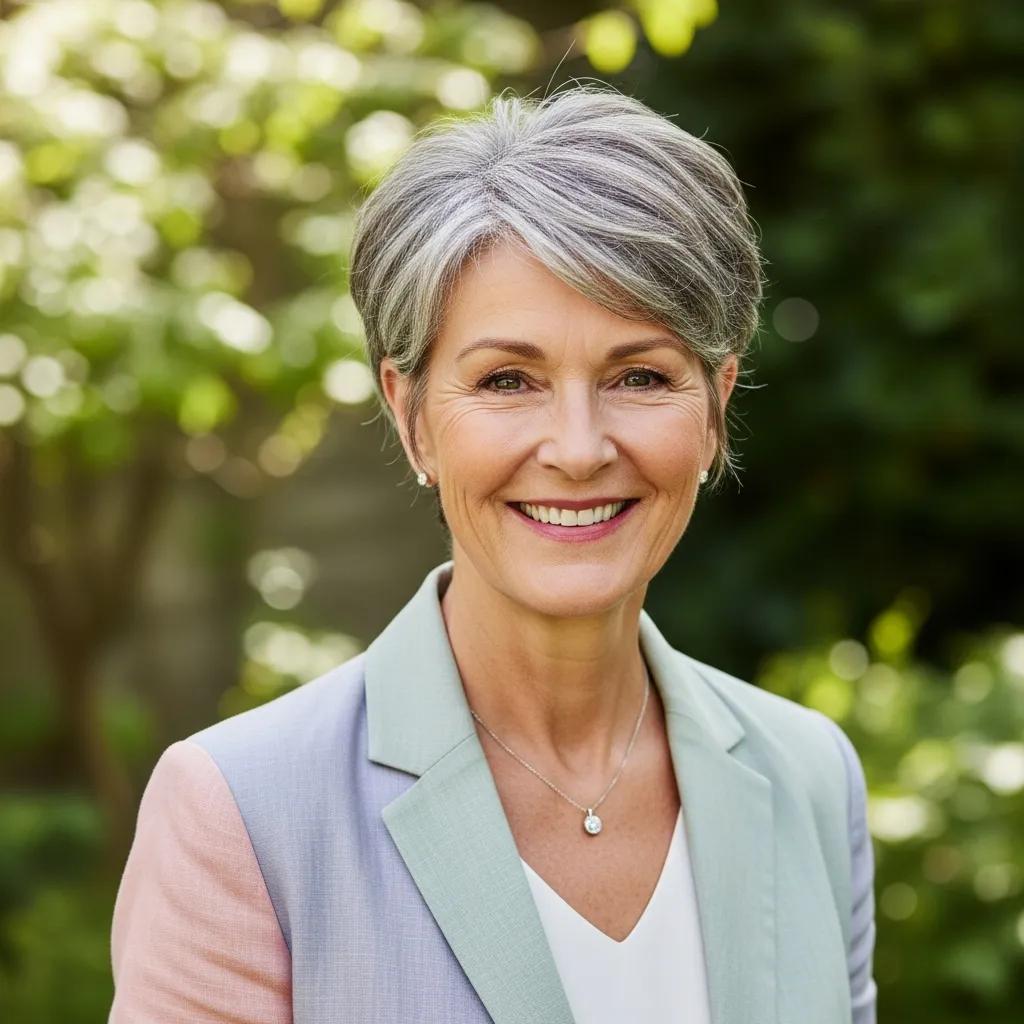
Linda's stacked bob
Linda's stacked bob is a working example of "the cut precedes the routine" — every product she uses afterward maintains the shape this cut created.
Linda's stacked bob — the cut that makes a simple routine work.
Decision matrixMatch your routine to your hair
The right routine depends on three factors: density, texture, and condition. This matrix maps the combinations to the routine that works.
| Your hair | Primary concern | Start with | Skip |
|---|---|---|---|
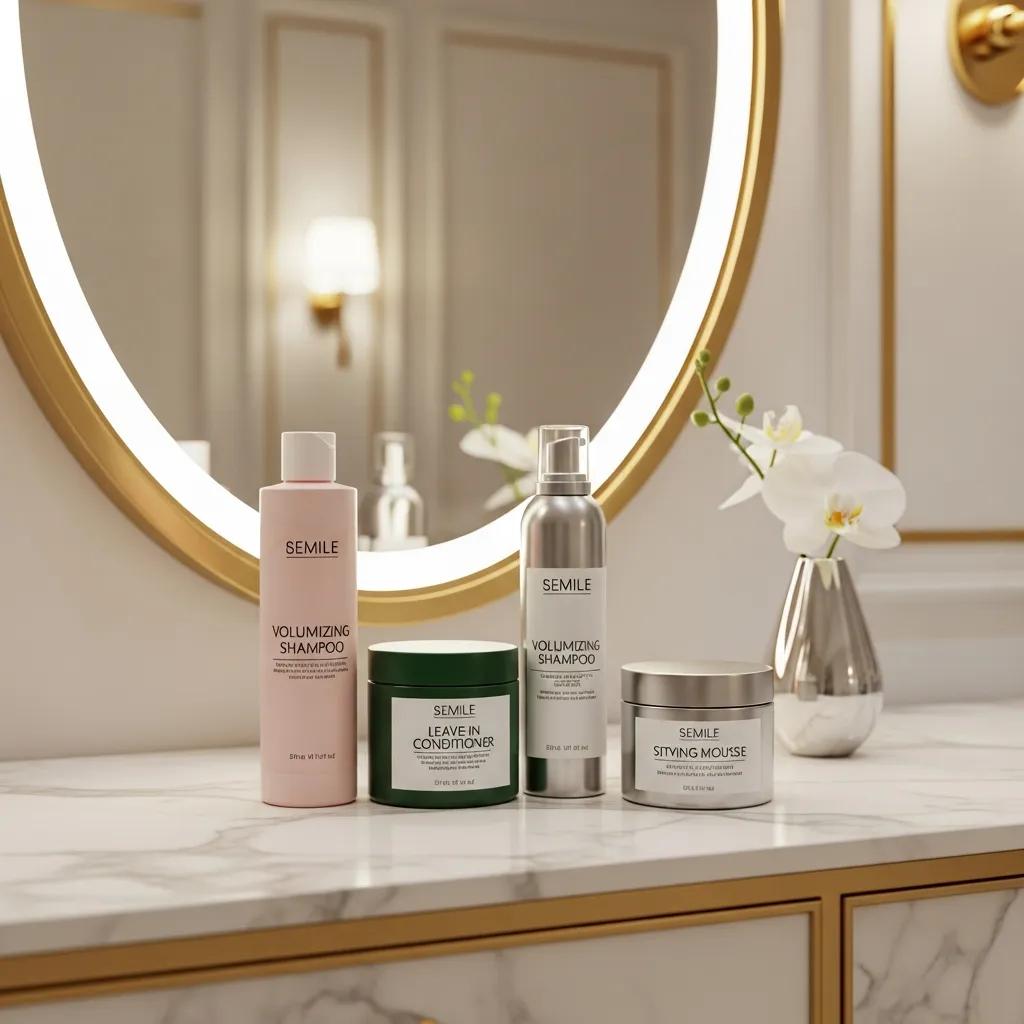
| Fine + straight + healthy | Volume that lasts past noon | Volumizing shampoo + lightweight mousse | Heavy oils, leave-in conditioners |
| Fine + straight + thinning | Visible density | Scalp serum + density shampoo + right haircut | Daily flat-ironing |
| Thick + straight + dry | Frizz, dullness | Moisturizing cleanser + lightweight oil | Volumizing products |
| Thick + wavy + healthy | Wave definition | Curl cream + sea salt spray + air-dry | Brushing when dry |
| Curly + natural + dry | Hydration and definition | Co-wash routine + leave-in conditioner | Sulfates, frequent washing |
| Gray / silver + any texture | Brassiness, dullness | Purple shampoo (weekly, not daily) | Daily purple shampoo, over-toning |
| Color-treated + fine | Color longevity | Sulfate-free shampoo + cold rinses | Hot water, daily wash |
| Damaged + any texture | Repair without cutting | 90-day bond-repair protocol | Quick-fix promises ("repair in one wash") |
Sources & Methodology
Generally, every routine and product recommendation on this hub goes through three filters before it's published. Specifically, the sources informing this hub include:
- RaDona's salon protocols — 25 years of in-chair experience in Utah.
- American Academy of Dermatology guidance — peer-reviewed research on aging hair (2024).
- Real client testing — every product used on 3+ clients before publication.
- Manufacturer transparency — full INCI verification, not marketing claims.
- Independent dermatology research — peer-reviewed where available.
- FDA cosmetic databases — for safety and labeling verification.
- Long-term follow-up — products tracked for 90+ days before recommendation.
- YouTube subscriber feedback — 180,000+ subscribers reporting what worked at home.
Methodology note: When manufacturer claims and real client results conflict, real results take priority. Products are tracked across 3+ hair types before being recommended. Notably, reader contributions and corrections are welcome — see the contact page.
Published: May 2026 · Last updated: May 2026 · Next scheduled review: August 2026.
Hair care after 50 — the eight questions RaDona gets most often
Generally, the best shampoo for thinning hair over 50 is a lightweight, sulfate-free formula with scalp-stimulating ingredients like biotin, caffeine, or saw palmetto. Specifically, the goal is to clean without stripping the natural oils that mature hair depends on for shine and elasticity, while supporting scalp health. Notably, mass-market "volumizing" shampoos often contain silicones that coat the hair and weigh it down over time. RaDona's tested-and-reviewed shampoo guide narrows the choices to the products that have worked on real fine-hair clients for at least six months of in-salon testing, with honest verdicts on which delivered and which over-promised. The right shampoo matters — but it matters less than the right haircut paired with the right routine.
Generally, three biological changes happen after 50: hormone shifts reduce sebum production (so the scalp grows drier), hair follicle density gradually decreases (so individual strands become finer), and the scalp grows more sensitive. Specifically, this means the same shampoo that worked at 30 now feels harsh or leaves hair flat. Notably, the change is gradual — most women only recognize it when they realize their old routine has stopped working. The fix isn't more expensive products; it's a routine matched to the hair you have now rather than the hair you had a decade ago.
No — once a week is enough for most gray hair, twice a week for hair with strong brassiness. Generally, daily use of purple shampoo over-tones the hair, leaving it dull, muted, or visibly violet. Specifically, purple pigments cancel yellow tones, but the same pigments build up if used too often. Notably, the rule is to use purple shampoo as a treatment, not a daily cleanser. Use a gentle sulfate-free shampoo on the other days. If your gray is brassy yellow rather than crisp silver, increase to twice a week and rotate with a clarifying treatment monthly to prevent buildup.
Generally, every two to three days is right for most mature hair. Specifically, sebum production slows after 50, so daily washing strips the natural oils mature hair depends on for shine and moisture. Notably, the exception is curly and natural-textured hair, which can stretch to four or five days between washes, and oily scalps that may still need every-other-day cleansing. The biggest mistake mature-hair clients make in RaDona's chair is over-washing — leaving the hair drier and the styling harder. Try stretching wash days by 24 hours; the hair usually adjusts within two weeks.
Generally, yes — peer-reviewed research from the American Academy of Dermatology supports scalp massage as a low-risk intervention for hair density. Specifically, four to five minutes daily of firm circular pressure across the scalp stimulates blood flow and may support follicle health over time. Notably, this is not a quick fix — results show at the 90-day mark, not the two-week mark. Pair it with a scalp serum containing caffeine or saw palmetto for compounded effect. The biggest mistake is doing it twice and giving up; consistency is what produces the result, the same way it does with any other slow-acting wellness routine.
Generally, yes — bond-repair treatments using technologies like Olaplex or K18 genuinely rebuild hair bonds, but they require a 90-day commitment to show meaningful change. Specifically, the protocol is weekly in-salon or at-home masks, paired with reduced heat styling and a gentle cleansing routine. Notably, the first four weeks usually feel disappointing because the surface improvement is gradual. The change shows around week six to eight. Most people quit at week three, which is why the protocol gets a reputation for not working. It works — but only with adherence. If hair is severely damaged at the ends (breakage, split ends past two inches), a small trim accelerates the repair by removing the worst sections.
Generally, no — for most mature hair concerns, the right $15-25 product outperforms the wrong $80 product. Specifically, the price premium on luxury hair care often pays for packaging, marketing, and fragrance rather than active ingredients. Notably, three categories where premium products do earn their cost: bond-repair systems (the patented technologies are real), professional-grade color-protective shampoo, and a quality round brush (a $40 round brush genuinely outlasts and outperforms a $10 one). For everything else, ingredient lists matter far more than brand names. The tested-and-recommended products on this hub include both drugstore and salon-priced options.
Generally, over-washing combined with under-conditioning. Specifically, mature hair needs less frequent cleansing and more consistent moisture — but most women do the opposite, washing daily and skipping the deep conditioner because it "weighs the hair down." Notably, the conditioning fear is misplaced; the issue isn't that conditioner weighs hair down, it's that the wrong conditioner does. A lightweight leave-in or weekly mask, applied mid-shaft to ends rather than at the scalp, restores moisture without heaviness. The second-biggest mistake is using the same products year after year as the hair itself changes — what worked at 50 often stops working at 60.
Keep reading
New routines coming through 2026
Six dedicated guides are in production. Subscribe to be notified as each publishes. 180,000+ subscribers get new videos weekly.