Best starting pointLow Ponytail
A low ponytail is the simplest starting point because it keeps the tie below the helmet area. Charles Owen specifically recommends a low ponytail for fitting long hair before the hair is otherwise incorporated.
For riding lessons, the best hairstyle is usually low, controlled and simple. A low ponytail, flat braid or compact low bun can manage long hair—but only if the hairstyle does not create pressure points or change how your riding helmet fits.

US Equestrian’s helmet-fitting guidance, citing Charles Owen fitters, recommends fitting the helmet to the shape of the head first. For long hair, a low ponytail can be used during fitting; hair that is incorporated later should be smoothed so it does not create bulk or pressure points.
Charles Owen also advises keeping the hair tie low and outside the helmet to avoid pressure points.
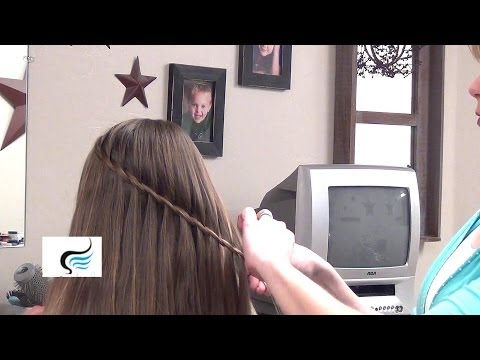
Read US Equestrian helmet-fitting guidance →This video is not horse-specific. It is the best BGH technique match because DeeAnn demonstrates one French braid directly down the back while explaining the finger handoffs you need when you cannot see what you are doing.
These are hairstyle directions, not helmet guarantees. Put the actual helmet on after styling and confirm that the fit is unchanged.
Best starting pointA low ponytail is the simplest starting point because it keeps the tie below the helmet area. Charles Owen specifically recommends a low ponytail for fitting long hair before the hair is otherwise incorporated.
113K+ viewsThe primary BGH tutorial teaches how to French braid your own hair down the back. It keeps the loose length together, but you still need to put on your actual helmet and confirm the braid does not create pressure.
Watch the braid tutorial →
601K+ viewsTwo braids divide long or thick hair into two controlled sections. They can be useful for riding only when the braid ridges and elastics do not change helmet fit.
Watch the double-braid technique →
Simple riding adaptationStart with a low ponytail below the helmet area, then braid only the hanging length. This avoids adding braid bulk across the crown while still controlling a long tail.
Official-fit optionUS Equestrian guidance notes that a low bun can work at the base of the skull when it does not interfere with the back of the helmet harness. Keep it low and compact; do not place a bulky bun inside the helmet shell.
448K+ viewsRaDona’s 448K+ low bun sits at the nape. It is useful as a visual low-placement reference, but because it uses pins and creates a bun shape, it should only be used when the actual helmet and rear harness still fit normally.
Watch the low-bun method →
375K+ viewsFor short hair that cannot reach one ponytail, small connected sections can control loose pieces. Keep elastics and clips outside the helmet’s pressure zones; move any section that causes a pressure point.
Watch the linked-section technique →
46K+ viewsThis BGH video turns a wraparound braid into a low ponytail or pigtails. Use the low placement idea rather than decorative bulk around the helmet area.
Watch the three-look tutorial →The first question is not “which looks cutest?” It is “which controls my hair without putting bulk where the helmet needs to sit?”
| Style | Profile | Skill | Best for | Main caution |
|---|---|---|---|---|
| Low ponytail | Very low | Beginner | Most long hair | Keep tie below helmet/harness area. |
| Single French braid | Flat | Intermediate | Medium–long hair | Check braid ridge under helmet. |
| Double French braids | Flat-ish | Intermediate | Thick/long hair | Two braid ridges must not create pressure. |
| Low braided ponytail | Very low | Beginner | Very long hair | Keep braid below the helmet area. |
| Low neat bun | Low/compact | Beginner | Dressage/event style | Must sit below and clear of rear harness. |
| Linked sections | Varies | Beginner | Shorter hair | Move any elastic that sits under helmet pressure. |
Do this with the hairstyle finished and the actual helmet you will ride in.
Do not tilt it or force it over the hairstyle. The helmet should sit in its normal level position.
If an elastic, braid ridge, clip or pin hurts once the helmet is on, move or remove it.
A properly fitted helmet should remain snug and move with your head rather than sliding independently.
Hairnets, accessories and presentation expectations vary by discipline and event. Helmet safety still comes first.
US Equestrian’s fit article explains that fitters first confirm the helmet fits the head shape, then incorporate long hair. The guidance specifically warns against twisting hair into bulky pressure points simply to get it under the shell.
For riders who put hair up, smooth it against the head rather than building a thick knot under the helmet.

RaDona’s 601K+ double-French-braid video is useful because it shows how to divide thick hair and keep the loose length controlled in two sections.
For riding, use the technique only if the braids lie comfortably under your own helmet without changing its normal fit. A high, bulky braid ridge is not worth forcing under the shell.
Practice French and Dutch braiding away from lesson time so you are not trying to learn the handoff while getting ready to ride.
Different sports create different constraints. Softball adds a batting helmet; volleyball does not.
Use school and quick-style pages to practice low ponytails, braids and simple buns.

RaDona’s video library provides the braid, ponytail and bun techniques. US Equestrian and Charles Owen provide the helmet-fitting principles used to decide whether those hairstyles are appropriate for riding.
That separation matters: a hairstyle tutorial can show how to control the hair, but it should not overrule helmet fit.
The helmet fit is the final test for every hairstyle on this page.
Start with a low-profile style that does not change the helmet fit. A low ponytail or a flat braid is usually simpler than a high bun. The helmet should still sit snugly and normally after the hair is styled.
A French braid can be a practical way to control long hair, but the braid must not create pressure points or change how the helmet fits. Put the actual helmet on after braiding and check the fit.
A low bun may work if it sits at the base of the skull and does not interfere with the back of the helmet or harness. Avoid placing a bulky bun inside the helmet shell.
Do not automatically size up just to accommodate a hairstyle. US Equestrian guidance citing Charles Owen fitters says the helmet should be fitted to the head first, then the hair incorporated without creating bulk or changing the contour of the head.
Short hair may only need the front and side pieces controlled. A low elastic, small linked sections below the helmet area, or a hairnet can help. Any elastic or clip that sits under the helmet should be moved if it creates pressure.
No. Hair needs to stay controlled, but painful tension is not necessary. The helmet itself should fit snugly; the hairstyle should not add painful pressure underneath it.
For most riders, start with a low ponytail or one flat braid. Add more braiding or a low bun only when you already know the finished hairstyle leaves your helmet fit unchanged.