
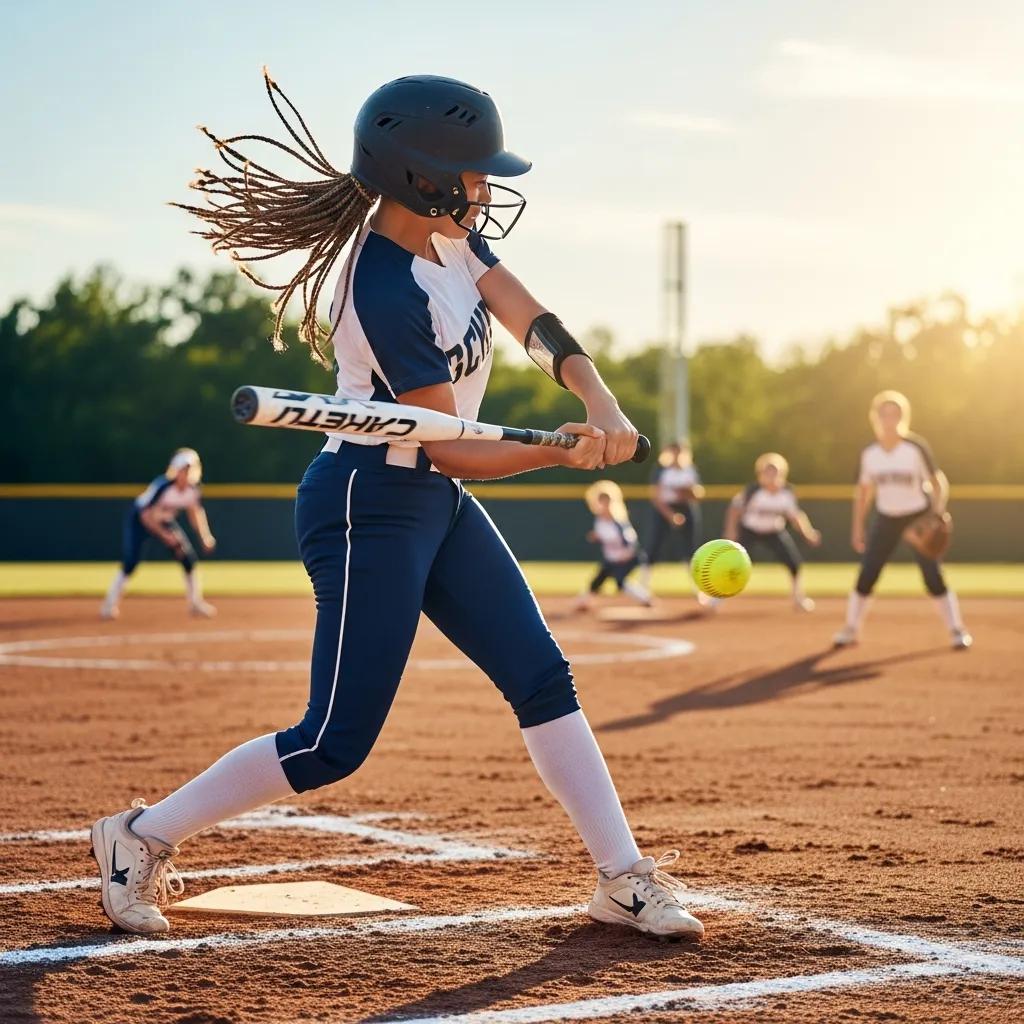
Cute Softball Hairstyles That Survive the Helmet
Softball hair has one job volleyball hair doesn't: survive the batting helmet going on and off twenty times a game, through seven innings of dust and sliding. These are the eight braids and styles that actually hold — built around the Dutch braid, and honest about what works on picture day, under a helmet, and on natural hair.
What softball hair has to survive
Softball is the dustiest sport there is, and the batting helmet is the real enemy. Every time a player goes from the dugout to the on-deck circle to the box, that helmet comes on and off — and the wrong hairstyle is destroyed by the second inning. After 25 years cutting softball families' hair every spring, RaDona narrowed the styles that actually survive down to eight, all built to stay put for seven innings and take the helmet on and off without falling apart.
Learn the Dutch braid — it powers five of the eight styles
Five of the eight styles below are built on the Dutch braid. If you learn one skill from this guide, make it that one. The Dutch braid sits on top of the hair instead of disappearing into it like a French braid — which is exactly why it lies flat against the scalp and survives a helmet. For travel-ball players ages 8–14, French braid pigtails are the single most common style, because the two braids balance the weight and there's no single pressure point under the helmet.
The one technique to learn: the Dutch braid
This is RaDona's full Dutch braid tutorial, filmed in her salon. It's the foundation for boxer braids, double Dutch braids, and most of the styles on this page — the raised, inside-out braid that lies flat against the scalp and survives the helmet. Watch it a few times and practice on a non-game day; once the under-cross motion clicks, most of the softball styles below are just variations.
French braid pigtails: the #1 travel-ball style
French braid pigtails are the most common style for players ages 8 to 14. The dual anchor balances the weight of the hair across both sides of the head — which means no headache after seven innings under a tight helmet. This is the video for parents to watch and practice before game day.
The technique tutorials behind the rest
The remaining softball styles build on these same braids plus a low bun. RaDona has full step-by-step tutorials for each — and is filming dedicated softball walkthroughs (picture-day fishtail, helmet-friendly boxer braids, the low braided ponytail) this season. Subscribe to catch them as they go live.
The 8 softball styles that survive the helmet
Ranked roughly from most secure to most photogenic. Every one is helmet-friendly; the adaptations for short, curly and natural hair follow below.
| # | Style | Best for | Helmet | Time |
|---|---|---|---|---|
| 1 | Double Dutch Braids (Boxer Braids) | Maximum helmet compatibility & natural hair | Excellent | 8–10 min |
| 2 | Single Dutch Braid Down the Back | Longer hair, every position | Excellent | 6–8 min |
| 3 | French Braid Pigtails | Younger players (8–14) | Excellent | 10–12 min |
| 4 | Low Braided Ponytail | The simplest secure option | Excellent | 5 min |
| 5 | Low Bun at the Nape | Thick or heavy hair | Excellent | 5 min |
| 6 | French Braid into Low Ponytail | Best of both — braid + length | Excellent | 7–9 min |
| 7 | Fishtail Braid Down the Back | Picture day & playoffs | Very good | 8–10 min |
| 8 | Half-Up French Braid | Bob-length / shorter hair | Good | 5–6 min |
The batting helmet is the difference. A high ponytail or top bun that's perfect for volleyball gets crushed and knocked loose every time a softball helmet goes on. Softball styles stay low and flat — braids against the scalp, low ponytails, and buns at the nape — so the helmet slides on and off without destroying them.
Curly, natural & what actually holds through the dust
Softball is dusty and sweaty, and products that worked for a clean gym day won't survive a slide into second. Here's what holds — and how to adapt the braids for curly and natural hair.
For curly and natural hair, boxer braids are especially flattering and secure. Apply a strong gel or curl cream before braiding to control the curls and add grip for the helmet pressure, and keep the braids slightly looser rather than very tight — fighting the curl pattern is a losing battle that only causes frizz and breakage. For very long hair, French-braiding all the way down the tail (style 8) stops the length whipping around during slides.
| Use | Why it works for softball |
|---|---|
| Strong-hold hairspray at the scalp before braiding | Locks hair against the scalp so dirt from sliding can't push it loose |
| No-slip elastics (grippy interior) | Survive sweat and helmet friction that make smooth elastics slide out |
| Strong gel or curl cream (curly hair) | Controls curls and adds hold under helmet pressure |
| Bobby pins, points-first (buns) | Hold the nape bun through the helmet coming on and off |
| A second hairspray pass at the end | Seals flyaways loosened by the first few innings |
Softball hairstyles — the questions asked most
The most secure options are boxer braids (double Dutch braids tied at the bottom) and French braid pigtails. Both lie flat against the scalp, stay clear of the batting helmet, and hold through seven innings of sliding and dust. French braid pigtails are the single most common style for travel-ball players ages 8 to 14 because the two braids balance the weight and don't create a pressure point under the helmet.
Anything low and flat. Braids against the scalp (boxer braids, French braid pigtails), a French braid into a low ponytail, or a braided bun at the nape all let the helmet slide on and off without being crushed or knocked loose. Avoid high ponytails and top buns — they're perfect for volleyball but get destroyed the first time a softball helmet goes on.
Spray strong-hold hairspray at the scalp before you braid, not just at the end — it locks each section down so dust and sliding can't work it loose. Use no-slip elastics with a grippy interior instead of smooth ones, keep the style low and flat, and add a second hairspray pass once the style is done. Braids anchored to the scalp hold far better than any gathered ponytail.
A fishtail braid running down from a low ponytail. It looks intricate and polished for photos, holds tight against itself so there are almost no flyaways, and still survives a game if pictures are the same day. It takes a few extra minutes over a basic braid, but it's worth it for team pictures and playoff games.
For younger players, French braid pigtails win. Two braids split the weight of the hair across both sides of the head, so there's no single pressure point pressing under the helmet and no headache by the late innings. A single French braid or braided low ponytail is great for older players and longer hair; it handles the length well and is quicker to do on yourself.
The batting helmet. Volleyball hair just has to survive diving and jumping, so high ponytails and buns work well. Softball hair has to survive a helmet going on and off twenty times a game plus dust from sliding, so it stays low and flat — braids against the scalp, low ponytails, and nape buns. Softball is also the dustiest sport, so the products have to hold harder.
Boxer braids are especially flattering and secure on curly and natural hair. Apply a strong gel or curl cream before braiding to control the curls and add grip for the helmet, and keep the braids slightly looser rather than very tight — fighting the curl pattern only causes frizz. Protective braided styles also cut down on the daily manipulation that dust and sweat make worse.
The softball hair kit
The no-slip elastics, strong-hold hairspray, curl creams and bobby pins RaDona keeps stocked for softball families — the products that actually hold through seven dusty innings and twenty helmet changes. All tested in her Utah salon.