
 ▶
Exact match · Fine hair 60+
Fine-Hair Pixie Over 60
Start here for a direct example of using short length and controlled layering to create lift on fine mature hair.
Watch on YouTubeFine hair does not need more cutting everywhere—it needs the right weight in the right places. The strongest cuts usually protect the perimeter, remove just enough length to create lift, and use controlled layering instead of aggressive thinning.
Start with a shape that gives the hair a visible perimeter and reduces enough length to create root lift. Soft pixies, bixies, chin-length bobs and lightly stacked bobs are often strong choices because they create structure without requiring lots of thinning.
If you want to keep more length, use fewer and longer layers. Fine hair usually looks fuller when the ends stay substantial rather than feathered into many short layers.
Still photos can make almost any haircut look full. These videos let you see the starting density, the cutting technique and how the finished shape behaves from the side, back and crown.
▶
Start here for a direct example of using short length and controlled layering to create lift on fine mature hair.
Watch on YouTube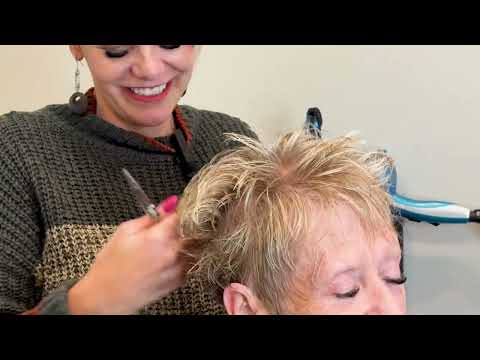 ▶
A newer step-by-step example showing how layering can create shape without needing to strip density from the whole haircut.
Watch on YouTube ▶
Compare the stronger perimeter of a bob when you want visible fullness through the lower edge rather than the lightness of a pixie.
Watch on YouTubeShorter is not automatically better. The goal is to put visible weight where the hair looks sparse and remove weight only where it is preventing lift.
Shorter length takes weight off the roots while enough crown length remains to create movement and directional styling.
Use deliberate top layering to build shape while keeping sparse zones fuller and more protected.

Keep a stronger lower edge than a pixie while using shorter layers above for movement and root lift.
A compact lower edge can make fine hair appear more substantial than a longer, feathered shape.

Controlled graduation in back can create a rounded silhouette and move visible weight upward toward the crown.

A shorter back and longer front keep more visible weight around the jaw while creating a clean, intentional angle.

Bring the perimeter higher than a traditional bob to reduce weight while keeping the visible density of a structured lower edge.

Directional length creates visual interest without depending on many short layers to make the haircut feel modern.

Surface separation can make the haircut feel fuller and more dimensional, provided the texturizing does not remove too much actual density.

Keep a bob perimeter and use only enough internal layering to prevent the shape from collapsing or feeling heavy.

Fine hair describes the diameter of each individual strand. You can have lots of fine strands and still have good overall density. Thinning hair describes a reduction in density—the amount of hair growing in an area.
A haircut can change the appearance of fullness by improving shape, perimeter and root lift. It cannot create new follicles or treat the medical cause of hair loss.
The goal is not to avoid layers entirely. It is to avoid removing weight from the exact areas where the haircut needs to look most substantial.
They can leave the lower perimeter light and transparent.
Fine hair rarely benefits from removing density simply for the sake of texture.
Longer is not always fuller if the roots cannot support the weight.
A cut balanced for the wrong part can expose sparse areas when styled normally.
That answer is more useful than choosing a haircut only because someone else with fine hair looks good in it.
Reduce overall weight and use controlled crown length to make root direction easier.
Bring the perimeter up to a stronger point and keep the lower edge deliberate.
Use controlled graduation to build a rounded silhouette without hollowing out the interior.
All three can work. The right one depends on whether you need maximum root lift, a middle ground with more softness, or the strongest visible perimeter.
Best when longer hair collapses and the crown needs the most help standing away from the scalp.
Best when you want pixie lift but need more visible weight and softness around the face.
Best when the ends need to look substantial and you prefer more jaw or neck coverage.
Use the video closest to your starting density and preferred length. The haircut family matters, but so does where your hair actually looks sparse.
 ▶
Compare another over-60 pixie when crown lift is the main goal.
Watch transformation
▶
Useful if you want more crown structure but are not ready for a pixie-length haircut.
Watch transformation
▶
See how directional shape can add interest without relying on aggressive layering.
Watch transformationBring the real-client video closest to your hair. Then tell the stylist where your density is strongest, where it looks sparse and where you need lift.
Gradual changes in density are common, but a haircut cannot diagnose or treat hair loss. If you notice sudden shedding, patchy loss, scalp pain, inflammation, or a substantial unexplained change from your normal density, consider discussing it with a physician or dermatologist.
This page owns the “which haircut should I choose for fine hair over 60?” decision. The existing Thin Hair Over 60 page remains the broader hairstyle companion, while pixie, bixie and bob pages let you compare specific shapes.
Use these when you want age-based inspiration or the wider thinning-hair topic.
Move into the haircut family that best matches your desired length and lift.
Use these when face shape, styling or the broader fine-hair question matters.
The guide explains perimeter, layering, lift and length. RaDona's videos show the starting hair, the haircut process and the finished result on real clients so you can compare what is closest to your own hair.
RaDona is a licensed cosmetologist and salon owner in Nephi, Utah who has worked behind the chair since 2000. Her fine-hair advice comes from actually cutting mature hair with different strand diameters, densities and growth patterns.
The salon goal is not to promise more hair. It is to use the hair that is present more effectively—protecting density, improving silhouette and making daily styling more predictable.
Save the example that most closely resembles your density and desired length. Then talk through crown lift, perimeter strength, part placement and which areas you do not want thinned.
These answers focus on haircut shape and styling. Hair-loss diagnosis and treatment are separate medical questions.
A soft pixie, bixie, chin-length bob or lightly stacked bob can all work well. The best choice keeps enough perimeter to look full while removing enough weight to create lift.
Yes. Shorter length can make root lift easier and reduce the weight that pulls fine hair flat. The cut should keep enough top length for movement and avoid over-thinning sparse areas.
Yes. A bob can make the perimeter look more substantial, especially around chin or jaw length. Soft graduation or stacking can add shape without making the ends wispy.
Fine hair describes the diameter of each strand. Thinning hair describes reduced density or fewer hairs. A person can have fine hair without significant hair loss, or coarse strands with lower density.
Usually only as many as the density can support. Strategic crown or internal layers can add movement, but too many short layers can reduce the visual fullness of the ends.
They can be. A light side-swept fringe or soft longer bang can frame the face without using too much density. Heavy bangs may take too much hair away from the sides or crown.
There is no required length. Choose the shortest length that gives you the lift and fullness you want while still fitting your styling preferences. Pixies, bixies, bobs and shoulder-length cuts can all work.
Consider medical or dermatology evaluation if shedding is sudden, patchy, painful, inflamed or noticeably different from your normal pattern. A haircut can change the appearance of fullness but does not treat the cause of hair loss.
Decide whether you need crown lift, a stronger perimeter or both. Then compare the closest real transformation, choose your haircut family and take that exact example to your stylist.