
1. One or two haircut examples
Use a BGH page, YouTube video, or photo that shows the shape you like. If possible, choose hair with a similar texture or density to yours.
Your first visit is not about arriving with perfect salon vocabulary. Bring one or two examples you genuinely like, explain what your hair does in real life, and be clear about the things you do—or do not—want changed.

RaDona’s current salon pages describe the consultation as part of the new-client haircut appointment. The point is not to force you to choose a haircut alone—it is to translate your examples, hair behavior and daily routine into a cut you can actually live with.
You do not need a folder of 30 Pinterest screenshots. A small amount of specific information is much more useful.
Use a BGH page, YouTube video, or photo that shows the shape you like. If possible, choose hair with a similar texture or density to yours.
If you wear glasses every day, bring the pair you normally use. Side length, bangs and temple pieces should be checked with the frames on.
Know the shortest length you are comfortable with at the fringe, ears, nape and front corners. This matters most on major changes.
Tell RaDona whether you air-dry, blow-dry, flat-iron, scrunch, use product—or usually do almost nothing.
Point out cowlicks, flat spots, heavy bulk, thin areas, pieces that flip, bangs that split or sections that never seem to sit correctly.
Say what you loved and what you regretted. “I liked the back but hated the bangs” is more useful than “my last haircut was bad.”
This 218K+ transformation is a strong example of why references help. Michelle arrives wanting a dramatic short A-line shape, but the real consultation is more specific than “make me look like the photo.”
You can answer these in plain language. The goal is to turn “I want something different” into concrete haircut decisions.
Examples: too much bulk, no crown volume, long drying time, bangs in your eyes, sides that puff, hair that feels flat or a neckline that grows out awkwardly.
Be realistic. If you do not want to round-brush every morning, say that before choosing a cut whose finished look depends on that routine.
Call out ear coverage, fringe, cheek/chin length, nape, or front pieces before they are cut. These are often more important than the haircut name.
Cowlicks, growth direction, natural curl, heavy density, fine strands and thinning areas can all change the best way to build the shape.
If you alternate between natural curl and blow-dried hair, tuck behind the ears, wear glasses, or need to pull it back, mention that before the shape is finalized.
Specific feedback helps: too short over the ears, too much thinning, no volume at the crown, bangs too heavy, back too stacked, or front too blunt.
The haircut name may be the headline, but the successful consultation happens in the smaller decisions.
 110K+ views
Beverly’s haircut is checked again with her glasses on before the final decision. Frames can change how you see side length and how hair sits near the temples.
Watch Beverly’s consultation details →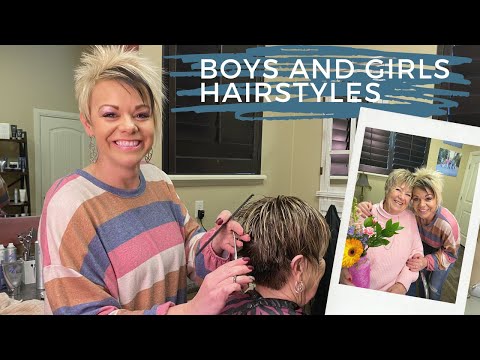 First visit
Patsy found RaDona online and drove in for her first visit. The conversation covers her flat spot, desired ear length, texture and whether she prefers soft or spiky styling.
Watch Patsy’s first visit → 130K+ views
Janice’s haircut keeps extra length where a cowlick needs coverage, while fullness, the nape and the ear area are treated as separate choices.
Watch the cowlick decisions →Use normal language. RaDona can translate that into cutting technique. A clear consultation sounds more like “I want my ear partly covered and I do not want to style longer than five minutes” than “Give me a 135-degree graduated textured perimeter.”
Exact service time varies by haircut and transformation, but the decision process should happen before irreversible length comes off.
RaDona can see density, growth patterns, curl/wave, cowlicks and the current shape before the finished plan is locked.
Show your saved page/video and explain what you like about it. Separate the parts you want from the parts you do not.
Confirm fringe, ears, nape, crown and front perimeter—especially before a long-to-short transformation.
Several BGH videos show RaDona checking the haircut again after drying because the final fall, texture and volume can reveal small adjustments.
Put your glasses back on. Tuck it behind the ear if that is how you wear it. Move the bangs where you normally put them.
Before leaving, make sure you know the basic drying direction, product amount and styling motion used on your own cut.
RaDona has filmed the actual Nephi salon, including the chair and work area. Knowing what the space looks like can remove one unknown from a first visit.
A strong reference gives the consultation a starting point. Your own density, texture, face, cowlicks and preferred maintenance level determine what should be adjusted.
Choose the broad haircut family first.
If density or proportion is the bigger issue, use a concern guide before choosing the exact style.
Read the service and salon pages for current booking details.
465 E 600 N, Nephi, UT 84648
By appointment. If this is your first visit, tell RaDona that when you contact the salon and mention whether you are considering a maintenance cut or a larger transformation.
Michelle arrives with a reference image for a dramatic Bob. Beverly checks the final side length with her glasses back on. Patsy discusses a flat spot, ear coverage and how she wants to style the finished haircut. Janice’s cowlick changes how much length stays in one area.
Those are the details a useful first-visit consultation should surface before the haircut is finished.
The consultation is there to reduce uncertainty before the haircut—not to test whether you know salon terminology.
A consultation is built into new-client haircut appointments. If you are considering a major change and want to talk before committing to a haircut date, call or text the salon and ask whether a separate consultation makes sense for you.
Bring one or two haircut photos or BGH videos you genuinely like, your usual glasses if you wear them, and a short list of what you do and do not want changed. It also helps to arrive with your hair in a normal state so RaDona can see how it naturally falls.
Explain what your normal morning looks like, how much styling you are willing to do, what your hair does that frustrates you, what you liked or disliked about previous cuts, and the shortest length you are comfortable with around the ears, nape and bangs.
Yes. Bringing a specific BGH page or video is one of the clearest ways to show the shape you like. The consultation is then used to decide which parts of that cut translate well to your own hair.
That is a normal reason to use the consultation. Start with the problem you want solved—too much bulk, flat crown, fine hair, difficult bangs, cowlicks, too much morning styling—and let the haircut options come from that discussion.
Call or text (435) 580-9160. RaDona’s salon is at 465 E 600 N, Nephi, UT 84648 and operates by appointment.
Save one or two real BGH transformations, bring your normal glasses, identify the lengths you want protected, and explain what you need the haircut to make easier. The consultation can do the rest.