Fine Hair
Fine hair refers to the diameter of each individual strand. You can have a full head of hair and still have very fine strands.
Fine hair and thinning hair are not the same thing — and neither automatically means you need one specific haircut. The goal is to preserve visible density, remove unsupported length and place shape where your hair has the most strength. Compare bobs, pixies, bixies and longer options, then see RaDona use the same ideas on real clients.
You can have one, the other, or both. That distinction matters because the haircut strategy is not exactly the same.
Fine hair refers to the diameter of each individual strand. You can have a full head of hair and still have very fine strands.
Thinning describes reduced overall density — fewer hairs covering the scalp than before or reduced fullness in specific areas.
Stronger edges, controlled layers and less unsupported length usually matter more than chasing maximum volume with product.
Removing unsupported length can make the top easier to lift while shorter layers create movement.
A defined lower edge makes the ends read as more substantial while the angle creates visual shape.
Graduation shifts visual weight upward while longer front pieces preserve softness.
A shorter perimeter reduces weight and can make root lift much easier to create.
The hybrid keeps more front perimeter than a pixie while shortening the crown enough to reduce weight.
Shorter sides and controlled top texture can move the visual focus upward when longer hair has begun to sit flat.
There is no universal “thin hair haircut.” The right shape depends on whether the concern is the ends, crown, part, sides or overall density.
A one-length lower edge keeps the ends looking as dense as possible.
Creates a stronger silhouette while preserving longer pieces around the face.
Controlled graduation moves weight upward without stripping the perimeter.
Reduces unsupported length and makes the top easier to lift.
Adds controlled separation through the top without removing excessive density.
Keeps softness around the face while shortening the crown and back.
Removing longer transparent ends can create a much stronger lower outline.
Preserves more length while strengthening the overall perimeter.
Short crown structure with longer fringe creates lift without exposing every area.
Uses a stronger diagonal line to create visual movement and interest.
Small amounts of movement without removing too much weight from the ends.
Natural wave can create visual body when the haircut avoids over-thinning.
Fine hair does not automatically require a pixie. If the lower lengths still look healthy and substantial, a blunt lob or shoulder-length shape may work beautifully.
Going shorter becomes especially useful when the ends look transparent, the crown sits flat or styling longer hair requires more effort than the finished result justifies.
All three can work. The main difference is how much length you want to preserve and where you need the visual weight.
Maximum reduction in hanging weight and the easiest route to crown lift.
Explore pixiesShorter crown structure with additional softness and perimeter near the face.
Explore bixiesExcellent when your ends still support length and need a strong visible outline.
Explore bobsGo deeper into eight volume-building cuts specifically for mature fine hair.
Fine hair over 50Understand what shampoo can improve cosmetically — and what it cannot do.
Shampoo guideContinue into heat protection, styling and practical care recommendations.
Hair care hubThese videos show the starting hair, cutting process and finished styling so you can judge the silhouette instead of relying on a single polished after photo.
▶
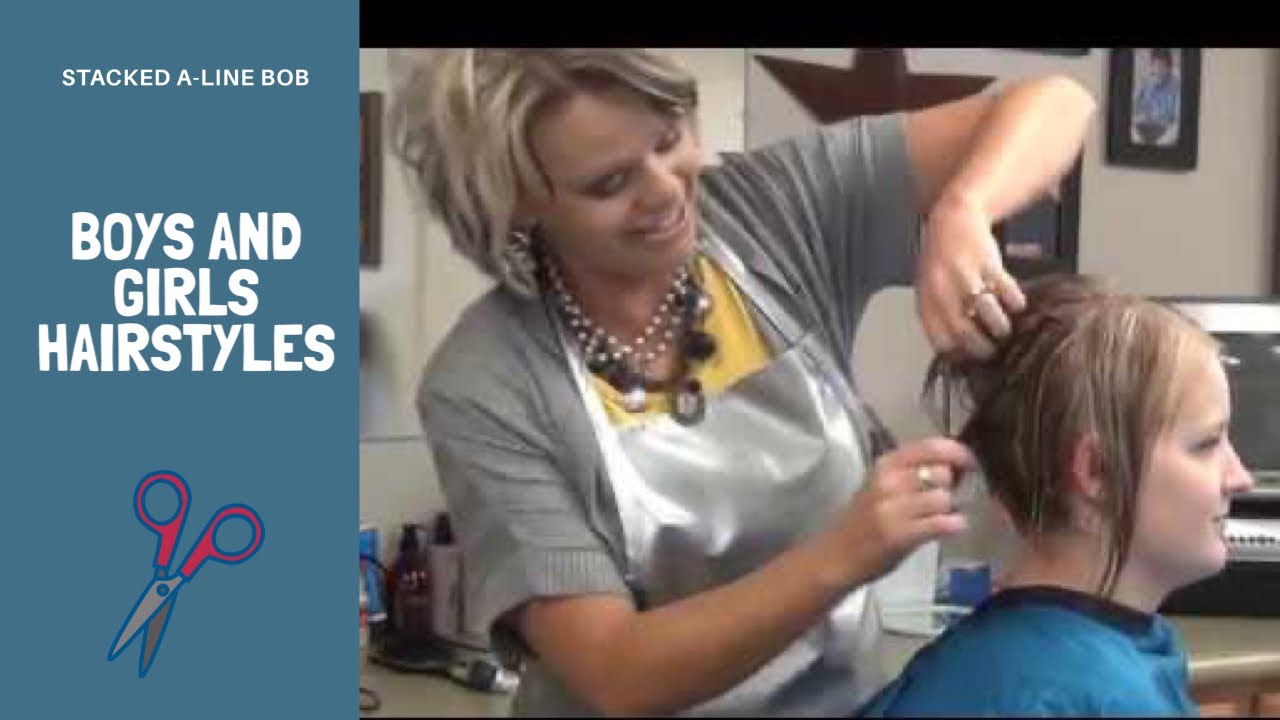
A strong example of how removing weak length and creating a clearer perimeter can improve the appearance of fullness.
Watch the bob
▶
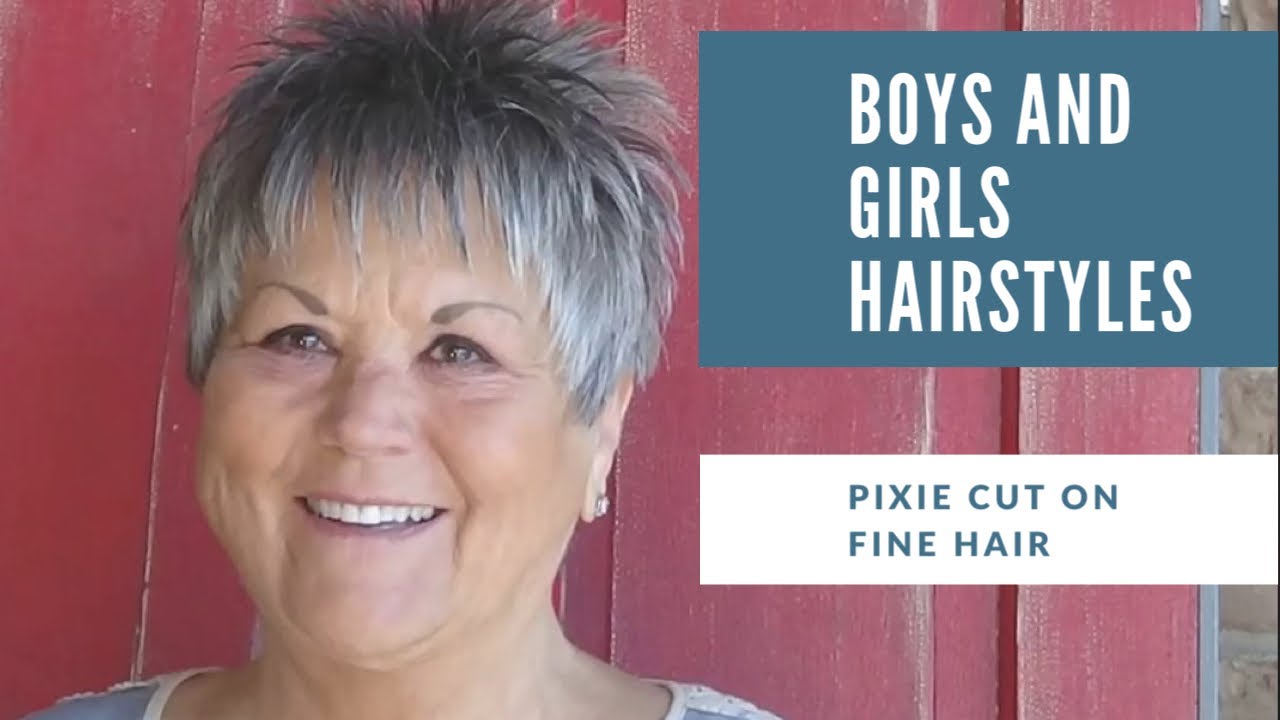
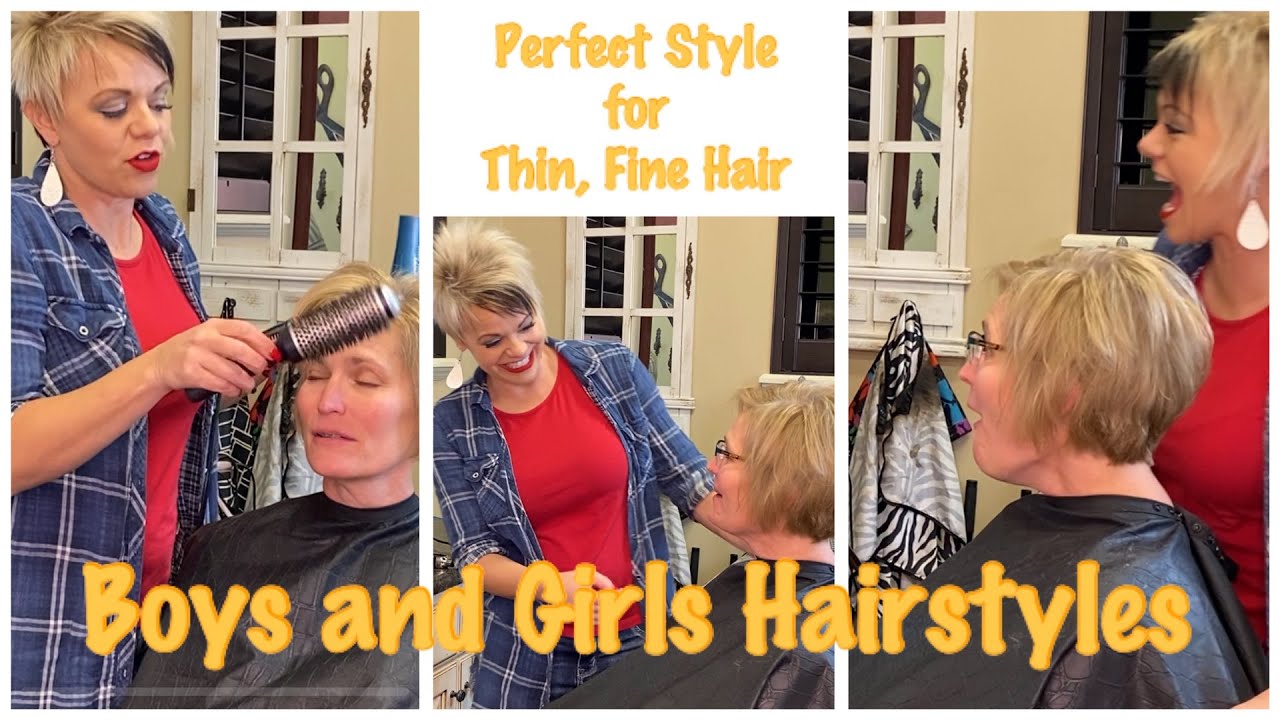
Watch RaDona create movement and lift on a real client with fine hair.
Watch Peggy
▶
Shows how graduation and longer front pieces can be combined without aggressively thinning the ends.
Watch Karen
▶
A useful example when shorter length and a tighter back are more appealing than maintaining a bob.
Watch the pixie
▶
A hybrid option when you want more crown structure without losing all of the front perimeter.
Watch the haircut
▶
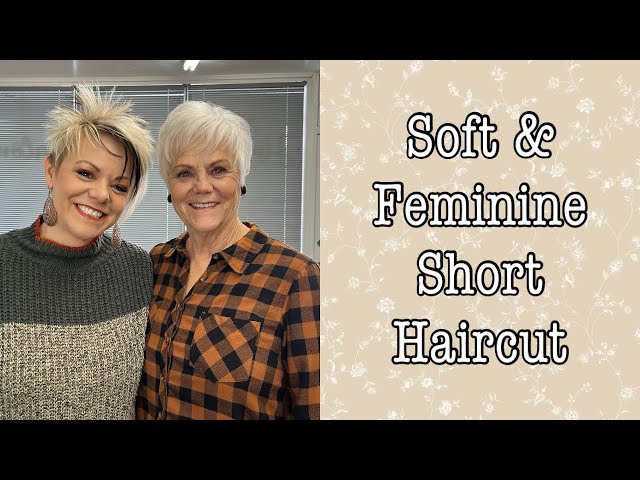
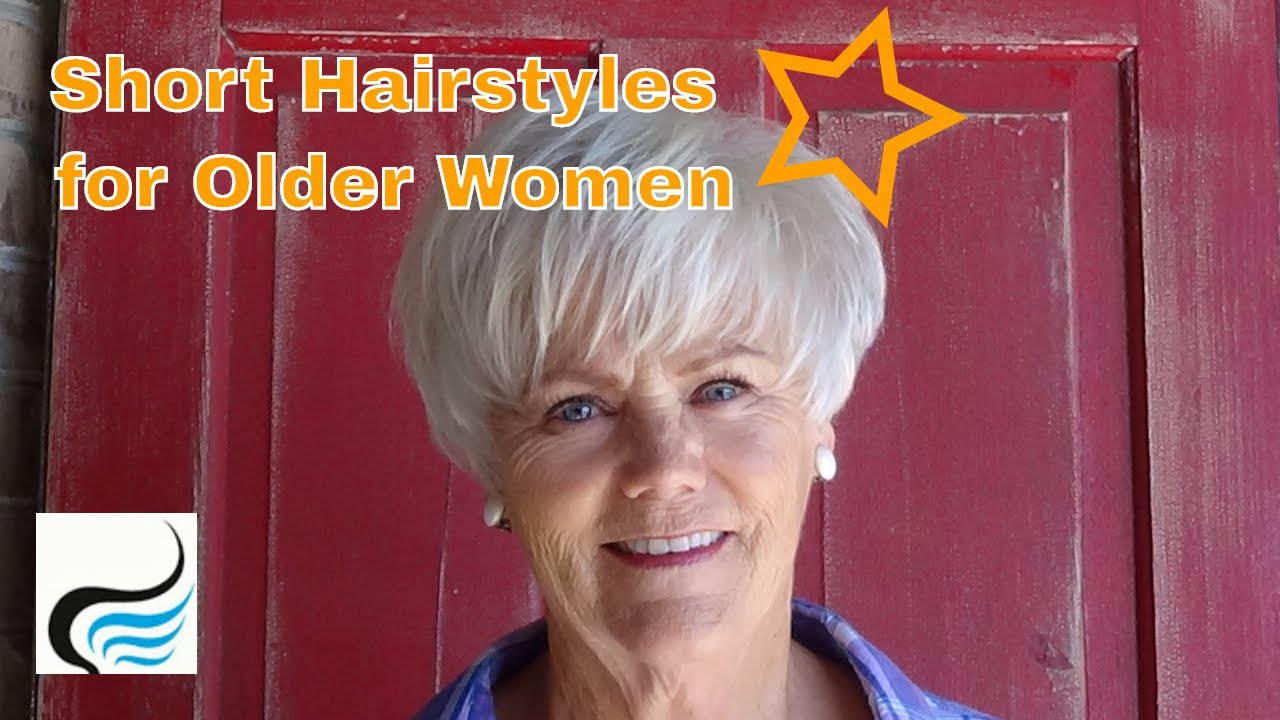
Demonstrates a compact mature-hair shape designed around softness, lift and easier styling.
Watch LindaTexture can be useful, but more layering and more thinning are not automatically better.
Hair density and texture can change with time, but the best haircut still depends on the individual hair in the chair.
Compare short cuts, bobs and longer options while density and texture begin changing.
Women over 50Pixies, stacked bobs and shorter layered cuts become especially useful when the crown sits flatter.
Women over 60Focus on simplicity, soft structure and preserving visible density without excessive layering.
Women over 70A good fine-hair routine usually starts light: enough cleansing to prevent buildup, enough conditioning to reduce breakage and enough styling support to create lift without coating the hair.
If your hair has always been fine, haircut strategy may be the main concern. If your density has noticeably changed, however, it can be worth discussing the change with a dermatologist or other qualified medical professional.
The American Academy of Dermatology notes that many causes of hair loss can look similar, and a dermatologist can help identify the cause and appropriate treatment.
Read dermatologist guidance from the AADStart with where the visual density is being lost, then choose the shape that protects it best.
| Concern | Useful Starting Point | Why It Can Help | Use Caution With |
|---|---|---|---|
| Wispy ends | Blunt bob / lob | Creates a stronger bottom edge | Heavy layering |
| Flat crown | Pixie / light stack | Moves weight upward | Long unsupported top length |
| Fine all over | Bob / bixie / pixie | Creates a clearer silhouette | Excessive thinning |
| Want to keep length | Blunt lob | Preserves perimeter density | Too many short layers |
| Need easy styling | Soft pixie | Less weight and shorter routine | Going shorter than you are comfortable maintaining |
Haircut advice can improve the visual result, but it should remain separate from diagnosing or treating true hair loss.
Fine hair describes the diameter of each individual strand. Thinning hair describes reduced overall density. You can have a lot of very fine hair, or thicker strands with reduced density, or both fine strands and lower density.
Blunt bobs, A-line bobs, controlled stacked bobs, pixies and bixies can all work. The best choice depends on where the hair looks least dense and how much length you want to keep.
Yes, but carefully. Strategic layers can create movement and crown lift. Too many layers or aggressive thinning can remove visual weight from already-fine ends.
No. Shorter hair can reduce weight and make the silhouette look fuller, but some fine hair can support a blunt lob or shoulder-length shape beautifully.
Shampoo may improve cleanliness, moisture, breakage and how full the hair feels, but shampoo alone should not be expected to regrow lost hair or determine why density is changing.
Consider professional medical evaluation if you notice significant or progressive thinning, a widening part, a much thinner ponytail, sudden heavy shedding, bald patches or other unexplained scalp changes.
If your ends look thin, start with Bob. If your crown stays flat and you are comfortable going short, compare Pixie. If you want more lift without giving up as much face-framing length, Bixie may be the middle ground.