▶
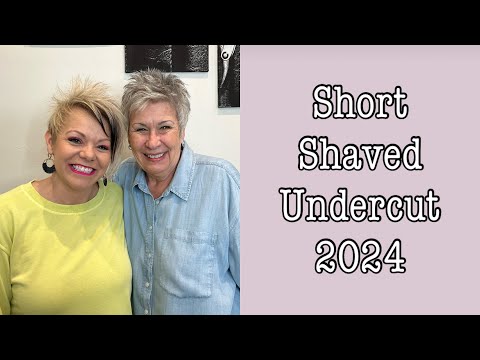
She Went for an Undercut at 52
Start here. This is the clearest recent match to the page intent and shows how an undercut can feel bold without reading as a men's cut.
Watch on YouTubeAn undercut does not have to mean shaving half your head. It can be a subtle hidden nape, a soft side undercut, a pixie with extra contrast, or a bold asymmetric shape. The right version depends on density, comfort level and how visible you want the short area to be.
Absolutely. The most wearable approach is usually to decide how visible you want the undercut to be before deciding how short to take it. A hidden nape or small side undercut can remove bulk without dominating the haircut; an asymmetric or shaved pixie creates much stronger contrast.
Hair density matters. Undercuts are especially useful on dense hair because they deliberately remove bulk. On truly thinning hair, removing too much can expose more scalp and reduce the visual density you are trying to protect.
An undercut is hard to judge from a finished front photo. These videos show where RaDona removes the bulk, how much contrast remains, and how the undercut connects into the longer hair.
▶
Start here. This is the clearest recent match to the page intent and shows how an undercut can feel bold without reading as a men's cut.
Watch on YouTube
▶
A faster-moving recent channel performer that shows what happens when the undercut becomes a visible part of the design.
Watch on YouTube
▶
Compare a bolder version when you are comfortable exposing more of the sides and creating greater contrast with the longer top.
Watch on YouTubeThe key question is not simply “Do I want an undercut?” It is where you want the short area, how much you want to expose, and how much longer hair you want available to cover or contrast with it.
Keep enough length on top to soften the result while taking one side shorter for contrast and easier bulk control.
One side remains much shorter while the opposite side or fringe carries the movement and visual weight.
Take the undercut shorter and preserve more length above it for a stronger difference between the two zones.
Remove bulk underneath at the nape while leaving enough hair above to cover the short area when the hair is down.
Preserve a bob silhouette on top while removing hidden or visible weight underneath.
Combine a closely cut under-layer with longer pixie length on top for maximum lift and visible contrast.
A real reminder that an undercut does not belong to one age group. The amount of contrast can be adjusted to the person.
Keep enough top length to partially conceal the undercut, then expose it with the part, tuck or styling direction.
A practical short shape that uses the undercut mainly to reduce bulk and simplify the sides.
Use a shorter lower section without turning the haircut into a dramatic shaved style.
An undercut intentionally removes hair from underneath or from one side. That can be extremely useful for thick, dense or bulky hair because it changes how much hair the longer section has to sit on top of.
On fine or truly thinning hair, use more caution. If the scalp is already visible or the perimeter is sparse, removing another section may reduce fullness rather than improve it.
The undercut itself grows quickly, but blending that short area back into longer hair can take time. Choosing the right size from the beginning matters.
Dense hair, a heavy nape or a bulky side can make an undercut functional as well as stylish.
A hidden nape or narrow side section lets you try the effect without removing a huge amount of hair.
If density is low, removing another section may expose more scalp and make the remaining hair harder to balance.
An undercut describes what happens underneath. Pixie, bixie and bob describe the overall haircut shape. You can combine an undercut with more than one of them.
Choose it when you intentionally want to remove a section underneath or on one side.
Choose a standard pixie when you want lift and short length but do not need a separate shaved zone.
Choose these when you want more softness and visible perimeter around the face and jaw.
Use the closest real-client example as your consultation reference. The location and size of the undercut matter more than the haircut label.
▶
A useful reference when you want proof that the idea can be customized well beyond one age group.
Watch transformation
▶
Compare a more committed shaved pixie when you want the undercut visible from multiple angles.
Watch transformation
▶
See how longer hair can cover or reveal the undercut depending on styling direction.
Watch transformation“Undercut” is not specific enough. Show the exact example and explain how much of the short area should show when your hair is styled normally.
An undercut can be quick to style but more demanding to maintain. Think about both the fresh-cut look and what you will do if you decide to grow it back.
Side, nape, hidden panel or larger asymmetric area.
A clipper-short section creates more contrast and shows regrowth sooner.
Use the longer hair to soften, expose or emphasize the undercut.
Decide whether you want frequent cleanups or a planned transition back into the longer hair.
| Undercut type | Visibility | Approx. maintenance | Grow-out difficulty |
|---|---|---|---|
| Hidden nape undercut | Low when hair is down | About 4–6 weeks | Lowest |
| Soft side undercut | Moderate | About 4–6 weeks | Moderate |
| Undercut bob | Low to moderate | About 4–7 weeks | Moderate |
| Shaved asymmetric pixie | High | About 3–5 weeks | Highest |
This undercut page is a transformation companion inside the Women Over 50 cluster. Use the pixie and bixie children to compare less-committed short cuts, or the bob page when you want to keep more perimeter.
Use the hubs if you are still exploring several short-hair directions.
Move sideways if you want short-hair shape without the same undercut commitment.
Density should influence how much hair you are willing to remove underneath.
The article helps you compare visibility, density, maintenance and grow-out. RaDona's videos show exactly how much hair is removed and how the longer section behaves after the cut.
RaDona is a licensed cosmetologist and salon owner in Nephi, Utah who has worked behind the chair since 2000. Her undercut advice is grounded in real client consultations, real density decisions and real grow-out concerns.
For an undercut, the consultation matters more than the trend name: density, cowlicks, scalp visibility, clipper length, maintenance and the amount of longer hair left above the short zone all affect the result.
Save the closest real-client example and decide whether you want the undercut hidden, visible only on one side, or clearly exposed as part of the haircut design.
Undercuts are flexible, but the short section changes density and grow-out. These are the practical decisions that matter before the clippers come out.
Yes. An undercut can be soft, hidden, asymmetric or very bold. The right version depends on density, hair texture, how much scalp exposure you are comfortable with and how often you want to maintain the shaved or closely cut area.
A hidden nape undercut or a small side undercut is usually the least dramatic first step because more hair remains available to cover the short area when you want a softer look.
Sometimes, but they require caution. An undercut removes density by design, so low-density hair can look thinner if too much is shaved away. Fine but dense hair may still work well; truly thinning areas should usually be protected.
They can be especially useful for thick or dense hair because an undercut can remove bulk underneath while preserving visible length on top.
A closely cut or shaved undercut often looks most intentional with maintenance about every 3 to 6 weeks. Hidden or softer undercuts can sometimes grow longer between appointments.
A regular pixie may be short all over, while an undercut pixie deliberately removes much more length underneath or on one side and leaves a stronger contrast with the longer top.
Yes. The contrast between a clean short area and longer silver or gray hair can look especially graphic and intentional.
Show the exact real-client example you like and specify the location of the undercut, how short it should be, whether it should be visible all the time or hidden, and how much longer hair you want left on top.
Then match that visibility to your hair density, maintenance comfort and preferred top length. Watch the exact transformation before you decide, and bring the video into the salon consultation.