
 ▶
2026 · Exact age + fine-hair match
The Perfect Pixie for Women Over 70
Start here for a recent age-specific pixie with step-by-step fine-hair cutting techniques.
Watch on YouTubeThe best haircut for thin fine hair after 70 is not the one with the most layers. It is the one that keeps visible weight where your hair needs it, removes enough length to prevent collapse, and creates a shape you can reproduce without heavy styling.
The strongest starting points are usually a soft pixie, long pixie, pixie-bob, compact bob or softly stacked short cut. All five can reduce the weight that pulls roots flat while keeping enough visible perimeter to avoid a wispy finish.
The best choice depends on where density is lower. If the crown is flat, go shorter. If the ends are transparent, strengthen the perimeter. If you need both, a bixie or soft stacked short can create a useful middle ground.
That is the advantage of RaDona's real-client library. These videos show what the hair looked like before the cut, where density was preserved and how the finished shape behaves from multiple angles.
▶
Start here for a recent age-specific pixie with step-by-step fine-hair cutting techniques.
Watch on YouTube ▶
A high-performing exact-match example that shows how short structure can create a fuller-looking silhouette.
Watch on YouTube ▶
Use this real age-77 transformation when you want strong proof from hair very close to the target audience.
Watch on YouTubeShorter is not automatically better. The goal is to place weight where density looks lowest and remove weight only where it improves lift or shape.
Shorten the sides and back while keeping enough crown length to create movement and root lift.
Use light surface separation to create dimension while protecting the actual density underneath.

Keep more fringe and side length when you want lift without exposing as much of the ears and temples.

A chin or upper-neck perimeter can make fine ends look more substantial than longer, feathered lengths.
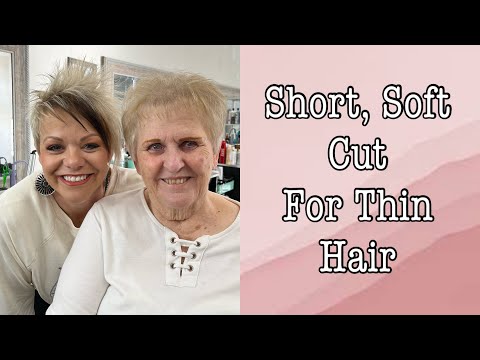
Controlled graduation can shift shape toward the crown while still keeping a substantial outside silhouette.

Keep the lower edge visible and add only enough internal movement to prevent the shape from collapsing.

Removing fragile, transparent length can make the overall silhouette look more deliberate and compact.

Keep more usable top length and direct it away from the scalp while tightening the lower silhouette.

Let natural curl create volume, but keep enough length for the curl pattern to form instead of cutting it too close.

Tighten the nape and sides while leaving enough top length to keep the silhouette soft and flexible.
Fine hair describes strand diameter. Thinning hair describes lower density. You can have fine strands with plenty of hair, or thicker strands with noticeably fewer hairs.
That distinction matters because fine-but-dense hair may support more layering, while low-density hair usually needs more protection through the perimeter and sparse zones.
That answer often matters more than whether a haircut is labeled pixie, bob or layered.
A pixie or short pixie-bob removes weight that can pull the roots flat.
Bring the haircut up to a point where the lower edge looks visibly denser.
A long pixie, pixie-bob or softly stacked short can create lift while preserving perimeter.
None of these are universal prohibitions. The point is to avoid removing density unless the haircut gains something useful in return.
They can break up the visible perimeter and leave the ends looking transparent.
Thinning shears or razors can remove density from areas that already need protection.
Extra length is not helping if the lower section looks see-through and pulls the roots flat.
Fine strands can collapse quickly when oils or rich creams sit close to the scalp.
These videos help you decide how short you want to go after you understand where your density needs support.
▶
A strong broad age-specific comparison when you want short shape without focusing on one exact pixie variation.
Watch transformation
▶
Use this if the main priority is a stronger lower edge and more face-framing length.
Watch transformation ▶
Compare a practical short shape when low daily styling effort matters as much as visible fullness.
Watch transformationConsider medical or dermatology evaluation if shedding is sudden, patchy, painful, inflamed or substantially different from your normal pattern. Haircut and styling strategies can improve the visible silhouette, but they do not diagnose or treat hair loss.
Bring one real-client example that resembles your starting hair. Then point out the crown, temples, part and ends instead of asking only for “more volume.”
Thin fine hair usually responds better to root direction and lightweight support than to layers of heavy product.
| Haircut | Best for | Approx. trim window | Main advantage |
|---|---|---|---|
| Soft pixie | Flat crown | About 4–6 weeks | Maximum root lift |
| Long pixie / pixie-bob | Lift + softer perimeter | About 5–7 weeks | Flexible middle ground |
| Compact short bob | Thin, wispy ends | About 6–8 weeks | Strongest lower edge |
| Soft stacked short | Flat back / crown | About 5–7 weeks | Rounded crown shape |
The Women Over 70 page remains the broad age hub. This page goes deeper on density and haircut selection, then sends readers to nearby bob, stacked and age-based pages when they are ready to compare shapes.
Use these when you want more than the thin/fine-hair decision.
Move into the broader bob or short-hair pages if your main question becomes length and perimeter.
These support pages help when face proportions or the broader fine-hair question matters.
The page explains perimeter, lift and haircut family. RaDona's videos show the actual starting hair, the cutting process and the final shape so you can choose from evidence instead of imagining how a stock photo might translate.
RaDona is a licensed cosmetologist and salon owner in Nephi, Utah who has worked behind the chair since 2000. Her mature fine-hair advice is based on real clients, including women in their 70s, with different densities, natural textures and maintenance needs.
The goal is not to promise thicker hair. It is to use the density that is present more effectively through perimeter, length, crown shape and realistic styling.
Then discuss where your hair feels finest, how much crown lift you want, how short you are comfortable going and which areas should keep the most weight.
These answers focus on haircut shape and visible fullness. Medical causes of hair loss are separate questions.
A soft pixie, pixie-bob, compact bob, soft stacked short or short A-line can all work well. The best choice protects visible density while removing enough weight to create lift.
Yes. A pixie can reduce the weight that pulls fine hair flat and make root lift easier. The stylist should preserve density in sparse areas and avoid over-thinning.
Yes. A short bob can create a strong lower perimeter, which is especially useful when the ends look wispy. Soft graduation can add shape without sacrificing too much density.
Usually only as many as the density can support. Strategic layers can create movement and crown lift, but too many short layers can make the ends look thinner.
Fine hair describes the diameter of each strand. Thinning hair describes reduced density or fewer hairs. A woman can have fine strands with good density or thicker strands with lower density.
A soft pixie or compact short cut is often the quickest to style. A short bob can also be low effort if the perimeter and natural fall are well designed.
A shorter, intentional shape can make the silhouette look fuller and can show the tonal variation in silver hair more clearly. The haircut changes appearance, not the actual number of hairs.
Consider medical or dermatology evaluation for sudden shedding, patchy loss, scalp pain, inflammation or a substantial unexplained change in density. A haircut can change the appearance of fullness but does not treat the cause of hair loss.
Decide whether you need crown lift, a stronger perimeter or both. Then watch the closest real Women 70+ transformation and take that exact example to your stylist.