
 ▶
October 2026 · Age 76
Mom's Short Stacked Makeover at 76
A very recent real-client option when you want crown shape, softness and a compact neckline.
Watch new transformationThe best hairstyle after 75 is not a rule about age. It is a shape that works with your current density, texture, glasses, neckline and styling routine. This guide uses real RaDona clients—many in their mid-70s, late 70s and 80s— so you can compare actual mature hair instead of stock-photo perfection.

Soft pixies, compact short cuts, pixie-bobs, short layered bobs and gentle stacked shapes are all strong options because they can create visible shape without demanding complicated styling.
But there is no age-based requirement to go short. The best haircut is the one that supports your density, makes your natural texture easier to manage and keeps enough softness or perimeter for you to feel comfortable.
These are deliberately different from the videos we have leaned on across earlier BGH builds. They give this page its own visual identity.
▶
A very recent real-client option when you want crown shape, softness and a compact neckline.
Watch new transformation ▶
A newer soft short-hair reference with a polished finish and strong real-client relevance.
Watch new transformation ▶
A newer age-specific pixie that brings a different client and thumbnail into the site library.
Watch new transformationThese are ranked by current lifetime views in the relevant mature-hair library at the time this page was built. We keep them here for proof instead of letting them dominate every hero and gallery on the site.
 #1
A major recent audience winner and useful reference for broad mature-hair appeal.
Watch popular video #2
A high-performing soft mature-hair transformation that extends the page naturally into the 80+ audience.
Watch popular video #3
One of RaDona's strongest exact-age transformations for fine mature hair.
Watch popular video #4
Strong family-centered proof that resonates with the exact late-70s audience.
Watch popular videoThese examples intentionally pull deeper into RaDona's library. The goal is to help you compare soft, polished, messy, stacked, bob and pixie directions without seeing the same handful of faces repeatedly.

Keep the silhouette compact but leave enough surface length to avoid a hard, close-cropped finish.
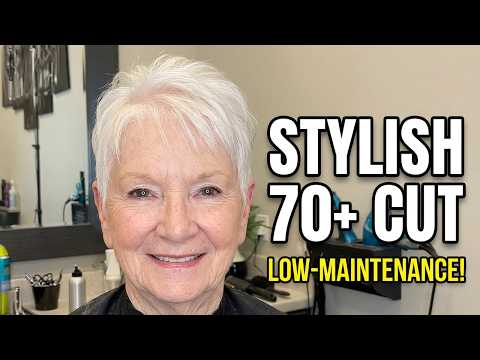
A compact pixie can make root direction simple and reduce the amount of daily brush work.

Use controlled separation and movement when you prefer a more casual finish than a polished rounded style.

Keep useful fringe and temple length while directing the crown upward for a softer face-framing result.

Focus on the silhouette itself—crown, sides and neckline—rather than relying on heavy product to create the finish.

A restrained short shape can look modern without requiring aggressive texture, asymmetry or a very exposed neckline.

Use an 80+ example when you want to see how pixie proportions translate on hair beyond the mid-70s.

A rounded silhouette can keep the haircut feminine and polished while still making daily styling manageable.

Keep more perimeter around the jaw and neck when you want softness and visible lower-edge density.
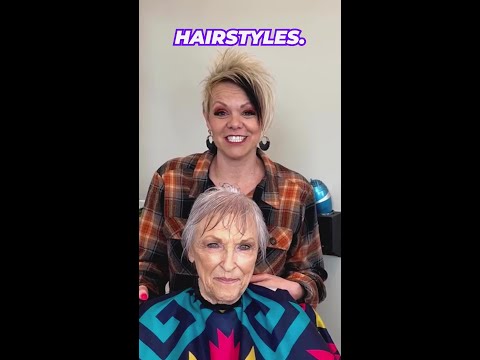
Use rounded shape and controlled perimeter when visible fullness matters more than edgy separation.

Go tighter through selected areas when you want a cleaner outline and very low day-to-day styling effort.

A straightforward salon shape can be the best choice when ease, repeatability and natural texture matter most.
Fine hair and thinning hair are not the same. Fine describes strand diameter; thinning describes lower density. Either can influence whether a pixie, bixie, bob or stacked short will look best.
The haircut can improve the appearance of fullness by changing silhouette, root lift and perimeter—but it cannot create new follicles or treat hair loss.
Start with maintenance, perimeter and crown lift rather than choosing only from a front-facing photo.
A soft pixie or compact short shape usually needs the least brushing and heat styling.
A pixie-bob or short bob preserves more face-framing length around the ears and jaw.
A stacked or rounded short cut can move visual fullness upward through the back.
The best reference is not always the haircut you like most. It is the one showing similar density, texture and natural fall.
Shorter hair usually simplifies morning styling, but very short outlines need more frequent salon maintenance.
| Hairstyle family | Morning styling | Approx. trim window | Main advantage |
|---|---|---|---|
| Soft pixie | 2–5 minutes | About 4–6 weeks | Maximum ease and lift |
| Pixie-bob / bixie | 4–8 minutes | About 5–7 weeks | Short-hair ease with softer perimeter |
| Short bob | 5–10 minutes | About 6–8 weeks | Strong lower edge and more coverage |
| Soft stacked short | 4–8 minutes | About 5–7 weeks | Rounded crown shape |
The Women Over 70 page remains the broad parent. This page narrows into the 75+ audience and then routes into thin/fine hair and bixie decisions when those become the main concern.
Use the age hubs to compare more haircut families and age ranges.
Use the density page when your biggest question is how to create visible fullness.
Move into the haircut family once you know how short or soft you want to go.
The page helps you narrow the shape. The videos show density, cowlicks, texture, styling and the finished haircut from angles a static photo cannot.
RaDona is a licensed cosmetologist and salon owner in Nephi, Utah who has worked behind the chair since 2000. Her mature-hair library includes women in their 70s and 80s with different densities, textures, glasses, cowlicks and maintenance preferences.
That real-client variety matters more than generic age rules. The best style is the one that fits the hair in front of you.
Then discuss crown lift, fringe, ear coverage, neckline and how much daily styling you want. That is far more useful than simply asking for an “older woman's haircut.”
These are starting points, not age rules. Density, texture, face framing and maintenance preferences matter more than the number on your birthday.
Soft pixies, short layered cuts, compact bobs, softly stacked shapes and low-maintenance short styles can all work well. The best choice depends on density, natural texture, glasses, face framing and how much daily styling you want.
A well-shaped short pixie or soft compact cut is often the easiest day to day. A short bob can also be low maintenance when the natural fall and perimeter are designed well.
Soft pixies, pixie-bobs, compact bobs and controlled stacked shapes can all create a fuller-looking silhouette. Fine or thinning areas should not be aggressively texturized.
Yes. Age does not determine the maximum hair length. The useful question is whether the length still supports the density, condition, styling routine and look you want.
Yes. Pixies can create lift, simplify styling and showcase natural gray or silver hair. The amount of fringe, ear coverage and nape exposure should be customized.
Yes. Short bobs can keep a strong lower perimeter and more face-framing softness than a pixie, which can be helpful for fine ends or women who prefer more coverage.
Very short pixies often need trims about every 4 to 6 weeks. Softer short cuts, pixie-bobs and compact bobs can often go roughly 5 to 8 weeks depending on the outline.
Bring one or two real-client videos that resemble your starting hair. Discuss crown lift, fringe, ear coverage, neckline, perimeter and how much styling you want to do at home.
Start with the fresh transformations, use Most Popular for proven inspiration, then save the real-client example closest to your own hair.