
 ▶
Exact haircut family · 116K+
Pixie-Bob Haircut Tutorial
Start here to see how the cut bridges pixie layering with bob-like perimeter and softness.
Watch on YouTubeA bixie sits between a pixie and a bob: lighter and more lifted than a bob, but softer around the ears, temples and neckline than a close pixie. For women over 70, that middle ground can be especially useful when you want manageable short hair without making the haircut feel too exposed.
It removes enough length to make crown lift easier while preserving more visible perimeter around the face than a classic pixie. That can make the haircut feel softer, more tuckable and more forgiving as it grows.
The best version depends on density. Fine or thinning hair usually needs fewer internal layers and a stronger lower edge; dense hair can support more texture and weight removal.
The pixie-bob videos show the haircut family. The Women 70+ transformations show how shorter length, perimeter and density behave on mature hair.
▶
Start here to see how the cut bridges pixie layering with bob-like perimeter and softness.
Watch on YouTube ▶
Use this to see the modern bixie silhouette and how much movement can sit between a bob and a pixie.
Watch on YouTube ▶
This gives the page age-specific evidence for how softer short-hair proportions work on a real woman in her 70s.
Watch transformationEvery bixie lives somewhere on that spectrum. The right balance depends on crown lift, visible perimeter, ear coverage, density and styling preference.
Keep bob-like softness around the face while using shorter layers through the back and crown.
Use visible surface movement and a lighter back while keeping enough perimeter to avoid a close-cropped feel.

Keep the lower edge more substantial and use fewer internal layers where density is already light.

Move closer to pixie length when root lift and simple styling matter more than side or nape coverage.

Keep more bob-like side length and perimeter while lightening the crown and back for movement.

Borrow soft graduation from a stacked cut to build crown shape while keeping the overall length shorter and lighter.
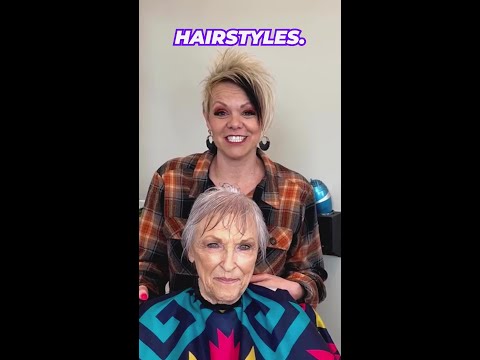
Keep the silhouette smooth and full rather than piecey when softness is more important than edgy texture.

Keep more weight through the lower edge when fine or thin hair needs visible density around the jaw and sides.
That is the main reason this haircut can work well for fine mature hair. Shorter crown and back length reduce weight, while the sides and front can stay long enough to look substantial.
But the haircut should not create fullness by removing more density. Fine strands and low density are different issues, and already-sparse areas should be protected.
Silver hair often has natural tonal variation. A bixie can make that variation more visible through shorter surface layers, but fine silver hair still needs enough weight to avoid a feathery or transparent finish.
A flexible fringe can soften the forehead and give the bixie more bob-like polish.
Create separation mainly where the eye sees it instead of carving deeply into fine silver hair.
Keep the nape, ears and front perimeter intentional so the haircut reads as designed rather than grown out.
All three can work beautifully. The difference is how much perimeter you want to keep and how much root lift you need from shorter length.
Choose it when maximum lift, open ears and a compact neckline are more important than keeping perimeter.
Choose it when you want short-hair lift with enough side and front length to keep the look soft and flexible.
Choose it when visible lower density and jaw or neck coverage matter more than maximum crown lift.
These are not all labeled bixies. They are useful because they show the neighboring pixie and bob proportions on real women in their 70s.
▶
Compare a rounded, bob-forward short shape when you want more back structure and perimeter.
Watch transformation
▶
Use this as the shorter end of the comparison when deciding how much pixie influence your bixie should have.
Watch transformation
▶
Use this as the longer end of the comparison if you want to keep more side and front weight.
Watch transformationBring the exact example closest to your density and decide whether you want more pixie lift or more bob-like perimeter before the first cut is made.
The exact schedule depends on how short the nape and sides are. In general, the more pixie-like the cut becomes, the sooner the outline needs attention.
| Bixie direction | Best for | Approx. trim window | Main advantage |
|---|---|---|---|
| Short / pixie-forward | Maximum lift | About 4–6 weeks | Quick styling and light crown |
| Classic bixie | Balanced lift + softness | About 5–7 weeks | Flexible middle ground |
| Long / bob-forward | More perimeter and coverage | About 6–8 weeks | Soft grow-out and tuckable sides |
| Fine-hair bixie | Lower density | About 5–7 weeks | Lift without giving up all lower-edge weight |
The Women Over 70 hub stays broad. The thin/fine-hair page handles density decisions. This page goes deeper on the middle ground between pixie and bob.
Go back to the age hub if you are still comparing multiple lengths and haircut families.
Use these when fine hair or the amount of shortness becomes the bigger question.
These pages are useful when the haircut family matters more than the exact age band.
The guide explains how a bixie leans pixie or bob. RaDona's videos show the actual back, sides, crown and perimeter so you can choose from real hair instead of trying to translate a stock photo.
RaDona is a licensed cosmetologist and salon owner in Nephi, Utah who has worked behind the chair since 2000. Her mature short-hair guidance is based on real clients—including women in their 70s—with different densities, glasses, cowlicks, textures and styling needs.
A bixie consultation is mainly about proportion: how much length remains around the face, where crown lift begins, how short the nape gets and how much perimeter should remain.
That makes the bixie consultation much easier. The goal is to decide exactly where your preferred middle ground sits before cutting the perimeter away.
These are starting points. The final bixie should be customized to density, natural texture, glasses, neckline and how short you want to go.
Yes. A bixie can give you pixie-like lift while keeping more bob-like softness around the ears, temples and neckline. The best version depends on density, texture and how much perimeter you want to keep.
A bixie blends elements of a pixie and a bob. It is generally longer and softer around the face than a classic pixie, but shorter and more layered than a traditional bob.
It can be. A bixie can remove enough length for lift while preserving more visible perimeter than a pixie. Fine or thinning areas should not be over-layered or aggressively texturized.
A pixie is usually shorter around the ears, sides and neckline. A bixie keeps more length and perimeter, especially around the face, while still using short-hair layering for movement.
A bob generally has a stronger, more continuous perimeter. A bixie breaks up more of that perimeter with shorter layers and a lighter back or crown.
Yes. A bixie can show natural silver dimension especially well because shorter surface layers catch light and movement. The amount of texture should match the hair's density.
Many bixies look their best with trims about every 5 to 8 weeks. Shorter versions may need maintenance sooner, while longer pixie-bob shapes can often go a little longer.
Bring a real example and describe how much length you want around the ears and face, how much crown lift you want, how short the nape should be and whether you want the cut to lean more pixie or more bob.
Decide whether you want the shape to lean pixie or bob. Then watch the closest real-client comparison and take that exact balance to your stylist.