
Fresh Shape
Learn where your fringe wants to sit, how your crown lifts and how little product the new shape actually needs.
A pixie usually does not fail all at once. The ears get heavy. The nape starts flipping. The crown stops lifting. The fringe changes direction. Good maintenance means recognizing which part of the silhouette changed first—and fixing only what actually needs attention.

A softer pixie often needs a professional reshaping around every 4–6 weeks. Tighter sides, a clipped nape or very fast growth can show sooner. RaDona's client Ellen is an unusually fast grower and returns about every three weeks.
Do not schedule by the calendar alone. Watch the silhouette: ears, nape, fringe, side bulk and crown balance usually tell you when the cut is ready.
Ellen is a useful maintenance client because she returns frequently. The point is not that everyone needs a three-week haircut—the point is seeing how a pixie loses precision through ordinary growth.
Growth speed, taper, density and styling tolerance all change the schedule. These windows are practical checkpoints rather than rigid rules.
Learn where your fringe wants to sit, how your crown lifts and how little product the new shape actually needs.
Very short pixies may start showing growth around the ears and nape. Fast growers like Ellen may already want a cleanup.
For many pixies this is when side weight, fringe length or crown heaviness starts changing the intended silhouette.
Either restore the pixie or intentionally transition toward a longer pixie/bixie. Do not drift into a grow-out without a plan.
The October maintenance video's captions are brief, so these detailed notes come from RaDona's fully captioned August 2026 Ellen walkthrough. They explain what makes a pixie easier to live with between appointments.
The goal is not to force an overgrown pixie to look freshly cut forever. It is to preserve the intended shape until the next appointment.

When a pixie starts falling flat, redirecting the roots can do more than piling product onto the ends.

A pixie should not require a full salon blowout every morning. Learn the two or three movements that recreate your shape.

Mousse, lift spray, paste and hairspray should each solve a specific styling problem rather than simply coating the hair.

Some shapes tolerate more growth because they keep useful length and avoid relying on a razor-tight perimeter.
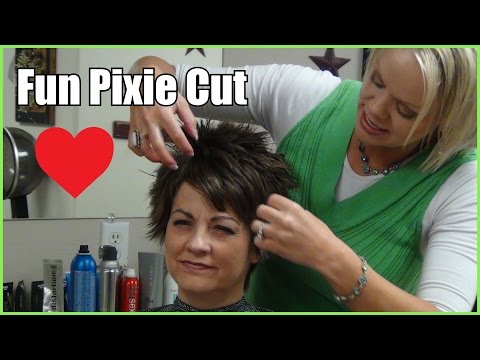
A pixie is easier to maintain when you can style it soft, lifted or slightly piecey as different sections grow.

Maintenance should evolve with the hair you have now. Fine, thick, gray and wavy pixies should not all be texturized or styled the same way.

In RaDona's grow-out video with Helen, the recurring lesson is simple: keep it shaped while it grows. Helen had been growing out a short spiky pixie for more than a year, but continued trims helped her avoid the roughest stages.
That does not mean cutting every section back to pixie length. It means maintaining the back, controlling bulk and trimming selected layers while allowing the areas needed for the next shape to gain length.
A maintenance appointment and a grow-out appointment should not have the same goal.
Bring the ears, nape, sides and crown back into the proportions you liked.
Keep growing the areas that create perimeter while controlling the back and bulky zones.
Clean only what is bothering you while preserving enough length to keep both options open.
This list stays tightly relevant to owning a pixie—styling, maintaining and growing it—rather than filling the section with unrelated blockbuster makeovers.
#1
The strongest view total in this maintenance-focused group and useful for learning multiple ways to control a short cut.
Watch the styling guide →
#2
The exact-match current video and the reason this page deserves its own maintenance search intent.
Watch the maintenance trim →
#3
A newer styling resource with solid momentum for people who already own the cut.
Watch the easier styling approach → #4
A proven resource for the moment when maintaining the original pixie is no longer the goal.
Watch the grow-out alternative →The first visible problem tells your stylist more than the number of weeks since the last haircut.
| What you notice | Likely maintenance issue | Salon conversation | Do you need a full reshape? |
|---|---|---|---|
| Hair covers the ears differently | Side / lower perimeter growth | Clean around ears while preserving desired side length | Not always |
| Nape flips or feels fuzzy | Neckline growth | Taper or soften the nape | Usually not |
| Crown falls flat | Top length or bulk changed balance | Reassess length, texture and root direction | Sometimes |
| Fringe sits in eyes | Front length / growth pattern | Trim or redirect fringe without shortening everything | No |
| Sides feel puffy | Bulk growth | Remove weight selectively | Depends on density |
| You want a bixie instead | Goal changed | Preserve front/side length and shape the transition | No—change the maintenance plan |
That keeps a small maintenance problem from turning into an unnecessary full haircut.
It should sit underneath the broad Pixie Haircuts hub and connect owners back into age, fine-hair and grow-out decisions.
Return to the haircut hub if you are considering changing the pixie itself.
Use these when the current pixie is no longer fitting the hair you have now.
A bixie is often the most natural next silhouette if you want more perimeter without abandoning short hair.
Start with the embedded maintenance video. Use Ellen's detailed walkthrough for shape and texture. Use Helen's grow-out video if you are no longer trying to preserve the original pixie.

RaDona is a licensed cosmetologist and salon owner in Nephi, Utah who has worked behind the chair since 2000. Maintenance advice on this page comes from recurring real-client videos—not just the day a dramatic haircut is created.
Ellen demonstrates frequent pixie maintenance. Helen demonstrates a long grow-out while preserving shape. Together they show why “just let it grow” and “cut it exactly the same every visit” are both too simplistic.
This page is intentionally different from the pixie inspiration pages: it is about living with, maintaining and eventually changing the cut.
A soft pixie often needs a salon trim about every 4 to 6 weeks to keep its intended balance. Tight tapers and very fast-growing pixies may need cleanup sooner. RaDona's client Ellen is an unusually fast grower and returns about every three weeks.
The ears, nape, side weight, fringe and crown balance often show growth first. Which area bothers you first depends on your haircut, growth pattern and how tightly the original pixie was cut.
Start with a haircut that has the right amount of internal movement for your density. Dry against growth patterns where needed, direct roots with your fingers or brush, and use a small amount of lightweight styling product instead of coating the hair.
Start with less than you think you need. Short hair can become heavy quickly. RaDona commonly works small amounts of mousse, lift spray, clay or paste through the hair and adds more only if the finished shape needs it.
Yes. Most people can extend the look of a pixie through styling, fringe direction and product without cutting it themselves. Home trimming around the ears or nape can change the haircut's balance, so use caution.
Keep the haircut shaped while allowing selected areas to grow. In RaDona's grow-out video with Helen, she emphasizes continued trims and shaping instead of simply avoiding the salon until the hair gets longer.
Only where density and shape need it. Thick hair may need weight removal during a grow-out, while fine or low-density hair can look thinner if it is over-texturized.
Tell your stylist which area is bothering you first: ears, nape, fringe, crown or side bulk. Ask to restore the silhouette while preserving any length you are intentionally growing.
Watch Ellen's maintenance trim, identify what is growing out first on your own pixie, then decide whether your next appointment should restore the cut or begin the transition toward something longer.