

Shortest
Pixie Haircut
Shortest around the sides and nape, with most of the styling length concentrated through the top or fringe.
Explore Pixie HaircutsShort hair can mean a close pixie, a soft bixie, a stacked bob, a choppy layered cut or something in between. The best choice depends on your density, texture, face shape, styling routine and how much length you actually want to give up. Start here, then move into the detailed Pixie, Bixie or Bob guide once you know your direction.

These three haircut families cover most short-hair decisions. Choose by how much perimeter and front length you want to keep.
Shortest around the sides and nape, with most of the styling length concentrated through the top or fringe.
Explore Pixie Haircuts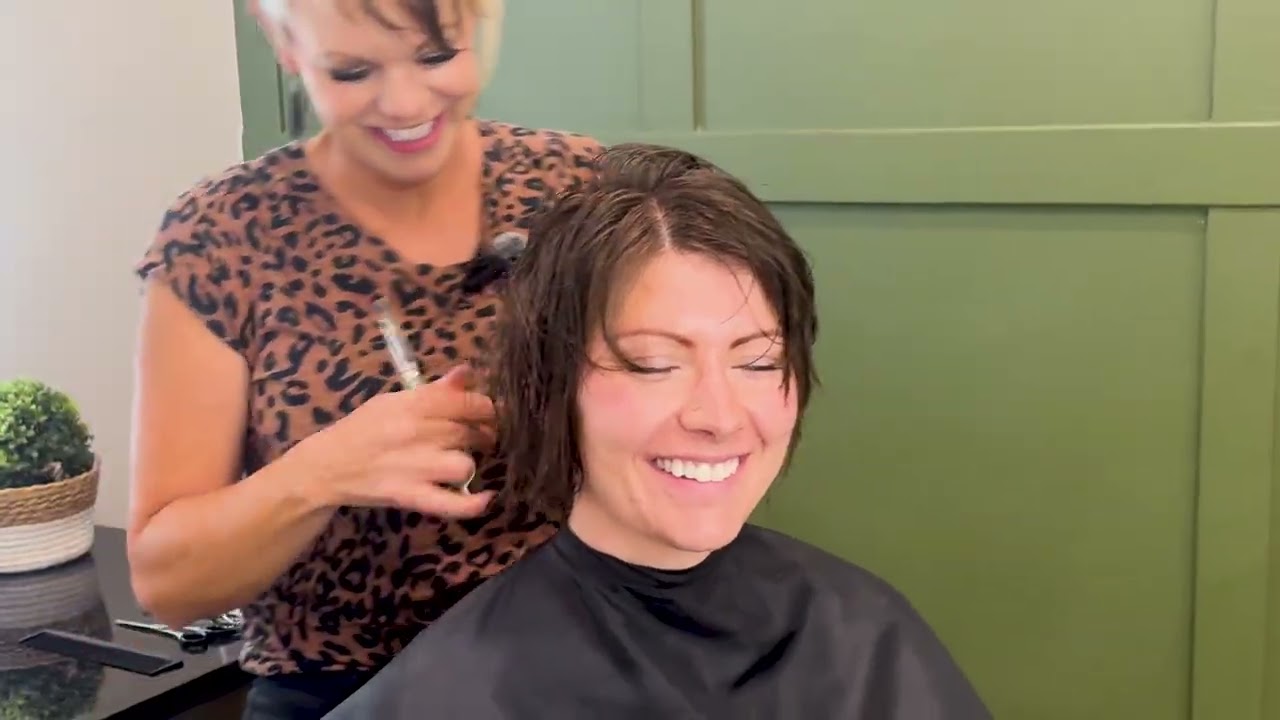
Keeps more side and front length than a pixie while removing enough bob weight to create a lighter crown.
Explore Bixie Haircuts
Keeps the strongest perimeter and most overall length, from short stacked shapes to chin-length and longer bobs.
Explore Bob HaircutsThese real-client examples help you see how length, texture and graduation change the finished silhouette.

A close back and sides with more top length keeps the morning routine short while preserving styling texture.

More perimeter than a pixie, but strategic layering keeps the silhouette from becoming heavy.

A good direction when you want more movement than a classic bob without going into a tight pixie.

Graduation creates back fullness while the front remains soft and long enough to frame the face.

Short texture can make the haircut feel energetic rather than polished and conservative.

Natural texture becomes the feature when the haircut is shaped around curl and shrinkage instead of fighting them.
Use this list to identify the silhouette first. Then open the dedicated hub for detailed haircut instructions and real examples.
Close neckline and sides with enough top length for lift.
Short but blended, with gentle pieces around the face.
Piecey crown layers create separation and a casual finish.
Extra fringe and top length provide more styling options.
Built around curl pattern and shrinkage.
One side or the fringe remains noticeably longer.
Bob softness combined with lighter pixie layering.
Keeps enough side length to tuck behind the ears.
Short crown layers with a softer perimeter.
Minimal layering creates maximum visual density at the ends.
A clean jaw-level shape with strong face framing.
Graduation through the back moves volume upward.
Shorter in back and progressively longer toward the front.
Interior layering softens a heavier short haircut.
Uneven side lengths add direction without going pixie-short.
Loose layering creates a softer, less geometric outline.
Short crown layers are styled upward for deliberate texture.
A collarbone-skimming option for women not ready for a true short cut.

Fine hair often benefits from less unsupported length and a stronger silhouette. But aggressive texturizing can work against hair that already looks sparse.
A curly pixie, bixie or short bob should account for shrinkage, natural direction and the amount of volume produced when the hair dries.
These examples show starting length, density and texture — not just a polished final photograph.
▶
One of RaDona's strongest examples of how a true short pixie changes the neckline, crown and face framing.
Watch the transformation
▶
A real example of a modern short shape with crown movement and softer front pieces.
Watch Rochelle ▶
Useful if you already wear a bob and are trying to decide whether the next step should be a bixie or full pixie.
Watch Lori
▶
A useful alternative if you want short hair but still want clear bob length around the face.
Watch Linda
▶
Shows how crown texture and reduced length can change the appearance of fine hair without claiming to create new density.
Watch Peggy ▶
One of the best examples for anyone nervous about moving from genuinely long hair into a short haircut.
Watch MarilynUse the decade pages when density, silver hair, texture or maintenance priorities are central to your decision.
Compare pixies, bobs, bixies and layered cuts with mature-hair context.
Women Over 50Fine-hair, gray-hair and low-maintenance short cuts for women in their 60s.
Women Over 60Real mature clients including soft pixies, stacked cuts and fine-hair options.
Women Over 70Choose by visible density rather than age alone.
Fine Hair HubGo deeper into classic, textured, curly, long and asymmetrical pixies.
Pixie HubCompare blunt, layered, stacked, A-line and longer short bobs.
Bob HubCrown height, fringe direction, side volume and front length can dramatically change the way a short cut frames the face.
Most short haircut families work. Let texture and density lead.
Use crown lift and diagonal fringe; avoid unnecessary width at the sides.
Soft front pieces and blended edges can reduce a hard jawline.
Longer fringe and softness near the jaw can improve balance.
Use fringe and side fullness instead of excessive crown height.
Longer front pieces can complement prominent cheekbones.
Going shorter often reduces daily styling time, but the shortest shapes may require more frequent salon maintenance.
| Haircut | Length | Main Strength | Daily Styling | Salon Upkeep |
|---|---|---|---|---|
| Tapered Pixie | Very short | Ease + crown lift | Very fast | Most frequent |
| Long Pixie | Short | Face framing | Fast | Moderate |
| Bixie | Short / medium-short | Softness + versatility | Fast | Moderate |
| Stacked Bob | Short | Back fullness | Fast / moderate | Moderately frequent |
| Blunt Bob | Jaw / chin | Visual density | Moderate | Moderate |
| Short Lob | Collarbone | Maximum flexibility | Moderate | Most forgiving |
The best short haircut starts with your actual hair and your tolerance for maintenance — not just the inspiration photo.
Start with how short you are comfortable going. Choose Pixie if you want the lightest, shortest shape; Bixie if you want a softer transition; and Bob if you want more perimeter and length.
Pixies, bixies, blunt bobs and lightly stacked bobs can all work. The important part is preserving visible density and avoiding unnecessary thinning through weak ends.
Yes. Short haircuts can be adapted to fine hair, silver hair, changing texture, glasses and lower-maintenance routines.
Soft pixies, bixies and lightly layered bobs can all be easy daily styles. Very precise short shapes may need more frequent salon reshaping even if morning styling is fast.
Absolutely. Curly pixies, bixies and short bobs can work beautifully when the haircut accounts for curl pattern, shrinkage and density.
If you want maximum lightness and lift, start with Pixie. If you want the softer middle ground, explore Bixie. If you want the strongest perimeter and most remaining length, go into the Bob hub.