Blend the Gray
If you are not ready to stop coloring completely, strategic highlights or softer color placement can reduce the contrast between natural gray and previously colored hair.
Gray blending & color guideGoing gray is not one haircut or one transition plan. Some women grow out their natural silver gradually. Others blend the change with highlights, cut away previously colored length or simply decide to stop covering it. This guide helps you choose a haircut, transition strategy and care routine that makes gray, silver and salt-and-pepper hair look deliberate and modern.
Your starting point determines whether the next decision is mostly about color, mostly about the haircut or a combination of both.
If you are not ready to stop coloring completely, strategic highlights or softer color placement can reduce the contrast between natural gray and previously colored hair.
Gray blending & color guide
Growing out color can be gradual. A shorter haircut may remove more old color at each appointment while giving the developing gray pattern a stronger overall shape.
Watch a gray transition
Once the hair is primarily gray or silver, the haircut can be chosen entirely around density, texture, face shape and the amount of styling you enjoy.
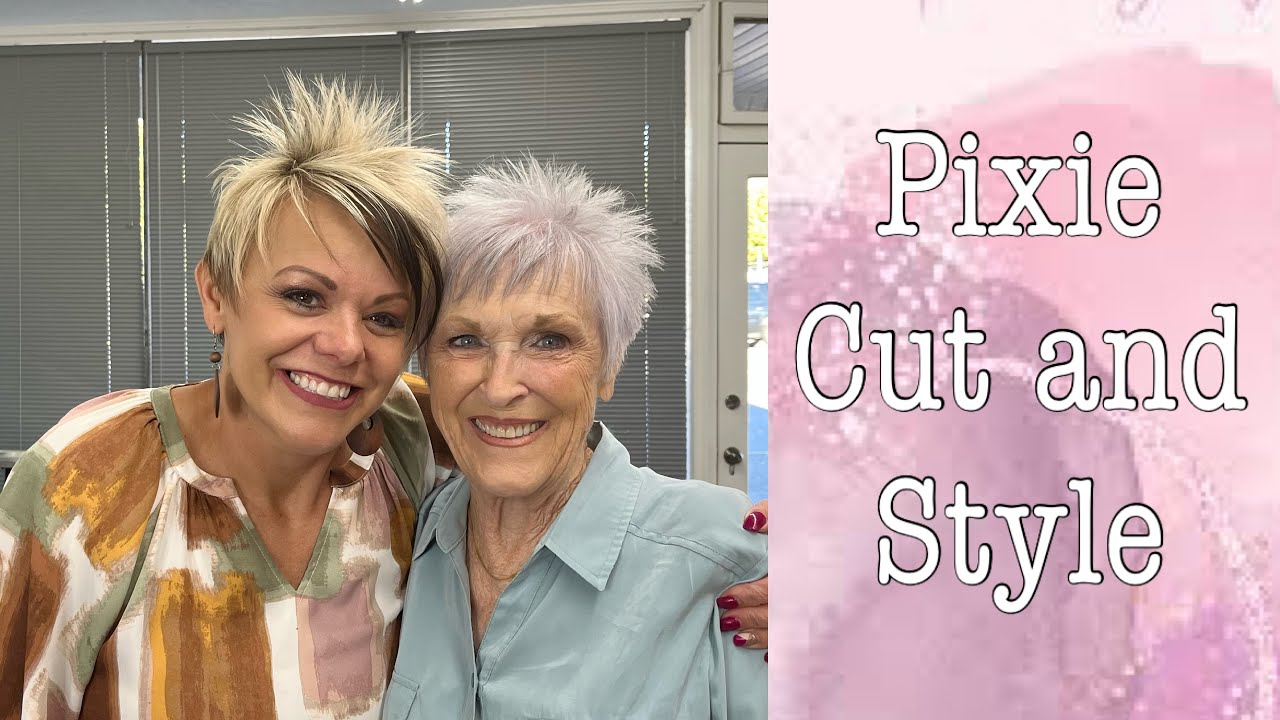
Watch the silver pixieNatural gray contains its own variation in light and dark strands. Different haircut shapes display that dimension differently.
A compact shape makes natural silver look deliberate while keeping the routine extremely simple.
Keeping slightly more crown and fringe length gives silver hair softness and styling flexibility.
Texture lets lighter and darker strands separate visually, giving salt-and-pepper hair more dimension.
A bob preserves more length while layers prevent the shape from becoming too heavy.
The haircut can provide structure even when the natural gray pattern contains several different tones.
A stronger shape can be especially useful when silver color is accompanied by changing density.
Not every idea requires color. Several simply use a better haircut to make the natural gray pattern become part of the finished style.
Short tapered sides with a slightly longer textured crown.
More fringe and crown length for additional styling options.
Bob-inspired face framing with lighter pixie layering.
A strong perimeter can make fine ends look more substantial.
Graduation through the back creates visible crown fullness.
Interior layers break up heaviness while preserving bob length.
Piecey layers showcase the contrast between dark and silver strands.
Works with natural curl pattern rather than straightening it away.
A stronger collarbone perimeter for women who do not want short hair.
Movement through longer gray hair when density can support it.
Uses dimensional color to soften contrast during grow-out.
Lighter pieces around the face can connect new gray to colored lengths.
Each haircut removes more previously colored length.
Allow natural contrast to become part of the finished look.
Keep the haircut clean and allow naturally light strands to lead.
Preserve natural darker strands rather than forcing one uniform tone.
The transition can be managed through haircut length, color blending or both. The best route depends on how much previously colored hair remains and how often you want to visit the salon.
Gray hair does not automatically become coarse. Some women have very fine silver strands, some have stronger texture, and many have a mixture.
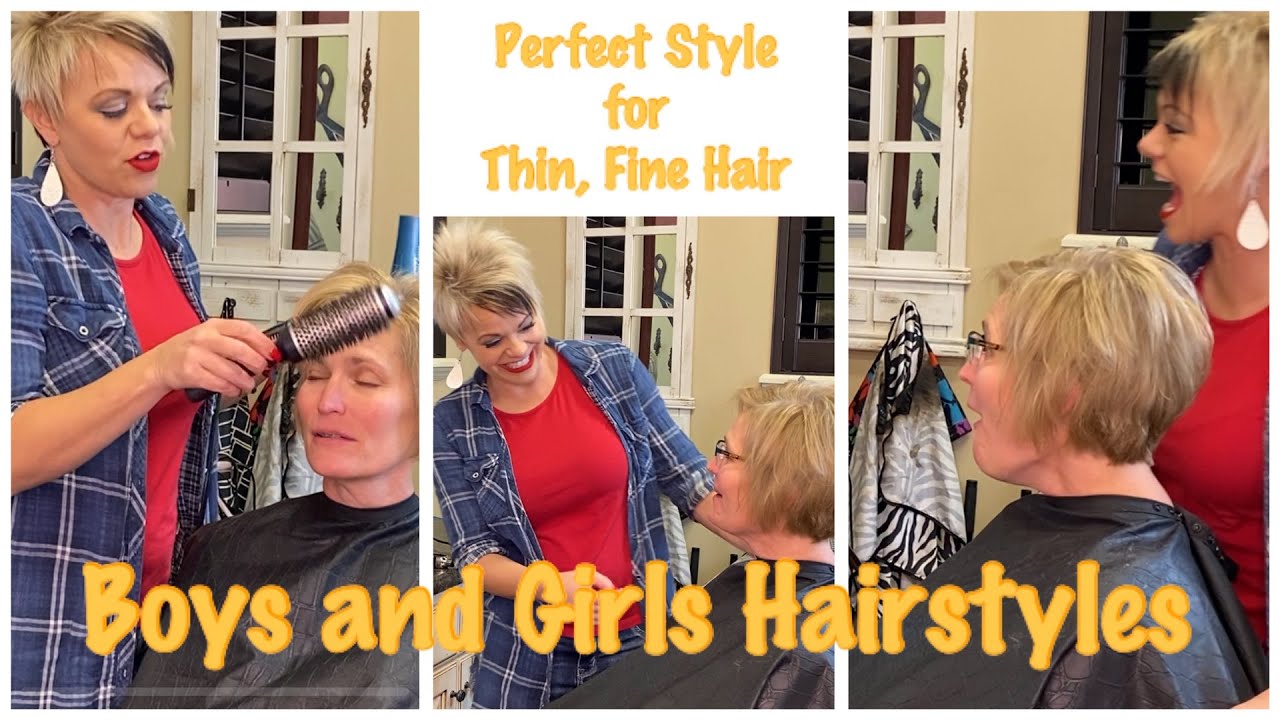
If density is the main concern, use the same principles that apply to other fine hair: protect the perimeter, avoid unnecessary thinning and remove unsupported length when it makes the ends appear sparse.
Color does not determine the haircut. Choose how short you want to go, then adapt that shape to your current density and texture.
Excellent for displaying dimensional salt-and-pepper color and minimizing daily styling.
Pixie HaircutsKeeps softer front length while creating a lighter, more layered crown.
Bixie HaircutsStrong edges make the haircut feel deliberate while giving silver strands room to catch the light.
Bob HaircutsCompare pixies, bixies, bobs, crops and short layered cuts in one place.
Short Hair HubCompare silver-friendly pixies, bobs and fine-hair cuts with mature-hair context.
Women Over 60Real clients demonstrate silver pixies, soft stacked cuts and low-maintenance shapes.
Women Over 70These examples show real texture, density, color variation and grow-out rather than a perfectly uniform studio-gray finish.
▶
A dramatic example of how removing long gray length changes the entire silhouette.
Watch Marilyn
▶
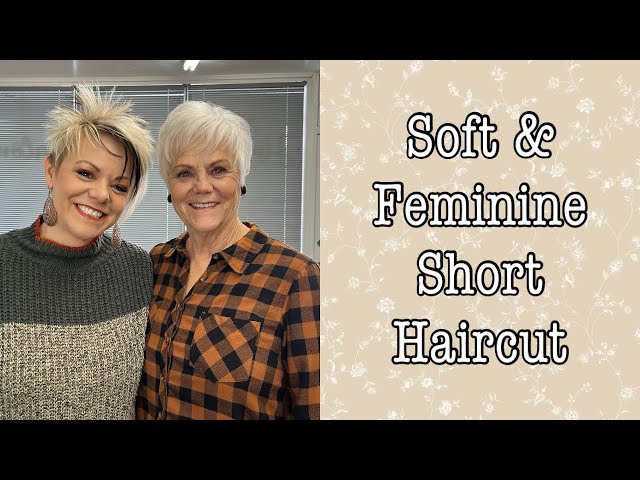
A compact, low-maintenance shape built around natural silver hair.
Watch Twila
▶
Useful if shortening the haircut is part of your gray transition.
Watch the transformation
▶
Keeps additional top length while allowing natural gray to remain the focal point.
Watch the haircut
▶
An example for women who want to soften gray contrast rather than move immediately to fully natural silver.
Watch gray blending
▶
Shows how natural silver itself can become one of the strongest features of a short haircut.
Watch the silver pixieSilver hair does not need a complicated routine. Use products to solve an actual problem rather than automatically adding every “gray-hair” product to the shelf.
If unwanted warmth appears, a violet-toned shampoo can help neutralize it. Follow the product directions rather than assuming it must be used every wash.
If the hair feels dry or rough, use conditioning where needed instead of relying only on toning products.
Use heat protection when blow drying, flat ironing or using other hot tools.
A deliberate haircut often does more to make natural silver look polished than adding more styling product.
No route is universally better. The best one is the transition you are willing to maintain.
| Approach | Main Idea | Color Commitment | Best For |
|---|---|---|---|
| Fully Natural | Stop covering gray | Lowest | Women ready to embrace the natural pattern |
| Gray Blending | Reduce contrast | Low / moderate | Softer grow-out |
| Shorten Gradually | Remove old color through haircuts | Low | Women open to going shorter |
| Highlights | Connect gray and colored strands | Moderate | Dimensional transition |
| Full Coverage | Continue covering gray | Highest | Women who prefer consistent pigmented color |
Natural gray varies widely in tone, density and texture. There is no one haircut or care routine every silver-haired woman needs.
Start with a deliberate haircut shape and healthy-looking ends. Pixies, bixies, bobs and longer layered styles can all make natural gray look polished when they suit the hair's actual density and texture.
Gray works with almost every haircut family. Pixies showcase color variation, bobs create strong outlines, bixies provide a softer short option and longer layers can work when the density supports additional length.
You can grow it out naturally, blend the contrast with highlights, shorten the haircut gradually or combine shorter cuts with color blending. A colorist can help choose the route that fits your starting color and maintenance preference.
Violet-toned shampoo can help neutralize unwanted yellow tones. Use it when the hair actually needs toning and follow the individual product's directions.
No. Gray hair can be worn at any length. Short hair simply makes the natural color especially visible and may speed the removal of previously colored ends during a transition.
If you are still actively transitioning, start with the Hair Color Over 50 guide. If you already love your natural silver and need a better shape, move into Pixie, Bixie or Bob. If changing density is the bigger concern, start with Fine & Thinning Hair.