
You Can Use More Texture
Plenty of fine strands can still create bulk. Controlled layering, point cutting and a shorter crown can create movement without making the hair look sparse.
Fine hair does not need one “best” short haircut. It needs the right balance of perimeter, crown lift, internal layering and daily styling. A blunt Bob protects the strongest edge. A stacked Bob builds structure. A Bixie keeps softness while releasing weight. A Pixie makes root lift easiest. The smartest choice depends on what your fine hair actually needs.

The best short haircut depends on where you need the illusion of more hair. If your ends look wispy, keep a stronger Bob perimeter. If the crown falls flat, use graduation, shorter internal layers or a Pixie. If you want lift but still need more side and jaw coverage, a Bixie can be the best middle ground.
Fine hair describes strand diameter—not necessarily low density. That is why one fine-haired client can handle significant texturizing while another should preserve nearly every visible strand.
Fine refers to the diameter of each strand. Thin refers to overall density. Your haircut should be chosen by both. The mistake is assuming every fine-haired person needs the same amount of layering.
Plenty of fine strands can still create bulk. Controlled layering, point cutting and a shorter crown can create movement without making the hair look sparse.
Keep a visible perimeter, then remove internal weight only where it improves crown shape or prevents the haircut from collapsing.
Use fewer strategic layers, stronger outer lines and conservative texturizing. A haircut should not create “movement” by exposing more scalp.
Before deciding on layers, have your stylist evaluate scalp visibility, end density, crown bulk and the strength of your front hairline.
These three families solve different fine-hair problems. Start with where you want the visible weight to live, then choose the specific variation.
 ▶
Shorter sides, nape and top reduce the weight pulling fine strands flat. This makes crown lift easiest and daily styling fastest.
 ▶
Bob-like exterior length with shorter Pixie-like layers inside the shape. It releases weight while keeping more visible hair around the face.
▶
More hair stays at the lower edge, which can make fine ends look stronger. Graduation or subtle internal layers can still create crown structure.
The “best” cut changes when your priority changes. Use this table before getting attached to a haircut name.
| Your priority | Best starting family | Why | Main caution |
|---|---|---|---|
| Flat crown | Pixie or stacked Bob | Shorter supporting shape reduces weight and builds lift. | Do not over-thin a low-density crown. |
| Wispy ends | Blunt / compact Bob | Maximum number of strands remain in the visible edge. | Too much length can pull roots flat. |
| Need temple coverage | Bixie or short Bob | More face-framing perimeter stays in place. | A very tight Pixie may expose the exact area you want covered. |
| Fine but lots of hair | Layered Pixie / Bixie / layered Bob | Higher density can support more internal movement. | Fine strands can still get weighed down by heavy products. |
| Fine + low density | Compact Bob or soft longer Pixie | Stronger edge and restrained layering protect visible density. | Avoid automatic thinning and aggressive texture. |
| Fastest styling | Pixie | Less length means faster root drying and easier shape. | Trim frequency is usually higher. |
| Easiest grow-out | Bixie or Bob | Longer perimeter moves naturally toward the next length. | Internal layers may need reshaping while growing. |
These are not twelve random trend names. Each option changes perimeter, crown weight, fringe or graduation in a way that can make fine hair behave differently.
A clean lower line keeps the maximum number of strands contributing to visible density.
Keep the perimeter substantial, then use restrained internal layering to prevent a flat crown.
Graduation builds shape through the back crown, so the haircut carries volume even before styling.
A shorter back and longer front create movement in the silhouette without relying on aggressive texturing.
Keep more exterior length than a Pixie while shortening selected internal sections for lift.
Less length gives fine strands less weight to fight, making crown lift and directional texture easier.

Keep extra fringe and temple length while reducing enough lower weight for lift.

A cleaner lower shape makes the top read fuller by contrast and keeps excess back weight from competing with crown lift.

A compact silhouette can make fine hair look intentional rather than stretched flat over too much length.
A flexible fringe changes the visual part line and lets existing hair move across the front without severe bangs.
Natural bends create visual separation and dimension without needing the haircut to be aggressively thinned.
When overall density is low, the best “style” may be fewer layers, a stronger outline and careful placement of fringe.
The biggest advantage of the BGH library is that you can see the starting hair—not just the polished after photo. Compare fine-dense and fine-thin clients before deciding how aggressively your own hair should be layered.
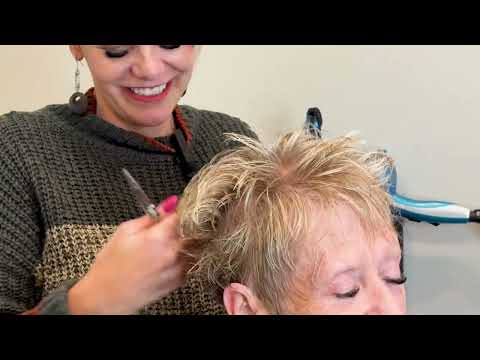 ▶
RaDona shows where texture creates lift and explicitly warns against using the same amount when a client does not have enough hair.
Watch the density warning
▶
Use this client to see why strand diameter alone does not tell you how much layering or bulk removal is appropriate.
Watch the full transformation
▶
Watch how a shorter structural shape changes where the eye sees fullness on a real fine-hair client.
Watch the structural cut ▶
Fine hair often needs less product than expected. Root direction, drying and lightweight support can matter more than heavy finishing paste.
Watch the volume routine
▶
A Bixie demonstrates how fine hair can keep a softer exterior while gaining movement from shorter internal layers.
Watch the Bixie shape
▶
When the nape carries too much visual bulk, a fine-haired crown can appear flatter. A cleaner lower shape shifts attention upward.
Watch the weight shiftShort is not automatically better. The cutting technique still has to match the amount of hair you actually have.
Layers remove weight. Use them where they create support, not as a default prescription for every fine-haired client.
Texturizing can improve lift when there is enough hair. On sparse sections it can simply reveal more scalp.
If the ends are already see-through, a stronger Bob or Bixie edge may look fuller than feathered, razor-thin ends.
Extra length can pull fine roots flat. Sometimes removing length makes the same amount of hair look substantially fuller.
Too much oil, paste or dense cream can collapse fine hair. The cut and root direction should do most of the work.
A finished inspiration photo can hide how much hair the model actually has. Compare starting density before copying the layers.
The strongest BGH fine-hair tutorials repeatedly show the same principle: create lift during drying, then use only enough finishing product to hold the shape.
| Fine-hair problem | Better approach | Why it helps | Avoid |
|---|---|---|---|
| Flat roots | Dry against the growth pattern or lift with a round brush | Creates movement before product is added | Trying to build all volume with paste |
| Fine + lots of hair | Controlled point cutting / internal texture | Releases bulk and creates movement | Assuming fine always means sparse |
| Fine + low density | Stronger perimeter + conservative texture | Keeps more visible hair in sparse areas | Thinning shears throughout |
| Hair collapses by noon | Light mousse or root-lift support | Adds structure without coating the strand heavily | Heavy oil at the roots |
| Ends look see-through | Shorten to a stronger edge | Moves the visible perimeter to a denser section of the hair | More feathering through the ends |
“Fine” describes strand size. It does not tell a stylist how much hair they can safely remove. Lead with your real priority: crown lift, fuller ends, temple coverage or easier styling.
“My strands are fine, but before we add layers I want to know whether my overall density is high, medium or low. My priority is [crown lift / fuller-looking ends / temple coverage / easy styling]. Please keep the perimeter strong where I need visible density and remove internal weight only where it will improve the shape.”
Bring one real BGH video showing the front, side and back you like. Then point out what you do not want exposed or thinned. That gives the stylist a much clearer target than saying “I want more volume.”
Fine hair can behave differently as density, gray percentage and texture change. Once you know the silhouette you want, move into an age page for clients closer to your own hair.
Compare Bobs, Pixies, Bixies and longer options without assuming every woman over 50 should go very short.
See how short Bobs, Pixies and modern short cuts behave on real women in their 60s.
Use real mature clients to judge fringe, temple coverage, crown lift and silver texture before choosing how short to go.
Fine-hair haircut decisions are about structure: how much hair existed before the cut, how much perimeter stayed, how short the crown became and what the finished hair looks like when it moves. BGH can show all four because RaDona's videos document the actual haircut.
RaDona is a licensed cosmetologist and salon owner in Nephi, Utah who has worked behind the chair since 2000. Her fine-hair library is useful because it includes clients with fine strands and very different densities—exactly the distinction that should control how much layering, texturizing and perimeter removal a short haircut can support.
This guide does not claim one haircut universally “makes hair thicker.” It shows how different short silhouettes can make existing hair look fuller by changing weight, perimeter and lift.
Start with density and the location of the problem. Then decide how much perimeter, crown lift and maintenance you actually want.
There is no universal winner. Choose a blunt or compact Bob for maximum visible edge, a stacked Bob for crown structure, a Bixie for lift plus coverage, or a Pixie for the easiest root lift and least overall weight.
Often, yes. Removing excess length can reduce the weight pulling fine roots flat. But “short” includes everything from chin-length Bobs to Bixies and Pixies. The best length depends on density and where you need fullness.
A Bob is usually stronger for visible perimeter and fuller-looking ends. A Pixie is usually stronger for crown lift and reduced weight. A Bixie is the middle ground.
It can be. Fine-but-dense hair may benefit from substantial internal movement. Fine hair with low density usually needs fewer layers and a stronger perimeter. Density should determine the amount of removal.
Fine refers to the diameter of each individual strand. Thin refers to the number of hairs or overall density. You can have fine strands and a lot of hair, or coarser strands with lower density.
If the ends are the issue, a blunt or compact Bob often creates the strongest thickness illusion. If the crown is flat, a stacked Bob or short Pixie can create more visual lift.
Yes. A Bixie can preserve more outer length while using shorter internal layers to create movement. It is especially useful when a Bob feels too heavy but a Pixie feels too short.
Avoid assuming that “fine hair needs lots of layers.” Heavy thinning, aggressive razor work or too many layers can make low-density fine hair look sparser. Use those techniques only where the hair has enough density to support them.
A haircut can improve the appearance of fullness, but it cannot diagnose or treat hair loss. Sudden shedding, patchy loss, scalp symptoms or unexplained density changes should be discussed with a qualified medical professional.