
Keep Liftable Top Length
Remove excess lower weight so the top can stand, but keep enough crown length to direct over sparse areas.
Thin hair is a density problem, not simply a strand-size problem. A pixie can make existing hair look fuller by reducing weight and moving attention upward—but only if the haircut protects sparse areas, preserves useful perimeter and avoids removing too much hair in the name of “texture.”

It can. The strongest thin-hair pixies usually remove length that is pulling the top flat, keep the lower shape clean, preserve enough fringe or temple coverage, and create lift only where the density can support it.
The haircut should shift attention toward the hair you have—not expose sparse zones by thinning them even further.
This is one of the channel's clearest true fine-and-thin-hair tutorials. The value is not just the finished haircut: RaDona explains why a shorter back, lightweight product and round brushing can make the top look fuller.
These timestamps come from RaDona's actual tutorial. They show why the silhouette matters more than simply “adding layers.”
“Thin hair” is too broad for a good haircut plan. Crown thinning, temple thinning and diffuse low density need different coverage strategies.
Remove excess lower weight so the top can stand, but keep enough crown length to direct over sparse areas.
A longer fringe or softer temple piece may be more flattering than exposing the entire hairline.
Side-swept fringe and a less rigid part can help existing hair cover more naturally without obvious comb-over styling.
Use fewer strategic layers, stronger edges and less internal removal when density is reduced throughout.
These examples pull from deeper parts of RaDona's library so the page has a distinct visual identity while staying tightly relevant to thin hair.
 ▶
Use this when your biggest issue is a flat top and you want to see what a very short shape changes.
Watch the shorter shape shift the volume upward → ▶
This is useful as a comparison: fine hair can still have different density, so notice how much coverage remains before copying the texture.
Compare the newer fine-hair silhouette → ▶
A technique-focused video is useful when you want to understand internal support rather than only seeing a finished style.
Watch the density-support shears technique →The useful question is whether the cut puts more visual hair where you need it and removes weight only where you can afford it.
An underused exact-match transformation built around a client who struggled to make her hair stand and look full.
A shorter top and tight sides can make existing crown hair look more intentional instead of stretched thin by extra length.
This technique video is useful for understanding how selective shorter support hairs can help longer hairs stand without thinning everything indiscriminately.
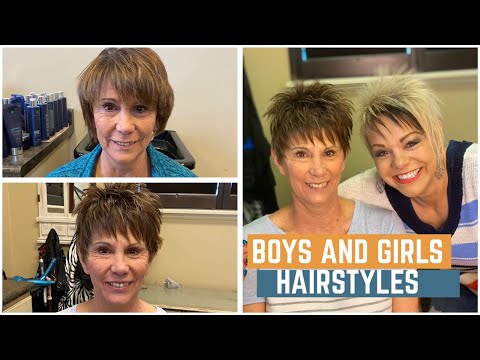
A softer pixie can preserve visible coverage while still making the crown easier to lift.

Piecey lift can make low-density hair look more dimensional when the scalp is not overexposed by aggressive texture.

A useful older library example focused directly on making thin hair appear fuller rather than simply making it shorter.

This technique centers the visual volume where thinning is most noticeable instead of creating bulk everywhere.

A density-conscious styling resource for people who already have the cut but need to make it look fuller at home.
A newer underused pixie reference that keeps this page visually fresher while still showing a light, volume-friendly silhouette.

A dedicated mature-hair reference for women who need age-appropriate coverage without giving up short-hair lift.
These videos have the strongest relevant view totals, but they do not need to become the hero image on every fine/thin-hair page.
 #1
A proven high-view transformation built specifically around thin hair and pixie proportions.
Watch the thin-hair pixie video → #2
The strongest recent exact thin/fine pixie in the mature 70+ library.
Watch the thin-hair pixie video →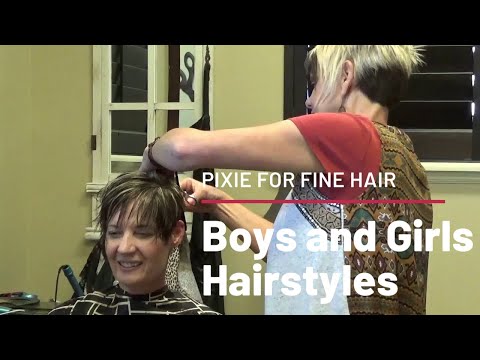 #3
A deep-library audience favorite with exact thin-hair + pixie + volume intent.
Watch the thin-hair pixie video → #4
The embedded teaching video, kept here too because it is one of the channel's strongest exact thin-hair tutorials.
Watch the thin-hair pixie video →Thin hair usually needs strategic removal—not maximum removal.
Internal texture can help create lift, but removing too much in low-density areas increases scalp visibility.
RaDona's thin-hair tutorial specifically explains that excess fullness low in the back can make the top look thinner by comparison.
Thin hair can collapse under too much paste, oil or hairspray.
A very tight side can be beautiful, but not if temple coverage is one of your primary concerns.
Piecey texture needs enough hair between the pieces. When density is very low, a smoother soft pixie may look fuller.
Answer that before discussing length, razor work, thinning shears or undercuts.
If the shortest version of a pixie would expose the temples, scalp or fragile lower density, keeping more length can be the smarter move.
Use shorter length when excess weight is pulling the crown flat and enough density remains for coverage.
A bixie preserves more side and jaw length while still removing enough weight for some crown lift.
A compact bob can create the strongest visible perimeter when thin ends look better with fewer layers.
The embedded tutorial repeatedly favors lightweight lift and a very small amount of finishing product.
| Problem | Better approach | Why | Avoid |
|---|---|---|---|
| Flat crown | Shorter supporting shape + root direction | Reduces weight and makes lift easier | Leaving all top length because it “looks like more hair” |
| Thin temples | Side-swept fringe / strategic side length | Preserves coverage around the hairline | Very exposed temple undercut |
| Diffuse low density | Simple shape + conservative texture | Keeps more visible density overall | Thinning shears everywhere |
| Hair collapses after styling | Light mousse / root lift / minimal paste | Adds support without heavy coating | Heavy oils or too much clay |
| Thin ends | Keep stronger perimeter or move toward bixie/bob | More hair remains at the visible edge | Excess layering through already-sparse ends |
“Thin” does not tell the stylist whether the concern is crown, temple, part line or diffuse density.
If your density changed suddenly, you have patchy loss, significant shedding, scalp pain or inflammation, or an unexplained change in your hair, a medical or dermatology evaluation is more appropriate than trying to solve the cause with a haircut.
It connects the Pixie cluster to the density/problem cluster without cannibalizing the Fine Hair page.
Use the broad hub when density is only one part of your haircut decision.
Move into age-specific pages when you want examples closer to your stage of life.
Use bixie or bob pages when a very short pixie would expose more than you want.
Start with the embedded thin-hair tutorial, then compare the underused thinning-hair examples. Use the Most Popular section only when you want proven audience favorites.
RaDona is a licensed cosmetologist and salon owner in Nephi, Utah who has worked behind the chair since 2000. The advice here is built from real thinning-hair clients and full haircut tutorials rather than from generic hairstyle photos.
The main editorial rule is simple: lower density changes the job of the haircut. A pixie should redistribute visual weight and create lift without sacrificing coverage in the areas that already have less hair.
The best pixie depends on where density is lowest—not just whether the strands are fine.
They can be. A pixie can reduce weight, move visual fullness upward and make root lift easier. The best results protect the lowest-density areas and avoid removing more hair than the client needs for coverage.
A soft pixie with a clean lower shape, useful crown length, strategic fringe and conservative internal texture is often a strong starting point. The best proportions depend on where density is lowest.
Sometimes, but much more selectively than dense hair. Texture can create internal support, but aggressive thinning or texturizing can expose more scalp in low-density areas.
A shorter pixie can reduce weight and make lift easier, but a slightly longer pixie can preserve fringe and side coverage. The correct choice depends on the location of thinning.
Keep enough crown length to lift, remove excess weight beneath it, dry roots in the direction that creates lift and use lightweight volumizing product. Heavy paste or over-long top layers can make the crown collapse.
A longer side-swept fringe or softer temple pieces can create more coverage than a tightly exposed pixie. If temple thinning is a major concern, a bixie may preserve more perimeter.
It can be when you need more side, temple or jaw coverage. A pixie typically gives easier root lift; a bixie keeps more lower-edge density and face-framing length.
No. A haircut can change the appearance of fullness but cannot create follicles or treat the cause of hair loss. Sudden shedding, patchy loss, scalp symptoms or unexplained density changes deserve medical evaluation.
Start with the embedded thin-hair tutorial, identify where your density is lowest, and then choose the real-client example that solves that specific problem.