web analytics
Pixie Haircuts · Fine Hair · Real Salon Transformations

Pixie Haircuts for Fine Hair 10 real-client cuts that create lift without sacrificing the density you actually have.

Fine hair is about strand diameter. Thin hair is about density. That distinction matters. Some fine-haired clients can handle significant texturizing because they have a lot of hair; others need every visible bit of perimeter preserved. The best pixie starts by identifying which situation you actually have.

Fine Hair Thin Hair Crown Lift Density-Saving Women 50–80+ Real Clients
Layered pixie haircut on fine hair by RaDona Ludlow
Fresh August 2026 fine-hair pixie Unique hero · Lisa · fine strands with higher density
The key question is not “Is my hair fine?” It is: fine with plenty of density, or fine and thinning? RaDona's real clients show why the answer changes the cut.
Fresh videoAug 2026new fine-hair pixie
YouTube230K+subscribers
Library1,500+public videos
RaDona25+ yrsbehind the chair
The practical answer

Can a pixie make fine hair look fuller?

Yes—often. Shortening fine hair can reduce the weight pulling roots flat, make crown lift easier and create a clearer silhouette. But the result depends on keeping the right amount of hair in the perimeter and using texture in proportion to the client's density.

A pixie should make the hair you have work harder visually. It should not remove so much hair that the scalp becomes more visible.

Fine + dense: more layering/texture may be useful
Fine + thin: protect perimeter and texturize conservatively
Flat crown: shorten weight and direct roots
Thin ends: consider a bixie or compact bob instead
Fine hair ≠ thinning hair

This is the decision that controls how much hair your pixie can afford to lose.

RaDona's recent videos make the contrast unusually clear: Lisa and Ellen have finer strands but a lot of hair; Suzy has fine, thinner hair and needs more restraint.

Fine + high density

You Can Remove More Bulk

Fine strands can still create a heavy, rounded shape when there are a lot of them.

  • Controlled texturizing can improve movement.
  • Point cutting may prevent a heavy round edge.
  • Keep the lower shape clean so top volume reads clearly.
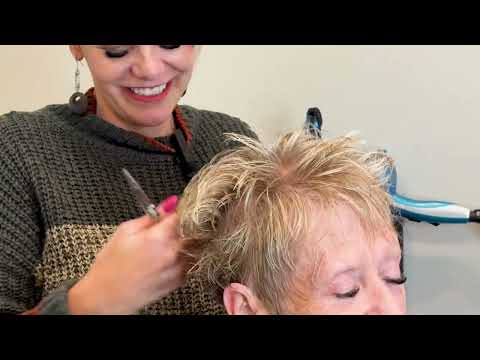
Fine + low density

Protect What You Have

The goal is lift without exposing more scalp or weakening the visible perimeter.

  • Use fewer, more deliberate layers.
  • Texturize conservatively.
  • Keep enough fringe and lower-edge density.
Not sure which?

Ask About Density First

Have your stylist evaluate how much hair you have before deciding how aggressively to layer or texturize.

  • Look at scalp visibility.
  • Look at end density.
  • Look at where bulk actually accumulates.
10 fine-hair pixie directions

Different fine hair needs different amounts of shortness and texture.

These examples deliberately include fine-dense, fine-thin, older and newer clients so the page does not pretend one “perfect pixie” works for everyone.

Soft Layered Pixie
Fine hair · transcript-backed

2. Soft Layered Pixie

Kathleen's cut can be worn softer or more piecey. RaDona controls the cowlick, layers for shape and adjusts texture to the amount of hair present.

Best for: Fine hair that still has enough density for controlled texture.
Watch how the same cut works soft or piecey →
Short Structured Pixie
Fresh 2026 · Rachelle

6. Short Structured Pixie

A compact short pixie can make roots easier to lift because less length is pulling the hair down.

Best for: Fine hair that benefits from less weight.
See the fresh 2026 short-pixie shape →
Very Short Fine-Hair Pixie
Super fine hair

7. Very Short Fine-Hair Pixie

A very short outline can simplify styling for super-fine hair, but the top and fringe still need enough visible density.

Best for: Super-fine short hair.
Watch a very-short fine-hair pixie example →
Fine-Hair Transformation Pixie
Thin hair · full tutorial

9. Fine-Hair Transformation Pixie

A full tutorial showing how a pixie can shift visual volume upward and remove length that is making thin hair look flatter.

Best for: Thin hair needing a stronger silhouette.
See the complete thin-hair pixie transformation →
Classic Fine-Hair Pixie
Proven fine-hair library

10. Classic Fine-Hair Pixie

An older but highly relevant transformation showing why short length can make thin hair easier to lift and style.

Best for: Fine/thin hair needing a practical everyday cut.
Watch a proven fine-hair pixie transformation →
Fine thin hair pixie transformation by RaDona
When hair is fine AND thin

Use texture carefully—RaDona's Suzy video shows why.

Suzy's hair is described in the video as fine and thin. RaDona still adds texture, but she explicitly says not to get carried away. The goal is to create shorter support hairs without taking so much away that the haircut loses visible density.

She also keeps Suzy's shape in style by trimming enough length off the top and perimeter instead of allowing the haircut to simply grow longer and flatter.

5:31: RaDona takes enough length to keep the cut in its intended shape.
9:18: controlled texture is added even though the hair is fine/thin.
9:35: she warns not to “get carried away” with the texture.
10:24: lightweight mousse and lift spray are dispersed throughout instead of concentrated in one spot.
When a pixie may not be the best answer

Sometimes fine hair needs perimeter more than it needs shortness.

The point of this page is not to sell everyone a pixie. If shortening the sides and nape would expose more scalp or weaken the lower edge, keep more length.

Choose pixie when

Root Lift Is the Main Goal

Shorter length makes it easier to lift the crown and reduces weight on the roots.

Best: fine hair with enough density
Watch: scalp visibility
Maintenance: 4–6 weeks for many cuts
Choose bixie when

You Need More Perimeter

A bixie keeps more hair around the ears and jaw while still borrowing some pixie lift.

Best: fine ends that look better with more edge weight
Watch: side bulk
Grow-out: more forgiving
Compare Bixies
Choose short bob when

The Ends Need the Strongest Line

A compact bob often preserves more visible density at the lower edge than a heavily layered pixie.

Best: thin-looking ends
Watch: crown flatness
Tradeoff: less automatic root lift
Compare Mature Bobs
Fine-hair styling

Use lift without loading the hair down.

The transcripts repeatedly show the same principle: lightweight product, deliberate root direction and only enough finishing product to hold the shape.

Fine-hair problem What RaDona does Why it helps What to avoid
Flat roots Dry against growth / lift with fingers or round brush Changes root direction before product Trying to fix everything with paste
Cowlick Dry opposite growth and reassess when dry Lets the stylist see the real settled length Cutting the cowlick too short while wet
Heavy fine hair Controlled point cutting / texture Creates internal support and movement Assuming all fine hair is too thin to texture
Fine + low density Use less texture and preserve perimeter Keeps more visible hair where it matters Aggressive thinning shears everywhere
Needs fullness Light mousse / root lift spray Adds body without excessive weight Heavy product concentrated in one area
Take this to your stylist

Ask about density before asking for texture.

This is the conversation that separates a fine-hair pixie from a generic pixie.

“My strands are fine, but I want to know whether my overall density is high, medium or low before we decide how much to layer or texturize. I want crown lift and movement, but I do not want to remove so much weight that my scalp or thin areas become more visible. Please keep enough fringe and perimeter for fullness.”
Website ↔ YouTube

The article diagnoses the density problem. The videos show how much hair RaDona actually removes.

Start with Kathleen's embedded lesson, compare Lisa and Suzy to see the difference between fine-dense and fine-thin hair, then move into the age or maintenance page that matches your next decision.

Fine-dense: fresh Lisa and Ellen examples.
Fine-thin: Suzy and mature density examples.
Technique: transcript-derived texture and cowlick notes.
Next: maintenance, age or broader fine-hair decision pages.
RaDona cutting fine thin hair into a pixie shape
Experience behind the advice

Reviewed by RaDona Ludlow.

RaDona is a licensed cosmetologist and salon owner in Nephi, Utah who has worked behind the chair since 2000. The key distinction on this page—fine strand diameter versus lower density—comes directly from how she describes and cuts different real clients.

Lisa and Ellen have finer strands but a lot of hair. Suzy is described as fine and thinner. RaDona changes the amount of bulk removal and texture accordingly. That is far more useful than a generic “fine hair needs layers” rule.

Experience: working cosmetologist since 2000
Evidence: multiple real fine-hair pixie clients
Originality: transcript-derived density comparisons
Local practice: salon in Nephi, Utah
Fine-hair pixie FAQ

Questions to answer before removing more hair.

The best fine-hair pixie depends on both strand diameter and overall density.

Are pixie haircuts good for fine hair?

Yes. A pixie can reduce weight, make root lift easier and create a more deliberate silhouette. The cut works best when the stylist protects low-density areas and avoids removing more hair than the client can afford to lose visually.

What is the difference between fine hair and thinning hair?

Fine hair refers to the diameter of individual strands. Thinning hair refers to lower density or fewer hairs. A person can have fine strands and still have a lot of hair, which changes how much layering or texturizing is appropriate.

Which pixie is best for very fine hair?

A soft layered pixie with a strong lower shape and controlled top layers is often a good starting point. Very fine or low-density hair usually benefits from less aggressive texturizing than fine hair with high density.

Should fine hair be texturized in a pixie?

Sometimes. RaDona's videos show that controlled texture can help fine hair stand and create movement, but she also explicitly cautions that clients without enough hair should be texturized more conservatively.

How do I make a fine-hair pixie look fuller?

Use a cut with the right top length, protect the perimeter, dry roots against growth patterns when needed, use lightweight volumizing product and lift with fingers or a round brush rather than coating the hair with heavy product.

Is a bixie better than a pixie for fine hair?

It can be when the ends need a stronger perimeter or you want more ear and jaw coverage. A pixie usually creates more root lift; a bixie keeps more visible lower-edge density.

How often should a fine-hair pixie be trimmed?

Many pixies need reshaping around every 4 to 6 weeks. Very fast-growing or tightly tapered cuts may need cleanup sooner, while softer longer pixies may go longer.

Can a pixie fix thinning hair?

A haircut can make existing hair look fuller by changing shape, weight and lift, but it does not create follicles or treat hair loss. Sudden shedding, patchy loss or unexplained density changes deserve medical or dermatology evaluation.

Fine hair needs a density plan—not just a short haircut.

The best pixie keeps enough hair to look full while removing enough weight to create lift.

Start with Kathleen's embedded lesson, compare fine-dense Lisa with fine-thin Suzy, then take the closest real-client example to your stylist.

Need more lower-edge density? A bixie may preserve more perimeter while still giving you short-hair lift.
Compare Bixie Haircuts
Translate »