web analytics
Bob Haircuts · Fine Hair · Real Salon Proof

Bob Haircuts for Fine Hair10 real bobs that use perimeter, stack and controlled layering to create a fuller-looking shape.

Fine hair does not automatically mean thin hair. Some women have fine strands and a lot of density; others have fine strands plus lower density. The best bob depends on that difference. Use this guide to choose how much perimeter, layering, stacking and texture your hair can support.

Blunt BobStacked BobA-LineFine HairThin HairMature Women
Layered bob on fine but dense hair by RaDona Ludlow
Fresh July 2026 fine-hair BobLinda · fine strands + high density · layered/stacked · unique hero
The density decision comes before the haircut name.Linda and Patti both have fine strands—but RaDona cuts their bobs differently because one has much more hair than the other.
YouTube230K+subscribers
Channel95M+lifetime views
Library1,500+public videos
RaDona25+ yrsbehind the chair
The 20-second answer

Why can a Bob work so well for fine hair?

Because a bob can keep a stronger visible perimeter than a highly layered long cut while still being short enough to reduce weight. The exact shape depends on density.

Fine + dense: more layering, stack and controlled texture can create movement. Fine + thin: keep more solid edge, use gentler graduation and texturize sparingly.

Strongest edge: Blunt/softly layered Bob
Need back lift: Soft Stacked Bob
Want face length: A-Line Bob
Crown lift matters most: Compare Pixie
The most important distinction

Fine hair and thin hair are not the same problem.

This is where BGH can be substantially more useful than a generic “best bobs for fine hair” gallery.

Fine strands + enough density

Linda: More Hair to Work With

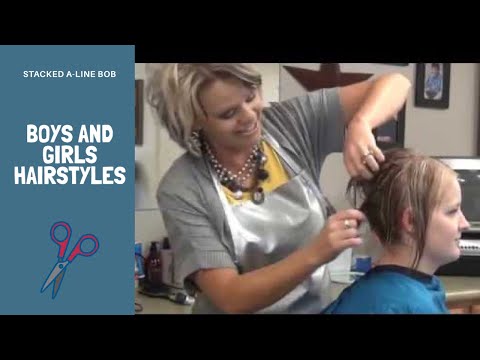
In RaDona's July 2026 video, Linda's strands are described as finer, but she has a lot of hair. That means the bob can carry more layering, back stacking and internal texture without making the perimeter look sparse.

  • Layer around the ear to remove bulk.
  • Stack/layer the back for shape.
  • Use texture where density is genuinely high.
  • Keep face-framing fringe soft rather than heavy.
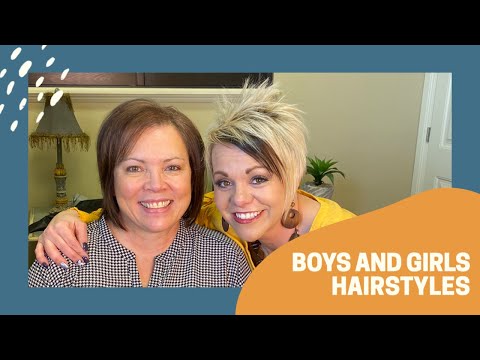
Watch Linda's Fine-but-Dense Bob →
Fine strands + lower density

Patti: Protect the Visible Hair

Patti has genuinely fine and thin hair. RaDona intentionally uses only a slight A-line/stack and very limited texturizing so the haircut gets lift without sacrificing too much visible density.

  • Keep more length in the perimeter.
  • Use a gentle stack rather than a steep one.
  • Texture only small areas that need support.
  • Use styling to create lift instead of removing more hair.
Hear RaDona Explain Patti's Fine + Thin Hair →
Linda's 2026 layered bob for fine but dense hair
Fine does not mean sparse · July 2026

Linda can handle more layering because she has a lot of hair.

RaDona explicitly describes Linda as having a lot of hair that is “a little bit more fine.” That changes the entire plan. More bulk can be removed around the ears, the back can be stacked more confidently, and internal texture can be used to help longer hairs sit on shorter hairs and stand fuller.

0:24: fine strands, but a lot of hair.
4:37: stack/layer removes bulk through the back.
6:15: side layering controls dense bulk around the ear.
9:56: substantial texture is appropriate because her density is high.
10 real Bob haircuts

Choose the Bob by density, perimeter and lift.

Not every “fine-hair Bob” should be blunt, and not every fine-haired client should be stacked. The gallery deliberately spans different density problems.

Layered Stacked Bob for fine hair
Fresh 2026 · Fine + Dense

1. Layered Stacked Bob

Linda has finer strands but a lot of hair. RaDona can layer, stack and texture more because density is not the problem.

Best for: Fine hair with enough density for movement and internal texture.
Watch the real Bob result →
Soft Slight A-Line Bob for fine hair
Fine + Thin

2. Soft Slight A-Line Bob

Patti's bob stays long enough to preserve visible hair while a gentle back shape shifts fullness upward without an aggressive stack.

Best for: Fine hair with lower density and a need for a stronger visible perimeter.
Watch the real Bob result →
Layered Bob With Crown Lift for fine hair
Fine + Thin · Fuller Top

3. Layered Bob With Crown Lift

A longer short bob with carefully placed layers and very limited texturizing to build lift without removing too much hair.

Best for: Women who want more top volume but are not ready for a Pixie.
Watch the real Bob result →
Soft Stacked Bob for fine hair
Fine + Thin · Easy

4. Soft Stacked Bob

Karen's stack keeps the back easy while shorter upper layers reduce heaviness and make the top easier to lift.

Best for: Fine/thin hair that feels flat when top layers get too long.
Watch the real Bob result →
Short A-Line Bob for fine hair
A-Line · Thin Hair

5. Short A-Line Bob

A shorter back with longer front can move visual weight upward while preserving a stronger front edge.

Best for: Fine or thin hair needing both lift and face-framing perimeter.
Watch the real Bob result →
Asymmetrical Bob for fine hair
Asymmetrical

6. Asymmetrical Bob

A longer side and stronger visible edge create shape without requiring a heavily layered crown.

Best for: Fine/thin hair when you want a statement perimeter rather than lots of texture.
Watch the real Bob result →
Fine-Thin Bob Over 70 for fine hair
Women 70+

7. Fine-Thin Bob Over 70

A mature-hair example showing how a bob can keep more visible side and lower-edge hair than a very short Pixie.

Best for: Women 70+ with fine/thin hair who want coverage.
Watch the real Bob result →
Layered Bob That Looks Fuller for fine hair
Layered Bob

8. Layered Bob That Looks Fuller

A proven layered-bob direction where movement comes from controlled layering rather than simply removing length everywhere.

Best for: Fine hair with enough density for strategic layers.
Watch the real Bob result →
In-Between Bob for Thin Hair for fine hair
In-Between Bob

9. In-Between Bob for Thin Hair

A midpoint between a shorter layered bob and a longer shape, useful when you want fullness without going very short.

Best for: Fine/thin hair when you want a cautious length change.
Watch the real Bob result →
Short Bob for Thin Hair for fine hair
Short Bob · 70+

10. Short Bob for Thin Hair

A shorter bob keeps enough perimeter to remain bob-like while reducing weight that can flatten the crown.

Best for: Thin/fine mature hair when a long bob feels too heavy.
Watch the real Bob result →
Which Bob should you choose?

Start with the problem you want the haircut to solve.

Perimeter, crown lift and face framing are competing priorities. Pick the one that matters most.

Ends look sparse

Blunt / Softly Layered Bob

Keep the strongest visible lower edge and limit internal removal.

  • Best for lower density.
  • Good when ends look wispy.
  • Layer only where lift is needed.
Back feels flat

Soft Stacked Bob

Use gentle graduation to move visual fullness upward without making the lower edge disappear.

  • Good for fine + moderate density.
  • Keep the stack softer when density is low.
  • Round-brush for lift.
Want front length

A-Line Bob

Shorten the back while preserving more visible hair toward the face.

  • Good for jaw/temple framing.
  • Can reduce back weight.
  • Keep front perimeter strong.
See the A-Line Bob Guide →
Styling fine-hair Bobs

Create lift with direction before reaching for more layers.

RaDona's videos repeatedly show that drying direction and root movement can create visible volume without removing additional density.

ProblemCutting responseStyling responseAvoid
Flat rootsShorten heavy top layers only as neededMove roots while drying; lift top with round brushAdding layers everywhere automatically
Wispy endsKeep a stronger perimeterDirect ends together rather than over-separatingHeavy internal texturizing
Bulky dense sidesLayer around ears if density supports itDry sides closer to headKeeping all density at ear level
Fine + thin crownUse only selective upper textureRoot lift + light round brushingCutting texture near scalp/part
Stack gets flatRe-establish graduationRound-brush from bottom upwardLetting lower back become too heavy
Bob haircut that keeps more perimeter for fine thin hair
Bob vs Pixie for fine hair

The choice is usually perimeter versus maximum lift.

A Pixie removes more length and can make crown lift easier. A Bob keeps more visible hair around the jaw, temples and lower edge. Fine hair with enough density can succeed with either; fine + low-density hair often benefits from asking exactly where coverage is needed before cutting shorter.

Website ↔ YouTube

Use the page to identify your density. Use the videos to see how much hair RaDona actually removes.

Watch Linda if your strands are fine but you have plenty of hair. Watch Patti if your hair is both fine and thin. The difference in layering and texturizing is the lesson.

Fine: strand diameter.
Thin: lower density.
Bob: preserves more perimeter than Pixie.
Next: choose age, density or Bob variation.
RaDona's fine-hair bob client Linda
Experience behind the guide

Reviewed by RaDona Ludlow.

RaDona is a licensed cosmetologist and salon owner in Nephi, Utah who has worked behind the chair since 2000. The page is built around a distinction visible in her real clients: Linda has fine strands with plenty of density, while Patti has fine strands plus low density.

That is why Linda can tolerate substantial layering and texture while Patti receives a gentler stack and only small amounts of texturizing. The haircut name may be the same—Bob—but the density strategy is not.

Experience: behind the chair since 2000
Evidence: real fine-hair Bob clients
Current proof: July 2026 Linda tutorial
Local practice: Nephi, Utah salon
Bob + fine hair FAQ

Choose the density strategy before the Bob variation.

That single distinction helps prevent most of the generic advice on this topic.

Are bob haircuts good for fine hair?

Yes. A bob can be especially useful because the perimeter can stay relatively strong while the overall length is short enough to reduce weight. The best amount of layering depends on whether the hair is fine but dense or fine and low-density.

What type of bob makes fine hair look fuller?

For fine hair with lower density, a blunt or softly layered bob often preserves the strongest visible edge. A soft stack or A-line can add lift in back. Fine but dense hair can usually support more internal layering and texturizing.

What is the difference between fine hair and thin hair?

Fine hair describes the diameter of each strand. Thin hair describes how many hairs are present, or overall density. You can have very fine strands and still have a lot of hair, as RaDona explains in Linda's 2026 bob video.

Should fine hair be layered in a bob?

It can be. Fine but dense hair may benefit from substantial layering and controlled texture. Fine and thinning hair usually needs fewer internal layers so the perimeter does not become see-through.

Is a stacked bob good for fine hair?

A soft stack can help move visual fullness upward and reduce a heavy lower back. The amount of graduation should match density: stronger stacking for dense fine hair, gentler graduation for lower-density hair.

Is an A-line bob good for fine hair?

It can be because it preserves longer front perimeter while shortening weight at the back. A subtle A-line often works well when you want fullness without a steep stacked shape.

Is a bob or pixie better for fine hair?

A pixie usually gives easier root lift because there is less length. A bob keeps more perimeter and visible edge density. If crown lift matters most, lean Pixie; if lower-edge fullness and face framing matter most, lean Bob.

Can a haircut make fine hair actually thicker?

A haircut can change the visual shape, lift and apparent fullness of existing hair, but it does not change strand diameter or create new follicles. Sudden shedding, patchy loss or scalp symptoms deserve medical evaluation.

Fine hair is not one density.

Keep the perimeter strong—then add only the layering your density can support.

Compare Linda and Patti first. Then choose the blunt, stacked, A-line or layered Bob that solves your actual weight-placement problem.

The next common decisionDo you need the Bob's stronger perimeter—or would a Pixie give your crown more useful lift?
Compare Pixie vs Bob
Translate »