web analytics
Bob Haircuts · Thin Hair · Real Salon Transformations

Bob Haircuts for Thin Hair10 real Bobs that protect fullness.

Thin hair is a density problem. The best Bob is not automatically the shortest, most layered or most texturized cut—it is the shape that keeps enough visible edge, protects sparse zones and puts lift where your hair can actually support it.

Low-density hair Stronger perimeter Soft stack Conservative texture
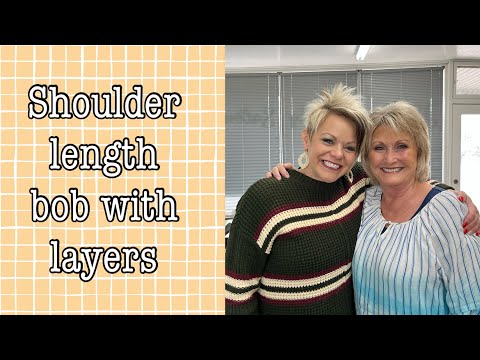
Anne's fine and thin hair before and after a short stacked A-line bob with RaDona
Anne: fine + thin hair → short stacked A-lineReal RaDona salon client
Real people. Real haircuts.Use the finished result—and the cutting process—to choose what your own thin hair can support.
Experience25+ yearsbehind the chair
Library1,500+public videos
YouTube230K+subscribers
EvidenceReal clientsnot stock models
The practical answer

Yes—a Bob can make thin hair look fuller when the cut protects density instead of removing it.

A strong lower edge helps the hair read as more substantial. A soft stack can move visual fullness upward. An A-line can keep more face-framing coverage. The mistake is assuming that “more layers” or “more texture” automatically creates more volume on low-density hair.

Thin-hair rule: protect the perimeter first. Then add only the graduation, layering or texture needed to solve a specific problem such as a flat crown, bulky nape or lack of movement.
Thin ends: blunt or softly graduated perimeter.
Flat crown: controlled stack + root direction.
Thin temples: preserve side/fringe coverage.
Diffuse thinning: simpler shape, less internal removal.
Do not merge these two problems

Thin hair and fine hair can overlap—but they are not the same thing.

This distinction is what keeps this page from duplicating our Bob-for-Fine-Hair guide. Here, the cutting decisions begin with how much hair is present.

Fine hair

Strand diameter

Fine describes the thickness of each individual hair. You can have very fine strands and still have a lot of hair.

  • Fine + dense hair may support more layering.
  • Texture can be useful when genuine bulk exists.
  • The perimeter may stay full even after internal removal.

Go to Bob Haircuts for Fine Hair

Thin hair

Overall density

Thin describes having fewer hairs overall or visibly lower density in a specific zone such as the crown, temples or ends.

  • Preserve visible edge density.
  • Use fewer internal layers around sparse zones.
  • Texturize only when there is enough density to support it.

Open the Fine & Thinning Hair Hub

Hair-loss boundary: a haircut can change shape, lift and apparent fullness, but it cannot create new follicles or treat hair loss. Sudden shedding, patchy loss, scalp pain, redness or unexplained density change deserves medical evaluation.
10 real Bob directions

Choose the Bob by where you need fullness—not by the haircut name alone.

These examples use nine video IDs not used on the Bob-for-Fine-Hair page. The final card is intentionally a reused 3.3M-view classic because it is unusually strong proof for the exact thin-hair intent.

Short stacked A-line for fine thin hair
#1 · Fine + thin

Short Stacked A-Line

Anne's real thin-hair makeover: shorter back, controlled stack and enough top length to create visible lift.

Best when: low density + flat crown + you still want Bob-like front length.
See why RaDona chooses the stack at 2:14
Extreme A-line bob for thin fine hair
#2 · Longer front

Extreme A-Line Bob

Amber's shape keeps the front dramatically longer while the back carries the lift—useful when side coverage matters.

Best when: you want fullness without exposing the temples or jawline.
See the thin-hair result around 13:30
Medium A-line bob with soft stack
#3 · Softer angle

Medium A-Line With Soft Stack

A less severe A-line when you want shape and crown support but do not want a sharply stacked back.

Best when: your density is lower but your preferred look is still soft and medium-short.
Watch the stack angle choice at 3:39
Stacked bob haircut with bangs
#4 · Fringe option

Stacked Bob With Bangs

Bangs can redirect visual weight toward the face while the stacked back carries the silhouette from behind.

Best when: the forehead or front hairline benefits from soft coverage.
See the full stacked Bob + bangs shape
Classic short stacked bob haircut
#5 · Classic structure

Classic Short Stacked Bob

A structured back is useful when the haircut needs a visible silhouette rather than lots of disconnected texture.

Best when: your back looks flat and you want an easy round-brush shape.
Watch the full stacked-bob tutorial
Stacked layered bob for fuller looking thin hair
#6 · 2025 quick proof

Stacked-Layered Bob

A current short-form example showing how a stacked silhouette can make a low-volume shape read more substantial.

Best when: you want to preview the silhouette before watching a full tutorial.
See the stacked-bob fullness hack
Short stacked bob with volume
#7 · Short + lifted

Short Stack With Volume

A shorter stacked shape when the priority is lift and a cleaner nape rather than retaining a longer classic Bob perimeter.

Best when: length itself is pulling the crown flat.
See the short stacked-volume result
RaDona demonstrating controlled texturizing for volume
#8 · Technique decision

Controlled Texture

Texture is not forbidden on thin hair—but it has to create support without removing the visible density you are trying to protect.

Best when: the hair needs movement but still has enough density for selective internal removal.
Watch the texturizing technique at 2:06
Blunt bob versus choppy layered bob comparison
#9 · Perimeter choice

Blunt vs Choppy Bob

For lower-density ends, the important lesson is not that one shape always wins—it is that every extra layer changes how much hair remains at the visible edge.

Best when: you are deciding how much layering your ends can afford.
Compare blunt and choppy movement
A-line bob transformation for thin hair
#10 · Proven favorite

Classic Thin-Hair A-Line

One of the channel's biggest thin-hair Bob videos: an older A-line transformation with more than 3.3 million views.

Best when: you want a high-proof example before committing to the A-line family.
Watch the 3.3M-view thin-hair Bob
Match the cut to the thinning pattern

Where your density is lowest should change the Bob you choose.

The haircut is most useful when it solves a specific coverage or lift problem instead of applying the same stack and layers to everyone.

Thin at the ends or perimeter

Start with a stronger lower edge. A blunt chin Bob or very softly graduated A-line keeps more hair in the visible line.

  • Keep the bottom deliberate.
  • Limit wispy point-cutting through sparse ends.
  • Add internal layers only where needed.

Flat crown, better density below

A soft stack can move visual volume upward without sacrificing all the front perimeter.

  • Graduate the back rather than texturizing everywhere.
  • Keep usable top length for round-brush lift.
  • Dry against the growth direction.

Thin temples or front hairline

Protect the side and fringe before chasing crown volume. A longer-front A-line may be more useful than a very short Bob.

  • Keep face-framing length where coverage matters.
  • Avoid exposing the temple with an aggressive undercut.
  • Choose bangs only if the front density supports them.
Extreme A-line bob showing longer front length on thin fine hair
Perimeter first

The Bob's biggest advantage over a Pixie is the amount of visible edge it can preserve.

When low density is most obvious around the temples, jaw or lower edge, the Bob gives you more material to keep in the silhouette. That does not mean every thin-hair Bob should be blunt. It means the stylist should know exactly where the haircut can afford to remove weight.

Keep: enough side length to preserve the area that looks sparse.
Graduate: the back when crown or occipital lift is the real problem.
Layer: only where the density can support the shorter pieces.
Re-check dry: thin hair can reveal transparency after the moisture and tension are gone.
Take this to your stylist

Describe the density problem before you describe the haircut.

“I want a Bob” is the shape. These questions tell your stylist what the shape needs to protect.

01

Show the sparse zone

Point out whether the concern is crown, part line, temple, sides, nape or ends. “Thin” alone is too broad.

02

Choose the perimeter

Ask where the strongest visible edge should sit: jaw, chin, nape or longer toward the front.

03

Set a texture limit

Tell the stylist you want texturizing only where there is enough density to support it.

04

Check it dry

Before removing more, look at the crown and perimeter after the hair is dry and styled.

What tends to backfire

Thin hair usually loses when the haircut removes density without a clear reason.

These are not absolute bans; they are places where the stylist should slow down and ask what the removal is meant to accomplish.

DecisionWhy it can backfire on thin hairBetter question
Heavy thinning-shear work everywhereCan reduce visible density in areas that are already sparse.Where is there genuine bulk that needs to be removed?
Very wispy perimeterCan make the lower edge look transparent even if the crown has lift.Would a stronger edge make the whole haircut read fuller?
Short layers through thin templesMay expose the exact area the client wants to cover.Can the side stay longer while the back carries the graduation?
Long heavy top with no shape belowCan pull the crown flat and make the lower-density top look even flatter.Would a shorter supporting shape reduce weight without over-layering?
Copying a thick-hair Bob photo exactlyThe same layer count and texture pattern may remove too much on lower density.Which parts of this reference photo depend on density I do not have?
Website ↔ YouTube

Use this page to choose the density strategy. Use the videos to see exactly how much hair RaDona removes.

Still photos can hide the most important thin-hair decision: where the stylist leaves weight and where she takes it away. Watch Anne for the full fine + thin logic, then compare the more extreme A-line if you need stronger side coverage.

Thin: lower overall density.
Bob advantage: more visible perimeter than Pixie.
Stack advantage: moves shape upward when the crown is flat.
Next click: choose age, density or haircut-family comparison.
RaDona's real fine and thin hair client Anne
Experience behind the guide

Reviewed by RaDona Ludlow.

RaDona is a licensed cosmetologist and salon owner in Nephi, Utah who has worked behind the chair since 2000. This guide is built around real low-density clients and the decisions visible in her salon videos—not generic claims that every thin-haired woman needs the same blunt Bob.

Anne's transformation is especially useful because RaDona explicitly identifies the hair as both fine and thin, then demonstrates how she balances stacking, top length, selective texture and styling direction to improve the silhouette without treating the client like she has abundant density.

Experience: behind the chair since 2000
Evidence: real thin-hair clients
Video library: 1,500+ public videos
Local practice: Nephi, Utah salon
Bring the problem, not just the picture

A good consultation starts with the places where your hair feels least dense.

If you visit RaDona's salon, bring two things: the Bob shape you like and a clear description of where you need coverage or lift. That gives the stylist a much better starting point than simply saying “my hair is thin.”

Best consultation sentence:

“My priority is to keep visible density around my ______, but I need more lift at my ______. Please keep texturizing conservative until we see it dry.”

Bob + thin hair FAQ

Protect density first; shape the Bob second.

That order keeps the advice practical and separates true low-density hair from fine-but-dense hair.

Are bob haircuts good for thin hair?

Yes. A bob can work very well for thin hair because it can create a stronger visible perimeter while removing length that may pull the crown flat. The best version protects low-density areas and uses graduation or layering selectively.

What bob haircut makes thin hair look fuller?

A chin-length blunt bob, soft A-line or gently stacked bob can all make thin hair appear fuller. The key is preserving the lower edge and limiting internal removal where density is already low.

Should thin hair have layers in a bob?

Sometimes, but fewer is usually safer. Soft internal layers or controlled graduation can add crown lift, while too many layers can make sparse ends look more transparent.

Is a stacked bob good for thinning hair?

A soft stack can help if the back and crown feel flat, but the graduation should be matched to the density. A very steep stack or aggressive texturizing may expose low-density areas on some clients.

Is an A-line bob good for thin hair?

Yes. An A-line can keep longer visual weight around the face while shortening and shaping the back. That can preserve side coverage and create lift without making the whole haircut very short.

What is the difference between fine hair and thin hair?

Fine hair describes the diameter of individual strands. Thin hair describes lower overall density. A person can have fine strands but a lot of hair, or coarse strands with lower density.

Is a bob or pixie better for thin hair?

A bob usually protects more perimeter and side coverage, while a pixie removes more length and can make crown lift easier. Choose based on where the thinning is visible and whether edge density or root lift matters more.

Can a bob haircut stop or treat hair loss?

No. A haircut can change the silhouette and make existing hair appear fuller, but it cannot create new follicles or treat hair loss. Sudden shedding, patchy loss, scalp pain or inflammation should be discussed with a qualified medical professional.

Keep what makes the hair look dense.

The best thin-hair Bob removes weight only where the removal earns you something.

Protect the visible edge. Add graduation where you need lift. Use texture selectively. Then watch the real transformation from the side and back before you decide how much hair you want your stylist to remove.

The next common decisionDo you need the Bob's stronger perimeter—or would a Pixie give your crown more useful lift?
Compare Pixie vs Bob
Translate »